

Insight pinpoints six convenience trends to watch in new decade
Six key trends have defined the shape of convenience retail in 2019 and are poised to strengthen and extend across the marketplace in 2020 and beyond.
During the last 12 months, Insight has interviewed chief executives and leaders at some of the world’s top convenience retailers, industry suppliers, sector experts and connected consultants.
Markets have included Denmark, Hungary, the UK, Ireland, the US, Australia, Norway, India and the Philippines.
Those interviews have pooled six key trends or themes within convenience retail around the globe. They are:
- Mobility
- Sustainability
- Food to go
- New tech
- Expansion of convenience retail on the forecourt
- Customer experience
Mobility

Insight closed 2019 with an interview with James Carter, a ‘new mobility’ expert and principal consultant at Vision Mobility. Carter showed how rapid change in the automotive industry with electric, shared, autonomous and connected cars is driving ‘new mobility’ or ‘mobility as a service’.
Carter shared findings from the latest Annual Global Mobility Study including the appetite for electric and shared cars in emerging markets such as India and China. And he provided an insight to the future with a prediction that automated and shared vehicles would be commonplace in 20 years’ time.
Two convenience heavyweights, Joe Bona, president at global design and consulting firm, Bona Design Lab, and Jacob Schram, senior advisor McKinsey & Company urged retailers to seize the opportunity provided by the move to EV.
Schram also highlighted the four key mobility drivers and urged fuel retailers to step up to the plate by providing the right infrastructure to support EV.
“Why are fuel retailers not pushing the agenda and letting others take this space?” he asked. “You own it – take it,” he said.
Bona considered how new mobility and advent of EV will impact site and store sizes with a need for more parking and in-store seating.
“That will start to dictate how people start to think about petrol stations and convenience stores,” Bona said.
One forecourt retailer that is ahead of the curve when it comes to mobility is MOL Group, operating in Central and Eastern Europe. Revolutionising transportation in the region is one of its key objectives. It is already investing in EV charging on its forecourts and has set up a new car sharing business called MOL Limo. The group also has ambitions with shared public transport. “We want to connect with future customers who don’t want to own their own cars, they want to share,” Bence Biro, head of retail operations at MOL Group said ().
Sustainability

Sustainability was put under the spotlight by convenience consultant, Scott Annan, principal at Blue Anata.
For Annan, sustainability, alongside fresh and retailtainment, is a top industry theme.
Annan highlighted how retailers in different countries are tackling sustainability and looking to take plastic out of the marketplace, in particular. In Indonesia Circle K is addressing plastics waste in Bali with its participation in the ‘Bank Sampah’ or waste banks programme. Consumers are incentivised to clean and separate their waste and take it to convenient centres, where based on weight their waste bank account is credited. The balance is issued as a barcode voucher, which they can spend in stores. The scheme is government legislated in collaboration with local banks and is underwritten by leading manufacturers including Unilever and Danone, who have a legal responsibility for their packaging.
“The programme is working as the packaging waste has a consumer value. Consumers, retailers and manufacturers are accountable so it works,” Annan said.
Annan also secured Insight’s readers with an introduction to Reverse Vending via global leader TOMRA during an IROF event held at the Sewell Group in Hull.
TOMRA aims to help people make the most of the world’s resources and it presented the merits of Deposit Return Schemes, which reward customers when they bring their containers back – giving a value to a material that may otherwise be littered or sent to landfill.
“It’s an easy way to collect. We are not good at waste – incentives are needed and the deposit creates the incentive,” said Mark Brill, TOMRA vice president sales and marketing, UK and Ireland.
Food to go
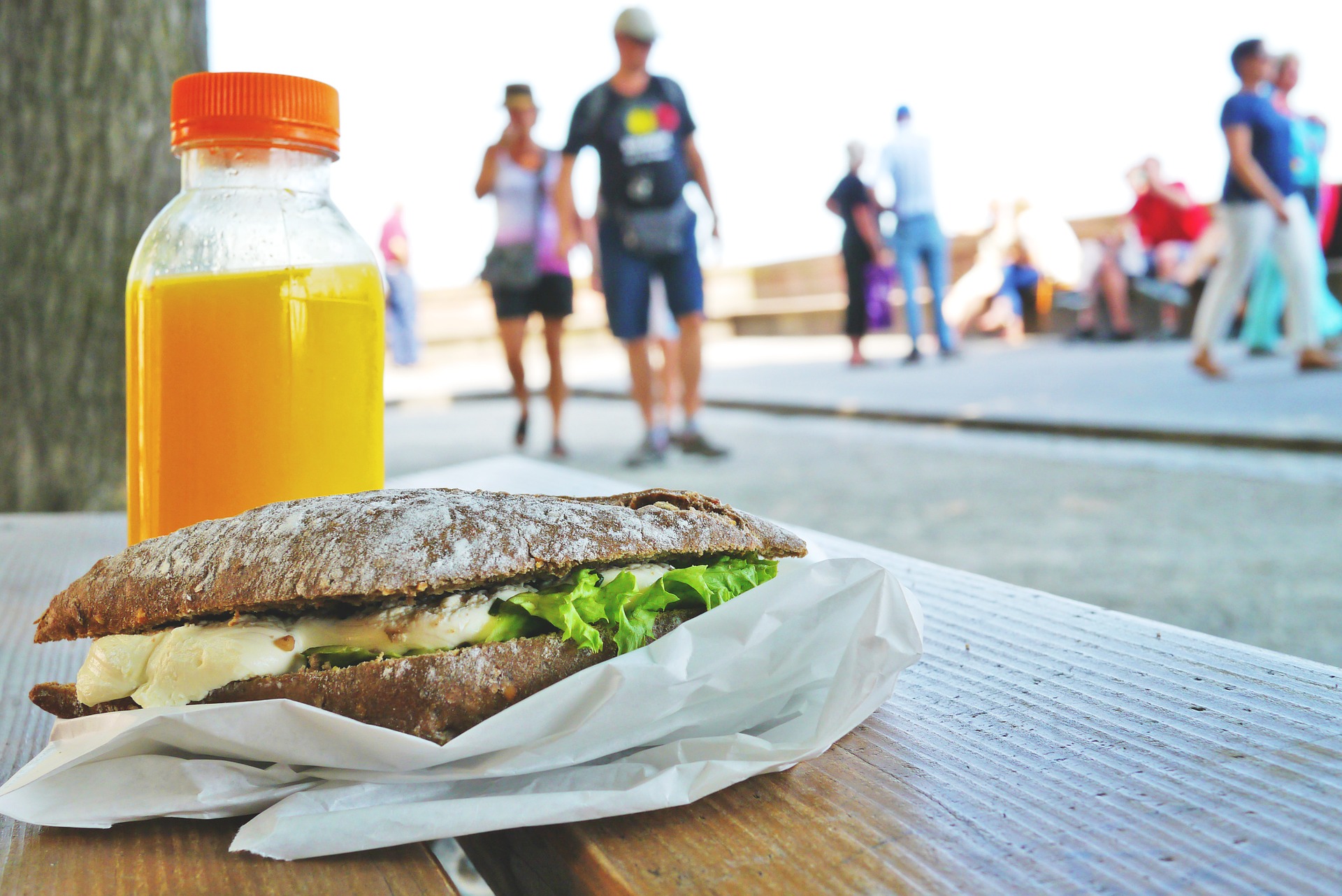
Food to go was probably the biggest theme to emerge in 2019 and especially in Ireland where retail leaders Musgrave and Spar set the bar in this category.
In April, Chris Martin, then Musgrave CEO, shared how the business has targeted the food market and the merging of in-home and out-of-home consumption.
“Centra recognised that convenience is changing but that there are significant opportunities when you rethink food and technology,” Martin said.
“Our team has set about redefining convenience and to determine how to make Centra really relevant and modern to this changing world.”
Musgrave has made Centra relevant via new own brands including the premium Inspired by Centra range and Frank and Honest coffee and in-store and cafes.
Over at Spar, operated by BWG Foods in Ireland, Declan Ralph, retail development director at BWG Foods, shared the latest foodservice innovations including in-house brands and new concessions like Food Junction, a time of day offer providing both hot and cold food across breakfast, lunch and dinner occasions; 6th Avenue Street Food Bar, served from lunchtime to early evening providing a rotating offer of ethnic cuisines, plus Pitta Project, a served offer of modern Mediterranean/Greek style food with healthy ingredients.
In August I went on a food to go safari in London and found a flourishing foodservice scene driven by healthier food and drink options, vegan and plant-based options. However, traditional c-store retailers were largely absent, squeezed out by a new breed of food-to-go players who are meeting the consumer need for fresh, healthy and instant and with aplomb.
That contrasts strongly with markets like Ireland and also Denmark, where Reitan Convenience is driving food to go at 7-Eleven.
“We had to change our strategy from being a more traditional convenience store to become a food destination selling convenience products,” said the 7-Eleven chief Jesper Østergaard.
Technology

As Martin at Musgrave acknowledged, new technology goes hand in hand with food and Centra’s Beat the Queue app is designed to remove a pain point in busy city centre stores.
In January we heard how 7-Eleven Australia is also deploying mobile technology to reduce shopper friction with its new mobile checkout app on trial in a Melbourne store.
“What we are always looking to do is find ways that reduce customer friction in terms of engaging with us. Our stores are very busy and popular so we are looking at ways to reduce the amount of time customers have to spend in store and that’s what this app is trying to achieve,” said Stephen Eyears, head of strategy, innovation and business development.
Technology is transforming small format retail for Philippine Seven too. The convenience retail chain, operated by Philippine Seven Corp. was the first 7-Eleven retailer to develop its own digital wallet and, through its CLiQQ Shop and Rewards loyalty programme, is melding online and offline sales.
For Jose Victor Paterno, president and CEO at Philippine Seven Corp., the emphasis has been on building an eco-system in digital, with the store at the foundation of the business. “Loyalty is the first point of contact and you have to offer loyalty, it’s table stakes,” he says.
In August Insight shared how Henderson Technology, part of the Henderson Group in Northern Ireland, is shaping retail through its innovative EDGEPoS point of sale technology and helping customers in both its home market and further afield to grow. “Building a system from scratch that was exactly tailored to the needs of convenience and fuel retailing was a game changing moment for our stores and one we continue to reap the benefits of 10 years later,” said Darren Nickels, head of Henderson Technology. “I have yet to find another symbol group retailer operating its own PoS solution in store and we are proud of this unique selling point.” Henderson Technology has subsequently developed a self-checkout solution which bolts on to existing EDGEPoS tills enabling convenience retailers to compete in this space.
In May, Jimmy Frangis, CEO of PDI, revealed its vision to be the leading global provider of enterprise software solutions to the convenience retail industry.
“For much of PDI’s 35-year history, we were primarily focused on delivering enterprise-class solutions to the convenience retail market in North America,” Frangis explained. “But the industry began to evolve, and so did our customers’ needs. Both wholesalers and retailers were merging and consolidating, investing in adjacent lines of business and looking for solutions to optimise every part of their operation, generate revenue and provide actionable insights.”
Market changes, coupled with a desire to extend its global coverage and provide a broader range of solutions to customers, spurred PDI on the acquisition trail.
Frangis said: “Over the last few years, we performed several acquisitions to increase our international footprint and expand our solutions portfolio to better support our customers,” he says. “When you combine our deep industry expertise and end-to-end solutions, we’re uniquely positioned to holistically serve our customers-regardless of size or geographic location-across the value chain.”
Expansion of convenience on the forecourt

The expansion of convenience retail on the forecourt was a key trend in 2019 and highlighted in America, Australia, Norway and in Central and Eastern Europe.
Puma Energy shared its convenience ambitions for the Americas including a a new Super7 store format and ramped up expansion plans.
Also in America, we also heard how Yesway’s upcoming merger with Allsup’s will catapult the young convenience retailer to 421 stores and bolstering its presence in Texas, New Mexico and Oklahoma; while in Australia, Warren Wilmot, CEO at On the Run shared the retailers plans to scale up in its home state of South Australia; and Deli De Luca presented its plans to offer the best convenience concept in cities and on the road during the NACS Convenience Summit Europe.
MOL Group is also expanding its Fresh Corner Coffee shop/convenience format on the forecourt with a target for 1,250 Fresh Corner Stores by the end of 2021.The aim of Fresh Corner is to be the first choice in the on-the-go segment with a quality fresh food and drink offer.
Customer experience

Getting the above trends right will help convenience operators deliver on the final trend pinpointed in 2019 and one to watch in the next decade: customer experience.
For Joe Bona experience takes centre stage in ‘new convenience retail’. “People want to engage in a meaningful experience. Retailers around the globe understand that when people do take the time to go into a store, it’s about the experience and emotional connections: the things that make people feel good about the space,” he said.
Customer experience is exactly what Circle K is focusing on in its new concept stores in nine markets in Europe.
Derek Murphy, food director at Circle K Europe, explained. “We’ve not compromised on the customer experience. Previously we started with the offer but now we start with the customer experience – providing a nice seating area and WiFi etc. That’s the base point and then we layer on top if there is more potential for other elements,” he says.
Similarly, Wawa is putting the customer experience high on the agenda at its largest convenience store to date, opened in Philadelphia in December 2018. The retailer was keen to demonstrate its connection with the city and that it was proud to be a “Philly-based organisation”.
“It’s not just about a great cup of coffee and friendly smile, it’s about being surrounded by things that confirm how great Philadelphia is,” said CEO Chris Gheysens. “We are showing our pride in Philadelphia through cues that include an historical view of the city and honouring many of the firsts that were invented in Philadelphia or happened in Philadelphia,” he says.
The store introduces a number of product “firsts” for customers too. These new innovations are typically higher end products in terms of quality such as an expanded line of Wawa Reserve coffee, small batches of top quality coffees from around the world. There is also a tap system for full-serve beverages, kombucha, teas and nitro cold brews plus a large bakery offering French baguettes, pastries, rolls and bread.
Gheysens emphasised the importance of demonstrating innovation in terms of products as well as store design. “The genesis for the store was to fill the historic space appropriately but stretch and upscale the Wawa experience from a food and design perspective,” he says.
And experience is king for Twenty Four Seven in India where Samir Modir, managing director of parent company Modi Enterprises, has aspirations for the chain to be the ‘Apple of convenience stores’.
From the store design and in-store music to staff uniforms and shopping baskets, Twenty Four Seven pays great attention to detail. Competitive pricing, new food and drink offers and digital technologies appeal to the younger consumer too and mean Twenty Four Seven is fast becoming a destination store. “The food is good, the pricing is good and it’s a great alternative to eating in a restaurant,” Modi said.
The retailers showcased here are the trailblazers in convenience retail but the trends on display remain the key ones to watch moving into the New Year and the new decade.
