

Puma Energy accelerates convenience ambitions in America
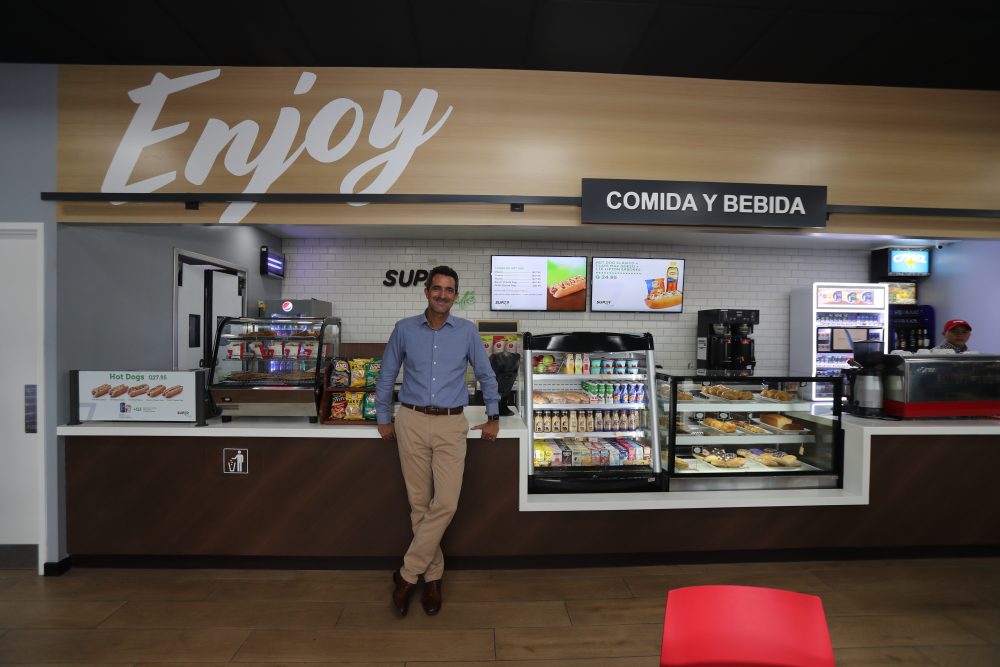
Puma Energy is firing on all cylinders with a new retail strategy and ramped up expansion plans. There are also numerous new initiatives either in the test phase or rolling out across its store portfolio including a new online platform for the Super7 format, new PoS, enhanced logistics, a loyalty programme plus a shared human resources service.
No wonder that Rodrigo Zavala, Puma Energy’s CEO for the Americas, is upbeat.
“I am very busy but very happy at the same time – it’s challenging,” he smiles.
First out of the blocks is a new Super7 store format, debuted in Guatemala. Puma Energy turned to the convenience retail design expert Bona Design Lab to develop the updated look and feel but also to create three variants based on store size and consumer needs.
“Basically what we did was take their current global design standard and make it a bit more friendly, approachable and more importantly, adaptable across a global footprint that has grown through acquisition resulting with quite a diverse portfolio of building footprints,” says Bona Design Lab president, Joe Bona.
Meal break is the largest format store and strongly foodservice oriented. Extended coffee is the medium size footprint and is focused on grocery and beverages. Ready to go is the smallest format and is geared towards snacks and beverages.
Store design and offer
Guatemala features the extended coffee format. It offers barista coffee, a small seating area – lounges with sofas will be key trait in other branches – and food embellishment in-store. According to Zavala, the space for seating and consumption is more defined; while the food offer is concentrated in one location, as consumers enter the store, and easier to understand.
Outside, the design is softened with wooden accents and shoppers have a clear view of what’s on offer inside.
“One of our main objectives was to better integrate the interior design with the exterior execution,” says Bona. “With that said, we introduced some wood paneling that brought a touch of the warmer interior to the outside and we elevated the branding so that it was much more visible and appropriately proportioned for a retail facility. On the inside we used graphics to help establish a branded personality – not so much for way-finding but more for creating a sense of place and adding character. We worked on updating the presentation of the food and service counter so that it had a “fresher” and more authentic presentation.”
The three new formats also take into account Puma Energy’s new value proposition, states Zavala. Being local and helping to energise communities is one of the retailer’s core pillars. “We want to transmit that we are part of ‘your’ community and that we are convenient and make life easier for our customers,” he says. Operationally, Puma Energy aims for a more friendly way of working and online employee training programmes are geared to welcoming customers and making them feel at home at its locations. “Super7 is the link between the neighbourhood and the store for different customers,” Zavala says.
Foodservice focus
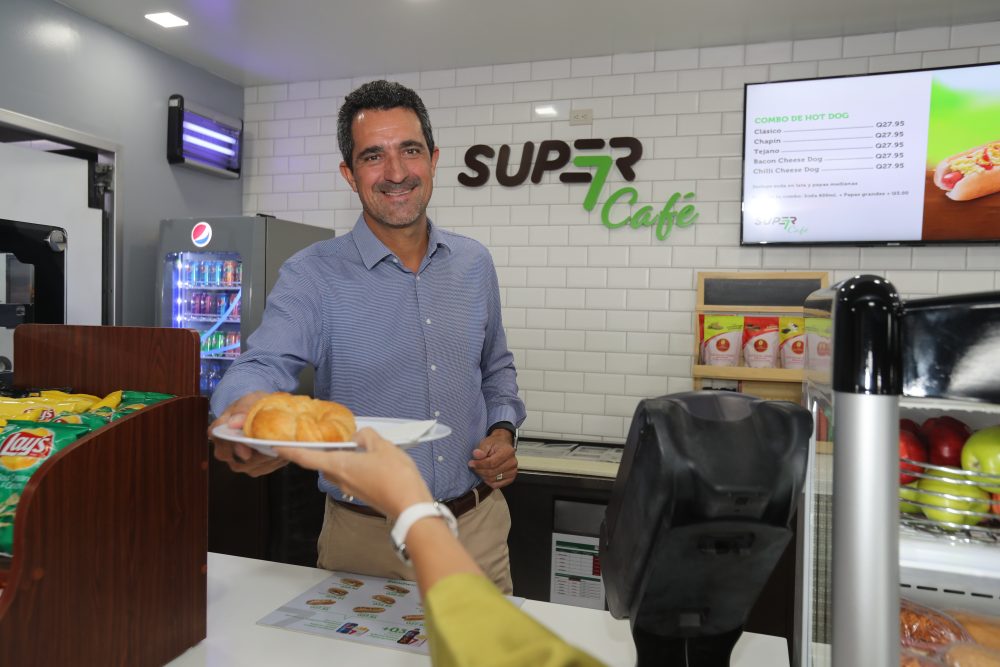
Foodservice is a key focus for Puma Energy’s new strategy and has been enhanced in the American region with the appointment of a foodservice category manager.
There’s a new Super7 online platform too featuring all the training tools and manuals for foodservice, which Puma Energy’s dealership base will require to deploy across different stores. It includes recipes and how to guides etc.
Healthier options such as salads and wraps are now being developed too since the dedicated category manager provides the scope to experiment in this space, while the online manuals aid with the in-store execution.
Beer caves are being tested too. According to Zavala, there is a “big desire” for refrigerated beverages. Initial results are encouraging, especially the customer reaction to the expanse of the caves. However, time will tell whether the additional space devoted to beer will drive incremental sales.
A local products corner, called “El Mercadito”, is also being introduced in some service stations, once again underscoring Puma Energy’s relationship with the community and local producers.
New retail strategy
Puma Energy is moving at pace, driven by new CEO Emma Fitzgerald, appointed in January 2019. “Fitzgerald has put in place a global strategy for Puma – for retail and the whole business. It proposes to increase our retail capabilities in both fuels and convenience. We have accelerated what we started last year. The structure and team is now in place and being a better convenience retailer is a key pillar and growth opportunity,” Zavala says.
As a result, the targets are much sharper. When Insight interviewed Zavala just over 12 months ago, Puma Energy was aiming to retrofit all its stores in Guatemala and Honduras in five years. Now all stores will be refitted in three years and Puma Energy plans to triple the amount of franchise convenience stores in the next five years, in all the countries they operate in LATAM.
The target for Latin America, for example, is to move from 150 to 500 stores. A chain of 300-350 stores is envisaged for Central America, up from 124 a year ago. According to Zavala, the numbers are realistic thanks to the new, multi-format approach.
There seems to be a whiff of confidence in the air at Puma Energy. “We have a very different way of working,” Zavala admits. “We are participating more proactively in different events and we sent a global group to the NACS Show this year for a mix of internal meetings, visiting the trade show and listening to the keynote speakers. It is reinforcing the message that for Puma, retail and convenience is a big strategic pillar for us,” he says.
Alongside new category managers, other new hires at the business include a global convenience manager and a regional convenience manager late last year.
With those key roles in place, Puma Energy can leverage the Super7 online platform across the dealer-based business, not just for foodservice but for planograms, promotions and training too.
New tech and HR resources
There’s not let up either. On top of the above Puma Energy is testing new PoS. “Before we did not have a standard in the network, now we are piloting two,” Zavala syas. “It will be the backbone of all the technology, which we want to be a pillar of our future interaction with customers,” he says.
Puma is also in the process of selecting a loyalty partner and is planning to do a full market pilot in January 2020, Zavala reports.
Panama is Puma Energy’s test lab for new ideas, he says. The country boasts 18 Super7 stores but Puma plans to grow that number to 50, retro fit sites and introduce the new PoS into stores.
The country was also used as a test bed for a new outsourced human resources shared service, piloted in the first quarter of this year. The service manages all employees across all service stations ie staff hiring and training so that when they are ready to go into store they are better prepared to serve customers. It’s now being rolled out across Puma Energy. “It’s a new way of working,” Zavala says. “Outsourcing allows us to have more flexibility and consistency.”
Puma Energy is also planning to introduce a logistics operator in each country to consolidate purchases and deliveries to different stores. “We’ve now started that work in Panama – it’s an experimental country where you will see all of our offers in place by the end of Q1: the new loyalty programme, new fleet card, PoS, shared HR and logistics operator all supported by the convenience store group,” Zavala says.
In addition to opening new stores, Puma Energy is keen to develop community villages, Zavala reports. These locations will offer facilities alongside fuel and convenience retail such as pharmacies and banks and additional food and car related service.
“They will be a one-stop oasis for customers in the regions in which we operate,” says Zavala, adding that Puma Energy is planning two community villages for next year.
Future plans
Increasingly popular technologies such as pre-order are on the retailer’s radar but require the unified PoS platform in place to make it really viable. “It’s on the ‘to do’ list, buy and pick up, but realistically we cannot do until we have the back office system in place,” Zavala says.
Data – Big Data – is another key trend Puma Energy is grappling with too. “It’s a challenge that we are experimenting with now: how we can link the data that we gather from cameras and telephone recognition etc to our loyalty programme in order to know the reaction of the end consumer and what our service people are doing to change their behaviour,” Zavala says. “We are measuring a lot of things but changing behaviour is where the opportunity lies but it’s not yet obvious how to do it.”
Given Puma Energy’s recent track record in testing and rolling out new ideas and innovations, the company looks set to find a way.
And Zavala remains quietly confident. “Compared to last year we now have data scientists, so there is a chance to crack this challenge,” he says.
