

Deliverect helps convenience and foodservice brands move at the speed of the consumer
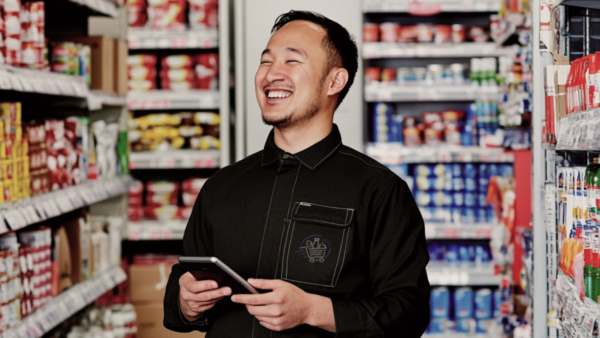
For convenience retailers and foodservice operators, the question is no longer whether consumers will order digitally, it is how quickly businesses can respond to changing expectations – and how efficiently they can turn those expectations into profitable growth.
For a generation of digitally native consumers, ordering food, groceries and everyday essentials through a smartphone is already second nature. Convenience increasingly means more than proximity: it means being able to find what you want, when you want it, and have it available through the channel you prefer.
That is creating a significant opportunity for retailers and foodservice brands. But it also presents a practical challenge.
How do you activate new digital channels quickly without creating a technology, integration and operational headache across thousands of locations?
This is where Deliverect comes in.
From delivery integration to the commerce layer
Deliverect was founded eight years ago by four EPoS entrepreneurs with complementary backgrounds across hospitality, engineering, commercial operations, security and infrastructure. The company initially built its proposition around integrating foodservice brands such as Burger King, Popeyes, KFC, Taco Bell, Starbucks, Caffè Nero and Pret A Manger with major delivery marketplaces including Uber, Just Eat, Deliveroo, Delivery Hero and DoorDash.

Joe Heather
The challenge was straightforward: instead of staff managing multiple platforms and devices, Deliverect could consolidate those channels into a single operational flow.
An order comes in, reaches the POS, and can be reconciled within the existing operating system.
What emerged from that work was something considerably broader: an infrastructure layer for digital commerce.
But the proposition extends beyond delivery. Digital ordering through kiosks, QR codes, screens, tablets and other customer touch-points can all connect into the same underlying operating system.
For a convenience retailer or foodservice brand, that means digital channels can be activated without having to build a new integration every time a new consumer touchpoint emerges.
As Joe Heather, Deliverect’s regional general manager for Northern Europe, who has also been leading the company’s retail strategy globally, and former Just Eat executive, puts it: the ambition is to make activating a new digital channel “turnkey” – so that a retailer can introduce a kiosk, for example, and the order is already connected to the existing operating system, while the same menu can be used across different marketplaces.
The consumer is setting the pace
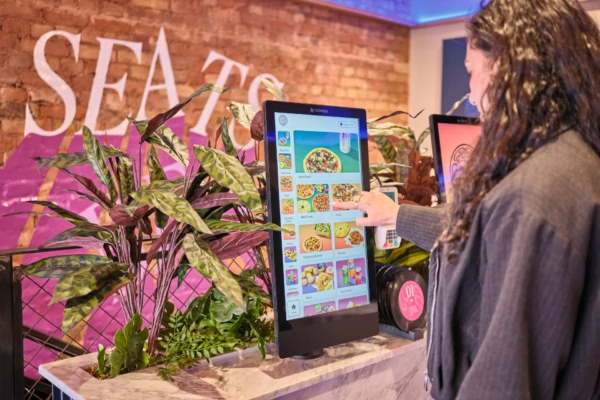
The commercial case is being driven by changing consumer behaviour.
Younger consumers, particularly Gen Z and Gen Alpha, have grown up with smartphones and digital ordering. Their expectations around convenience are correspondingly high.
For these consumers, convenience increasingly means immediacy. The expectation is not necessarily delivery tomorrow, later today or even in an hour. In many use cases, the expectation is measured in minutes.
That plays directly into the proposition of convenience retail.
A consumer who needs a drink, snack, meal, household item or other everyday essential does not necessarily distinguish between a physical store, a retailer’s website and a delivery marketplace. They simply want the easiest way to get what they need.
The delivery ecosystem has made that possible at scale. Major marketplaces already have premium logistics networks capable of delivering products in fewer than 30 minutes in many markets.
For convenience retailers, the digital marketplace is not simply another sales channel, it is another shop window; as well as a powerful brand marketing tool.
And, if the retailer or brand is absent from that shop window, there is a risk that consumers simply choose an alternative.
The challenge isn’t demand. It’s complexity.

For many retailers, the obstacle to digital expansion isn’t a lack of consumer demand. It is the complexity of making digital channels work operationally.
Consider a store receiving orders from Uber, Deliveroo and Just Eat.
Without consolidation, staff may have to manage multiple devices, multiple interfaces and multiple workflows. Every new platform potentially means additional training and operational complexity.
The same applies in foodservice. A kitchen does not become more efficient because orders arrive through more channels if every channel requires a separate device and process.
Deliverect’s approach is to consolidate those orders into a single operational workflow.
Instead of staff learning three platforms, the aim is to give them one system, one process and one way of working.
That has a direct operational benefit: digital ordering can become part of the existing store or restaurant operation rather than a parallel process bolted onto it.
And, for a CEO considering a rollout across hundreds or thousands of sites, that ability to activate digital channels at scale matters and will drive revenue growth.
Keeping the digital shelf in sync
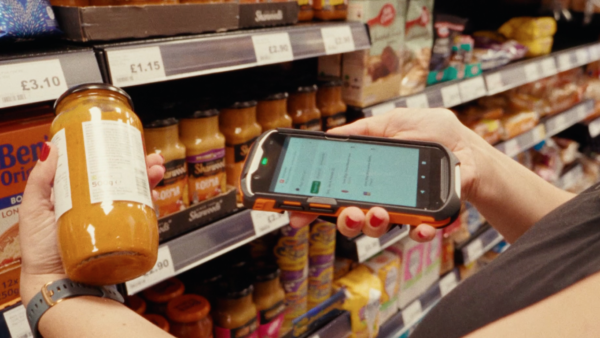
Availability is another issue that becomes increasingly important as digital ordering scales.
A digital channel is only as good as the information it presents to the customer.
If a store has run out of Diet Coke, for example, the digital menu should ideally reflect that rather than allowing a customer to place an order for an unavailable product.
Deliverect connects digital ordering channels with existing inventory systems so that the products presented to customers can reflect live availability, Heather explains.
That matters for more than operational efficiency – it is a customer experience issue too.
“A customer who repeatedly orders products that turn out not to be available is unlikely to regard the digital channel as convenient. Accurate availability therefore becomes part of the brand experience,” he says.
It also opens up more sophisticated approaches to substitution and fulfilment, allowing retailers and foodservice operators to manage what happens when an individual item is unavailable.
Asda Express: putting scale behind convenience
The potential is particularly clear in convenience retail.
Deliverect has recently expanded from its earlier work with One Stop into wider retail environments, including Asda Express; as well as working with businesses including Q8, Maxol, SPAR, Hy-Vee, EG Group, MFG, Welcome Break and Moto in global markets.
Deliverect is now live across hundreds of Asda Express stores. The company’s on-demand brief also includes Burger King sites that sit alongside Express locations plus Asda Wholesale.
According to Heather, the partnership has driven a huge increase in availability, unifying three devices and enabling thousands of store staff to work through one system rather than having to manage multiple marketplace devices.
And the economics of convenience can make this particularly interesting outside traditional daytime trading hours.
Many Asda Express locations operate 24/7, and demand can remain significant into the evening, especially after 10pm; when retail supply is shuttered elsewhere. Stores that remain digitally accessible can capture more of the available demand so, for a retailer, the opportunity is not simply incremental sales, it is about making existing physical infrastructure productive across more hours and more channels.
Foodservice has already shown what is possible
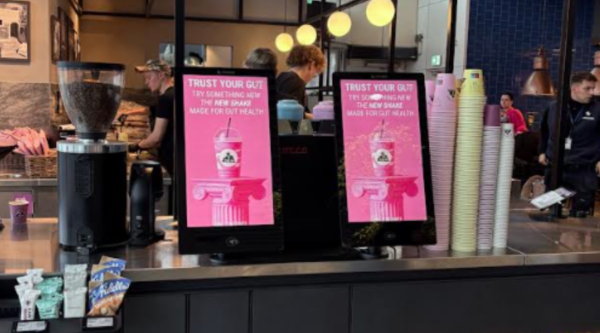
Coffee chains such as Starbucks, Caffè Nero, Pret A Manger and Joe & The Juice provide further use cases for the Deliverect model, which increasingly extends beyond delivery.
Joe & The Juice, for example, uses Deliverect’s API across its global estate, connecting delivery platforms and in-store kiosks into its POS environment. That is an important evolution.
The same infrastructure can support an order placed through a delivery marketplace and an order placed through a kiosk inside the physical location.
For the operator, the distinction between “online” and “in-store” becomes less important. Both are simply digital orders entering the same operational ecosystem.
Other foodservice examples demonstrate the same principle. Deliverect connects online menus and orders into POS systems, while also supporting loyalty and digital ordering use cases, such as Caffè Nero’s app.
The lesson for convenience retail is clear: digital does not have to mean delivery-only. The infrastructure can support the convergence of physical and digital commerce.
The next phase: infrastructure for what comes next
The opportunity for convenience and foodservice is therefore much bigger than simply adding another delivery partner.
Deliverect already operates from 12 global offices and commands 100,000 committed locations across 70 countries with over 1.6 billion orders powered for the world’s biggest brands – 0.6 billion in the last 12 months alone, illustrating the brand’s capacity to scale.
The company’s experience in foodservice provides a blueprint for what can happen when digital ordering becomes part of the core operating infrastructure rather than a standalone initiative.
For convenience retail, the opportunity is now to apply that experience to a market where speed, proximity and availability are already fundamental to the proposition.
From voice ordering to agentic commerce
But the next phase of digital commerce will extend well beyond today’s delivery marketplaces. Voice ordering, for example, is likely to become increasingly prevalent across markets, particularly for intent-led purchases where consumers know what they want and want the most frictionless route to getting it. Deliverect is already integrated in this space with partnerships with leading companies including SoundHound. Looking further ahead, the business is tipping agentic commerce, where AI assistants place orders on behalf of customers, as the next big trend and is already working on solutions. For operators, success will not be determined by the AI agent but the technology infrastructure that keeps menus, availability and pricing accurate across every location; gets the order made and delivered at peak volume. It’s that infrastructure layer which Deliverect provides and places its customers in pole position as the agentic commerce trend accelerates.
Fulfilment and dispatch
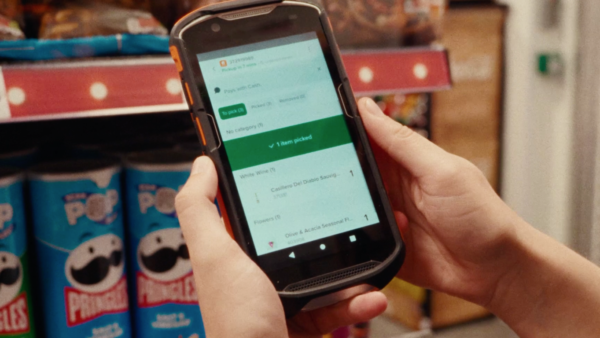
As new first-party ordering channels emerge alongside marketplaces, the complexity increasingly shifts downstream. It is not enough simply to capture the order; businesses also need to orchestrate how that order is fulfilled and dispatched.
That could mean coordinating third-party logistics providers alongside a retailer’s own fulfilment operation, while also preparing for emerging fulfilment methods including autonomous vehicles, drones and robotics. Through Dispatch by Deliverect, brands can already coordinate how every order is fulfilled, from couriers to new autonomous delivery options.
The consumer, meanwhile, is unlikely to care which technology sits behind the transaction. They will simply expect to be able to order through the channel that is most convenient to them and receive their purchase quickly and reliably.
This points towards a broader digital commerce ecosystem in which marketplaces, first-party ordering, kiosks, loyalty, dispatch and emerging digital channels all need to work together.
That is also where Deliverect’s evolution becomes particularly significant. The business is moving beyond its origins as a delivery integration platform to provide commerce infrastructure across both retail and foodservice – connecting the channels through which consumers discover and order with the systems businesses rely on to operate, fulfil and deliver those orders.
The trajectory is towards a world where the consumer does not care whether an order is technically classified as grocery, foodservice, click-and-collect or delivery.
They simply expect the brand to be available wherever they choose to shop.
For CEOs, that changes the strategic question.
It is no longer:
“Should we offer delivery?”
It is:
“How quickly can we activate the next digital channel – and how easily can we make it part of our existing operation?”
That is the proposition behind Deliverect: providing the infrastructure that enables brands to move at the speed of changing consumer behaviour, connecting marketplaces and first-party channels with the operational systems, fulfilment and dispatch capabilities businesses already depend on.
Being ready for what comes next
As new channels emerge – from voice and new forms of first-party ordering to increasingly automated fulfilment – the competitive advantage may belong less to the businesses that predict exactly which channel will win and more to those with the infrastructure to activate whatever comes next.
For convenience and foodservice brands, that makes digital commerce infrastructure a strategic capability in its own right: the layer that allows them to respond to new consumer behaviours, new ordering channels and new fulfilment models without having to rebuild their technology stack every time the market moves.
And, in a market where consumer expectations are changing faster than traditional technology programmes can often move, that ability to activate what comes next may become one of the most important competitive capabilities of all.
Insight joined Deliverect’s Digital Ordering Club in Barcelona, 21-23 September 2026 and enjoyed a deep dive into the evolution of digital ordering in foodservice and convenience. Delegates heard from senior leaders at top QSRs including Starbucks, McDonald’s, Papa John’s, Caffè Nero and Burger King. Deliverect showcased its existing product and latest innovation and provided a host of networking and feedback sessions. The event’s fifth iteration hosted 120 delegates and 30 Deliverect staff and was the business’s most successful event yet.
