

Reitan Convenience Finland launches Ärrä and Nivo, its boldest reinvention in 116 years
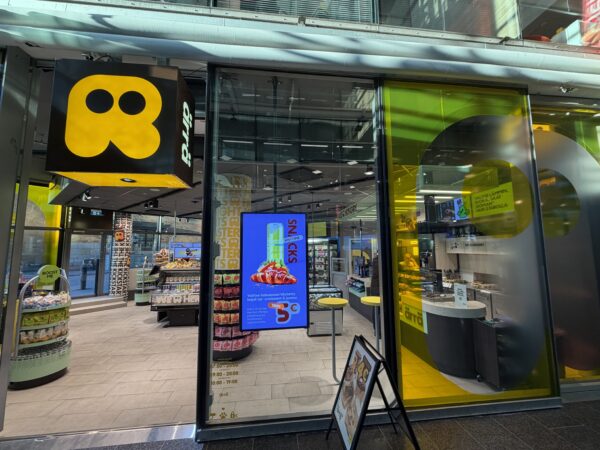
Reitan Convenience Finland is reinventing its 116-year-old R-kioski network, launching two new formats: the food-led convenience chain Ärrä and the functional-coffee café concept Nivo. Niklas Lilius, CEO of Reitan Convenience Finland, gave Global Convenience a tour of both formats in Helsinki and explained the thinking behind the transformation, which has been influenced by international trend research from Insight Research’s Trends Team.
From railway bookstore to Ärrä
R-kioski has operated in Finland for 116 years, tracing its roots back to a railway bookstore, Rautatiekirjakauppa, at Helsinki Central Station. The name became so familiar that Finns simply call it “R”.
“We have existed in the Finnish market for 116 years with a traditional kiosk concept, and now we are launching something completely new,” says Niklas Lilius, CEO of Reitan Convenience Finland. “We’re taking the essence of what’s existed previously and bringing it into the 21st century.”
That meant rethinking the brand itself. “We are no longer going to be a traditional kiosk, so having the word ‘kiosk’ in the name didn’t make sense,” Lilius explains. “We were looking at what we could create that would still honour our legacy, but bring it into the modern world.” The result is Ärrä, named for how Finns have long pronounced the letter “R”.
Ärrä: a food-led format built for the go
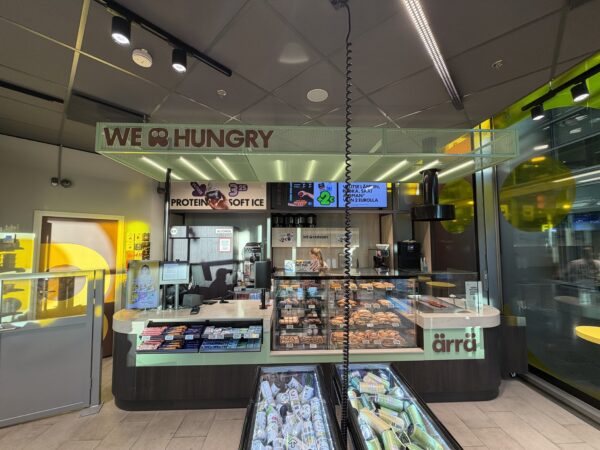
On a tour of the new format, Lilius set out how Ärrä differs from the traditional kiosk. “Ärrä really focuses on on-the-go,” he says. “Our R-kioskis will remain, and are more destinations, especially in smaller villages and the countryside. Ärrä has a much bigger focus on food throughout the day: we have a big breakfast offering, lunch, afternoon and evening offerings, and a focus on trend drinks, much more natural energy drinks and other functional beverages.”
The rollout has moved quickly. “This year we launched our first pilot in June, and we’ve been running a test for a few months,” Lilius says. “Today we’re opening Ärrä number four. By the end of the year we’ve promised our owners we will have 31 Ärrä stores. Next year we’re looking to launch between 40 and 60 more.”
The long-term ambition is a chain of 100 to 140 Ärrä stores, roughly matching the scale of the existing R-kioski network, sitting alongside 30 to 60 Nivo cafés by 2030.
Nivo: Finland’s first functional coffee concept
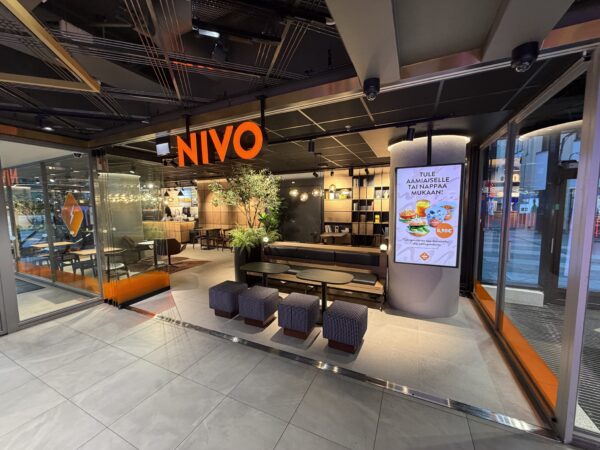
The second new format, Nivo, targets a gap Lilius saw hiding in plain sight. “Finland is the country where we drink the second most coffee in the world per capita, we are very big coffee drinkers,” he says. “But we noticed that in the market space, there are no cafes that really focus on functional coffees, such as coffees that have electrolytes or protein or collagen. So we saw an opening in the market.”
The concept draws on Reitan’s own network. “We looked around within the Reitan family and found a fantastic concept called Caffeine, which originates in Lithuania,” Lilius says. “We have worked very closely with our colleagues in Lithuania and built Nivo using Caffeine as a base, but then adapted it to local tastes. The idea is now to have a brand new cafe chain and concept that we look to expand throughout the Nordics, with functional drinks and coffees as its USP.”
During the store visit, Lilius pointed to a food offer built around the same principles. “We have managed to make a food offer that is completely palm oil-free, which focuses on everything from something sweet with your coffees to more substantial salads and sandwiches,” he says. “We have taken a sustainability angle, so we have been very mindful of the usage of red meat and instead want to focus on more white meat, so that this is a place where you can go to not just enjoy yourself, but also feel good while you’re enjoying yourself.”
Why the traditional kiosk still matters
Neither new format replaces the original R-kioski, which Lilius describes as central to both the business and the country. “Our kiosk is absolutely very important to us. It’s also very important to the Finnish community. It is known by 99% of the Finnish population,” he says. “It is an institution in the country. It’s also something that gives us a lot of scale, so having a very wide store network allows us to be interesting partners for a lot of our suppliers.”
The three formats are deliberately segmented by location. “In our major cities and high-traffic locations, we will have Ärrä food-led convenience stores, which will be very much focused on the go,” Lilius says. “Meanwhile our kioski will remain in countryside and smaller cities and villages, and their services play a much bigger role. We can be the main postal point or package delivery point for 50 kilometres.”
That role runs deep. “We know that we have people who spend up to three hours at our kiosks, because it is the focal point in the local village,” he says. “That is why we see that having these two concepts side by side actually allows us to really tailor our offering and be more sensitive to what the consumers need, by location.”
Reading Finnish consumers, and looking beyond Finland

Lilius is careful to distinguish Finland from its Nordic neighbours. “I’d say the Nordic markets are similar but different,” he says. “A perfect example is coffee. R-kioski is the biggest breakfast chain in Finland, we also sell the most coffee, but in Finland people drink filter coffee. It is very different from Sweden and Denmark, where it is a lot of espresso-based coffees. But what you tend to see is when something trends in Sweden, it tends to trend in Finland as well.”
Younger consumers, he says, are closing that gap faster than the market as a whole. “A lot of the trends reach London, or are created in London, much earlier, then they eventually reach the Nordics and Finland in particular. But what we can see is the same trends that are appearing in social media, for example matcha drinks, trend here in Finland as well, and that is very much thanks to the social media influence on all the different products and experiences.”
Turning that insight into action has meant looking outward. “The general Finnish market has been quite traditional and not so quick to respond to trends, and that’s one of the main reasons why we’ve also looked at creating the Ärrä concept, and very clearly worked towards understanding what’s happening in different markets,” Lilius says. “We sent our category team over to London to learn more. They have visited lots of other countries, because what we’re trying to do is be the chain that actually brings these trends to the Finnish market, to differentiate ourselves against our current main competitors, the smaller-format food stores of big retail chains.”
That London trip included a guided tour of innovative convenience and food-to-go stores hosted by Insight Research’s Trends Team, alongside a briefing on the firm’s latest social media research into emerging format and food and beverage trends. Lilius points to that kind of outside-in research as part of what shaped the thinking behind both Ärrä and Nivo.
Social media as product development
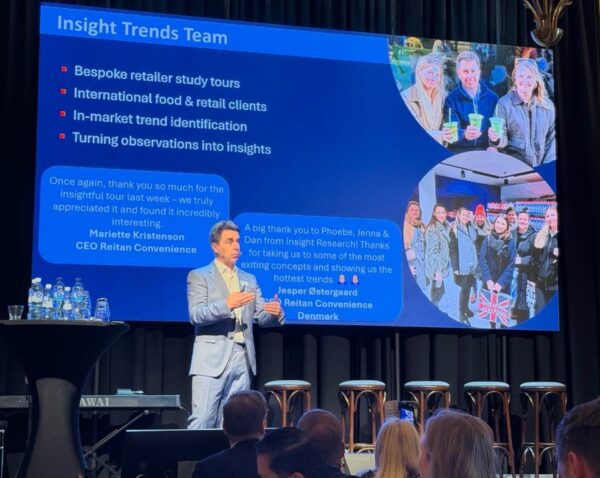
That appetite for outside trend intelligence was also on display at Reitan Convenience Finland’s annual supplier conference in Helsinki, where Dan Munford, CEO of Insight Research, presented the Trends Team’s latest social media research alongside Lilius, Mariette Kristenson, Jonas Krüsi and the wider Reitan team.
Munford’s presentation centred on one recurring idea: social media is no longer just a marketing channel, it has become a driver of product development in its own right. Matcha, he showed, moved from a TikTok drink trend to an M&S own-label flavour in under a year, with forecourt and Motorway Service Station retailer Applegreen building a self-serve “Octoquad” concept around it, turning what was once a destination purchase into a convenience one.
Other examples followed the same pattern. Dessert brand Yo-Chi built UK demand before it had opened a single UK store, off the back of two content creators and a single bow-cutting video, with queues round the block on opening day. Caesar wraps, having gone viral in the US, saw CZER draw queues out the door in London within months, online attention converting directly into physical footfall, in real time.
M&S, Munford said, has turned this into a repeatable system, spotting pistachio, overnight oats, Dubai chocolate and matcha on social media and getting each onto shelves fast: content, then demand, then product, then more content. The next shift, he suggested, is already under way. Irish brand Whole Supp, a new Insight Research client, has built a 73% monthly repeat-purchase rate direct to consumer and optimised its visibility for being recommended by AI assistants such as ChatGPT and Claude, before it had ever asked a retailer for shelf space. “Today it’s TikTok and Instagram shaping what sells. Tomorrow’s discovery engine is already live,” Munford told the conference.
His conclusion chimed with Reitan’s own approach: the retailers and brands winning in this environment are no longer simply reacting to trends, they are participating in them, and in some cases helping decide which ones go mainstream.
First-mover advantage
Lilius is confident the strategy is already paying off. “Optimistic about the future? Very, very,” he says. “We’ve seen a very positive response in both the traditional media and customer feedback. Our big focus was to try and increase sales in food, and that was a big shift that we wanted and needed to make, and we can firmly say we’ve succeeded with that.”
He sees the opportunity as bigger than Reitan Convenience Finland’s own numbers. “We are managing to get a foothold in a place in the market that no one has a foothold in at the moment, which allows us that first-mover advantage,” Lilius says, “but also to kind of shape the market in the way we think it should be shaped.”
With Ärrä scaling towards 100 to 140 stores and Nivo targeting the wider Nordic market by 2030, Reitan Convenience Finland’s 116-year-old network looks set to carry that ambition well beyond Finland’s borders.
