

Inside Deliverect’s Digital Ordering Club: what Barcelona told us about the next stage of Foodvenience
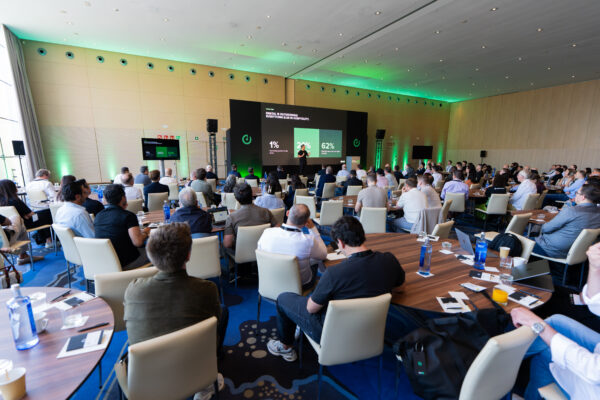
Deliverect’s Digital Ordering Club convened in Barcelona from 21 to 23 September, and the format lived up to its billing. This is much more than a conference, it is a powerful user event and networking opportunity with cutting edge product reveals and closed-door discussion among senior operators. Insight Research & Global Convenience CEO Dan Munford was in the room to track how the conversation lines up with our own view of the merging of convenience and foodservice.
Setting the scale
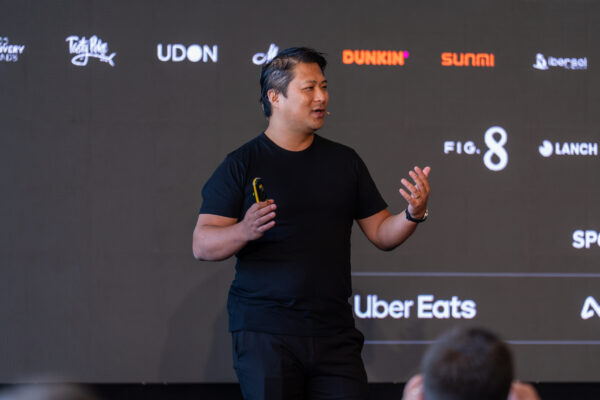
The headline numbers, delivered by Deliverect co-founder and CEO Zhong Xu, set the scale of what’s happening in digital ordering. Deliverect now has 110,000 committed locations, signed and rolling out, as of September 2026, and has processed 1.6 billion orders in total: it took the company seven years to reach its first billion, with a further 600 million added in just the last twelve months, while the broader hospitality market grew only 1% year on year against 3.5% inflation. Digital ordering, by contrast, is growing at more than 20% annually, and 62% of all QSR orders are now digital, with some brands already over 90%. The gap between a flat industry and an accelerating channel is, in Xu’s framing, the whole opportunity: AI has already reshaped software development inside Deliverect, with 30–50% of code now AI-generated and developer productivity up 300–400% in a year, and restaurant operations are following the same curve a stage behind; 60% of partners already use AI somewhere in their operations, but only 6% of orders today are AI-placed.
Three pillars for the year ahead
Deliverect founder and chief product officer Jelte Vrijhoef framed the year’s roadmap around three pillars: winning the order across an expanding set of channels (marketplaces, first-party apps, and now conversational ordering through assistants and LLMs, a genuine concern given Xu’s claim that 83% of restaurants are invisible to those platforms today); owning the customer, on the logic that a returning customer is worth roughly 13 times a one-off; and running at scale without letting overheads outpace growth, a discipline Vrijhoef framed as the one that separates operators who scale profitably from those who simply scale.
AI agents in action
Deliverect AI product manager Maëlie Canlorbe walked the room through where that ambition is landing in product. An “Opportunity Agent” now scans commercial events market by market and auto-themes menus for them, cutting what used to be 15 minutes of manual work per location per week down to one click; one UK customer using the underlying menu tools saw upsell value rise by £1,000 per location per week and basket size increase 8%. On the operational side, agents that once needed 90 minutes to catch and fix an out-of-stock item or a mismatched PLU now resolve the same errors in under five, built on what Deliverect calls an inform-act-undo framework that keeps a human in the loop on every automated decision. The results Deliverect pointed to were concrete: a KFC Netherlands AI pilot generated over 1,000 promotional codes within hours of launch and delivered a 118% uplift in sales on the campaign day, and a fraud-detection module (Wasted) saved one partner €40,000 in thirty days.
The first-party counterpoint: Deliverect Direct
That AI pilot sits alongside a separate, equally striking KFC Netherlands result: its rollout of Deliverect Direct, the company’s first-party ordering solution, delivered a 17% revenue increase and a 14% higher average order value, with order failures down to just 0.05%. For Deliverect, the Direct story is really about control: giving a brand ownership of the orders placed through its own channels is what lets it optimise loyalty and promotions on its own terms, rather than ceding that relationship to a marketplace, a point that speaks directly to the first-party and loyalty debate the Barcelona panel returned to repeatedly.

Profitability under the microscope
The second session we’re reporting on, a panel titled “Driving Profitability in Digital Channels,” brought a sharper operator’s edge to the same themes. On stage were Søren Grundtvig Skaarup, VP global operations at Joe & the Juice; Juan Uribe, founder and CEO of Healthy Poke; David Campbell, chairman of Ole & Steen and Lagkagehuset (and formerly CEO of Wagamama and Pizza Express, and chairman of steakhouse group Gaucho); and Alex Lee, who leads European strategy for payments infrastructure provider Airwallex.
The panel’s starting position was blunt: delivery can and should be profitable, despite persistent industry scepticism to the contrary, but the P&L looks nothing like a traditional restaurant’s, with lower rent as a share of cost and marketing as a much bigger line item. Uribe, whose Healthy Poke was built delivery-first from day one, tracks profitability both channel-by-channel and in aggregate, since delivery promotions can lift dine-in customer value over time in ways a single-channel view would miss. Skaarup made the same point from the opposite direction: Joe & the Juice deliberately withholds delivery in a new market until operations and staff are ready, treating channel discipline as a brand-protection issue as much as an operational one, a caution worth noting for any convenience operator tempted to switch on every marketplace at once.
Promotions versus loyalty
The panel’s most pointed exchange was on promotions versus loyalty. Campbell recalled inheriting a Pizza Express where 54% of transactions were discounted: “more people bought pizzas on discount than at full price”, and named it as the textbook way to train customers into bad habits and erode margin permanently. The fix, in the panel’s shared view, is targeted promotions aimed at price-sensitive or second-tier products rather than blanket discounting, paired with loyalty mechanics that actually reward repeat behaviour: Joe & the Juice’s stamp-card-style app matches purchases daily but is tuned market by market to avoid triggering the same discount spiral, while Campbell’s own loyalty programme at Pizza Express grew to roughly 4.5 million members after what he admitted was years of internal resistance to launching it at all.
The infrastructure view
Airwallex’s Alex Lee brought the infrastructure view: operators typically underestimate what they’re actually paying in payment processing by 30 to 80 basis points once interchange, scheme and acquirer fees are properly broken down, and missing a customer’s preferred local payment method can cost as much as 15% of transactions to cart abandonment outright. Buy now, pay later, he noted, is now expected even on a $10 order, a detail that drew a laugh but was offered as a genuine signal of where consumer expectations are heading.
Where AI meets its limits
On AI, the panel converged on a single caveat that’s worth carrying back into any convenience or forecourt foodservice rollout: automation should own the efficiency gains, but the last touch on a customer complaint should stay human. As Campbell put it, watching AI absorb functions that once needed whole teams is genuinely impressive, but getting comfortable that a system “won’t hallucinate and run amok” on a real complaint is a different bar entirely, and one none of the panel were yet willing to hand over.
What this means for convenience
For convenience and mobility retailers, the read-across is direct. Foodservice is the fastest-growing part of the channel, and Barcelona’s discipline translates directly: treat every channel as independently accountable, protect the brand experience as digital scales, get promotions and loyalty structurally right the first time because reversing them is brutal, and keep a human at the point of failure even as AI takes the routine work. That is exactly the discipline Foodvenience will demand as convenience operators build out their own digital ordering stacks. In our view this event just became a must attend for our industry and we are delighted to be partnering with Deliverect.
