From fuel stop to food destination: what the world’s best foodvenience stores are teaching the industry
As Best Foodvenience Store in the World reaches its third year, 24 entries from ten countries show how quickly the convenience store is turning into a food destination, and how much operators can learn from one another along the way.
Now in its third year, the competition is organised by Insight Research and co-hosted by NACS, with The Moseley Group as knowledge partner and Deliverect as sponsor. Its format is simple. Every entrant answers the same questions, covering its foodvenience journey, menu, dayparts, coffee, loyalty, delivery, operations, social media and performance, and the answers are published as public entry profiles.
That openness is what makes the competition so useful to the wider industry. Rivals on different continents set out their strategies side by side, often with real trading figures, and the rest of the sector can see what is working. Rutter’s, the Pennsylvania family business named Best Foodvenience in the World in 2025, has returned this year with its #111 store in Ruffs Dale while Applegreen, our 2023 winner returns with its newest Motorway Service site in Ireland at Dunshaughlin. Leading operators enter every year and use it to drive the competitive spirit in their teams and to benchmark against the best.
This spirit of learning from others runs through the entries. FreshStop, South Africa’s largest forecourt convenience brand, notes that it has attended the NACS Show every year since 2011 to benchmark its service against international best practice. Several entrants present their stores as pilots or blueprints for wider rollouts. Aral’s Northeim site is the test bed for a new Autohof concept, Galp’s A5 flagship is the blueprint for 250 Galp Goody stores across Iberia, and The Barbican Centra was the pilot store for Musgrave’s Winning Store Programme. The competition gives the whole industry a window into those experiments.
Five lessons for success from this year’s field
| 1. Segment the format to the mission, not a single template. Highway sites (Ampol, Applegreen, Circle K, ESSO Onestop) are built for dwell time; freight routes (Aral, Sasol) are designed around long rest periods rather than a quick stop; neighbourhood stores (EUROSPAR Glenwell, The Barbican Centra, Kwikspar Hillcrest) are built as meal-solution destinations for their community. A handful, including Spinx Market & Eatery and Wrights Centra and Foodhall, have no need for fuel at all.
2. Make food and coffee the reason to visit, not an add-on to fuel. At Ampol Eastern Creek, food is 71% of combined sales; at Applegreen Dunshaughlin, food and coffee delivered 51% of gross profit; Dash In Concord set a foodservice record on its opening day at 69% of total sales; APCO has grown foodservice from 8.9% of shop sales in 2007 to 40.2% in 2026. 3. Engineer the operation so quality is repeatable, not occasional. Chestnut on the Hutch replaced its tobacco backbar with an open kitchen; Wrights’ adoption of Musgrave’s Winning Store Operating Model cut labour by 7% and stockholding by 11%; Dash In holds food waste to around 7% while running a 57% foodservice margin; AI-driven forecasting and ordering now feature at EUROSPAR Glenwell, Oasis by ADNOC and YPF’s Black Nordelta. 4. Keep loyalty simple, and connect it across the whole visit. ADNOC Rewards has 2.6 million members and touches more than half of Oasis food transactions, with redeemers worth three times the lifetime value of non-redeemers. Applegreen Rewards enrols every member in its Coffee Club automatically, with no tiers to learn. When The Barbican Centra cut its free-coffee threshold to six stamps, app scans rose 22% and redemptions rose 38%. 5. Give customers a reason to stay, and move quickly when culture moves. Play areas and seating at The Hub by ADNOC have measurably increased dwell time and cross-shopping; Sasol’s on-site wellness clinic has delivered hundreds of health screenings for drivers; EV charging utilisation has jumped 220% at Ampol Eastern Creek. Galp’s willingness to back a genuine online trend rather than a scheduled campaign returned almost seven times its usual engagement rate. |
A shift in what the forecourt is for
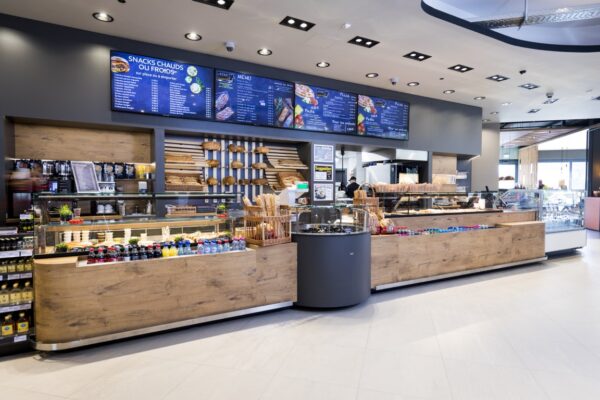
Ampol’s entry for its Eastern Creek Westbound site on Sydney’s M4 sums up the direction of travel. It describes a move from a fuel stop that happened to sell food to a food destination that happens to sell fuel.
The numbers across the field support that framing. At Eastern Creek, where more than 300,000 vehicles pass every day, food accounts for 71% of combined store and quick-service sales. At Applegreen Dunshaughlin in County Meath, food and coffee delivered 51% of the site’s gross profit between January and July 2026, more than fuel and retail combined. Dash In’s new store in Concord, North Carolina, set a company foodservice record on its first day of trading, when food made up 69% of total store sales. APCO reports that foodservice has grown from 8.9% of shop sales in 2007 to 40.2% so far in 2026.
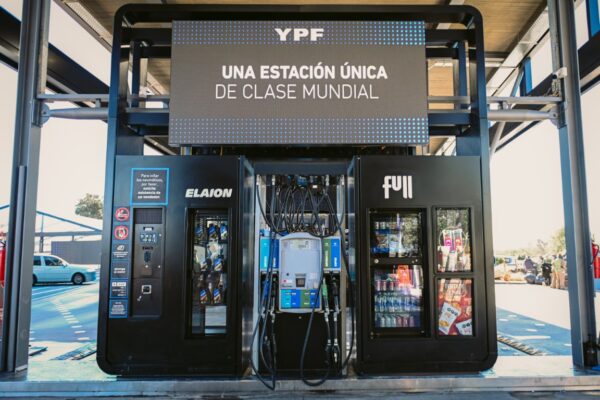
YPF describes its goal for FULL Black Nordelta in Greater Buenos Aires as reversing the traditional service station logic. Instead of relying on location and the need to refuel, the site was built to generate its own demand. Customers come to eat, work, meet and socialise, even when they don’t need fuel. Galp puts it in similar terms. Its transformation, begun in 2022, set out to turn a compulsory stop into a chosen experience.
Different formats for different missions
The entries show there is no single foodvenience model. Instead, operators are building formats around how their customers actually use the site.
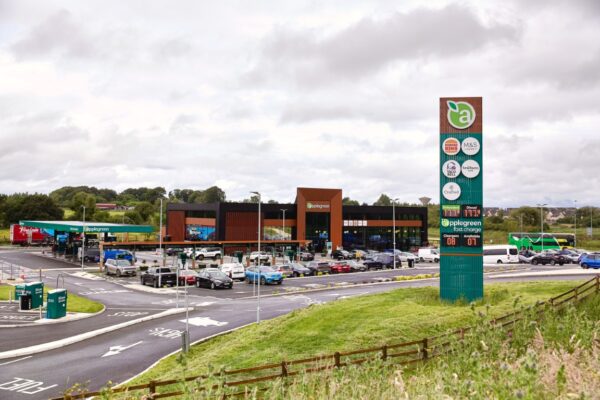
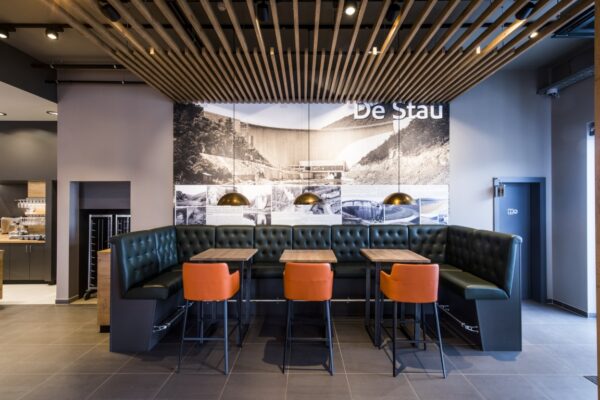
On the motorway, the priority is dwell time. Applegreen Dunshaughlin was built on ten acres of greenfield land off Junction 6 of the M3. It combines Ireland’s first Taco Bell with Burger King, M&S Food, Braeburn Café and Applegreen’s own Crafted Kitchen & Deli, all served in a 120-seat food hall that never closes. Circle K Kilcullen on the M9 welcomes more than a million customers a year around the clock. ESSO Onestop Heiderscheid in northern Luxembourg pairs its 100-seat restaurant, “de Stau”, with a supermarket-style shop, 400kW charging and what it describes as Luxembourg’s longest carwash tunnel.
For freight routes, the design starts from a very different set of needs. Aral found that car drivers at an Autohof typically spend around 30 minutes on site, while truck drivers on mandatory rest may stay for about 150 minutes. Northeim therefore serves its full menu throughout the day, because long-haul drivers keep irregular hours. The site adds a dedicated truck driver lounge, showers, laundry facilities and an AI-supported, barrier-free parking system whose vouchers can be redeemed in the shop. Sasol N17 Truckstop near Secunda was once undeveloped rear-site parking. Sasol says the site competes on the total driver experience rather than fuel price and parking capacity, and that its strategy came from studying how drivers use the site rather than importing a metropolitan store template.
In towns and suburbs, the neighbourhood store is becoming a meal-solution destination. EUROSPAR Glenwell in Glengormley has served its community for 25 years. A £5.5m refurbishment grew its footprint by more than 70%, added over 1,700 products and created 47 new jobs, built around a Fresh Market concept and a 1,400 sq ft production kitchen. The Barbican Centra in Newcastle, Northern Ireland, sits at the foot of the Mourne Mountains. After a £1.4m refurbishment and conversion from SuperValu, it was redesigned around four missions: On-The-Go, Dinner For Tonight, Top-Up and Alcohol. Kwikspar Hillcrest, a 24-hour store west of Durban, competes with more than 12 big-box supermarkets in its area and still achieves trading density roughly double its peer group average.
Some entrants have no need for fuel at all. The Spinx Market & Eatery opened in downtown Greenville, South Carolina, in 2024 with no forecourt. It serves office workers, residents and tourists on foot, and stocks products from more than two dozen local vendors. Wrights Centra and Foodhall at University College Dublin combines a convenience store with Asian, Mexican, sushi and American diner outlets under one roof, and handles more than 3,000 transactions a day.
Proprietary brands and trusted partners
Many entrants balance their own food brands with well-known partners. Ampol builds frequency through its proprietary Foodary brand, while partner brands such as Hungry Jack’s, Boost Juice and Soul Origin, which it operates as franchisee, create the reasons to make a destination stop. Oporto trades alongside under lease.
The Hub by ADNOC takes the partnership model furthest. Each location brings Oasis by ADNOC together with quick-service brands covering Arabic grill, fried chicken, burgers, pizza, sweet bakery and speciality coffee, plus grocery, pharmacy and lifestyle services. A partnership with Americana Restaurants supports that range. ADNOC builds each site to a shell-and-core standard, hands units over against published fit-out guidelines, and sub-meters every unit so each brand’s consumption can be managed separately.
Others are going deeper into their own brands. Redmonds Centra Gorey in County Wexford opened in May 2026 and serves Black Angus beef reared on the Redmond family’s farm just 8km away. Its Farmhouse Burger concept has grown from a food truck into a dine-in, takeaway, delivery and drive-through restaurant. Galp’s Goody menu was developed by a Le Cordon Bleu-trained chef, mixing Portuguese classics with international trends. TXB in Texas presses its own tortillas for made-to-order tacos. At Chestnut on the Hutch, the top-selling item is the empanada, displayed in a hot case between the registers.
Local sourcing is a recurring theme. Maxol launched its Homegrown at Maxol programme in 2023 to support Irish producers, and Long Mile Road has a dedicated section showcasing their products. ESSO Heiderscheid serves two Luxembourgish beers on draught and a wide selection of food made in Luxembourg. The Barbican Centra dedicates part of its Top-Up zone to locally sourced products.
Coffee: the daily habit
Almost every entry treats coffee as the product that brings customers back. Galp calls coffee “the heartbeat of Galp Goody” and its most powerful driver of frequency, with more than 15 million cups served each year across its Portuguese stores. A new partnership with Delta Cafés begins rolling out in autumn 2026.
Quality is being recognised independently. APCO’s own blends, developed with roaster Gigante, won a Silver and two Bronzes at the 2026 Golden Bean Awards. Ampol’s in-house Foodary blend took Bronze in both 2024 and 2025 and sells self-serve for $2 a regular cup. In a recent customer survey, 81% of respondents rated Oasis by ADNOC’s coffee the best in the UAE. ADNOC runs it as its own programme, with its own blends, recipes and trained baristas, rather than as a franchise.
The formats vary widely. Applegreen’s Braeburn self-serve carts, created in 2021 and now numbering 102 across Ireland, use cold textured milk so an iced latte takes under a minute. Chestnut Market grinds every cup to order using a proprietary blend from a local roaster, promising that its coffee is always fresh. Aral developed its own organic, Fairtrade single-origin offer in-house and uses technology to help staff follow each recipe accurately. Kwikspar Hillcrest takes a deliberately practical view, treating its in-house Leigh’s Continental coffee as an everyday product rather than a performance. The store gives free coffee to local emergency service personnel as a thank-you.
Sasol’s entry offers a useful counterpoint. For long-haul drivers, it finds that beverage missions are hydration-first and caffeine-second. Cold drinks and water outsell hot drinks during the day, while coffee peaks early in the morning and overnight. Filtered drinking water is free on site as part of the truck stop’s commitment to driver wellness.
Training and operational excellence
Restaurant-quality food in a convenience setting depends on the operation behind it, and entrants go into detail on how they make quality repeatable.
Chestnut on the Hutch made one of the boldest design choices in the field. It gave up the traditional tobacco backbar behind the registers and turned that high-value space into an open kitchen, putting food preparation at the visual centre of the store. TXB takes a similar approach, designing kitchens so guests can see their food being made.
Several entries show investment in people. Circle K Kilcullen’s 36-strong team, representing 11 nationalities, is led by Patrick Fleming, Store Manager of the Year 2026, and supported by gamified learning, Food Excellence coaching and a Retail Supervision Apprenticeship. Every new colleague at The Barbican Centra completes a six-week onboarding and accreditation programme. At Applegreen Dunshaughlin, every colleague is trained across more than one brand, so staff can move to wherever demand is highest.
Technology is taking on more of the load. EUROSPAR Glenwell uses AI-driven stock ordering and electronic shelf-edge labels. Oasis by ADNOC’s Service Station 694 combines AI-powered demand forecasting with D-TEC AI checkout. At YPF’s Black Nordelta, an AI-powered kiosk welcomes customers and recommends meals and drinks based on their preferences. Kwikspar Hillcrest runs daily tasks, orders and standard procedures through its own staff app.
Standardised processes are delivering measurable efficiencies. Wrights reports that Musgrave’s Winning Store Operating Model cut labour by 7% and stockholding by 11%, while on-shelf availability rose to 99.4%. Dash In holds food waste at around 7% while delivering a 57% gross margin on foodservice. Galp summarises its approach neatly: it standardises the customer promise, not the physical store.
Loyalty as a relationship, not just a discount
Loyalty programmes are increasingly used to connect fuel, shop and food in a single relationship. ADNOC Rewards has 2.6 million members and is involved in more than half of food transactions at Oasis by ADNOC. Customers who use the programme and redeem vouchers have more than three times the lifetime value of those who don’t. YPF’s ServiClub, with more than four million active members, links fuel, convenience and foodservice within the YPF app.
Simplicity is a recurring theme. Applegreen Rewards enrols every member in its Coffee Club automatically, with no tiers or points to convert. Corrib Oil’s app offers instant savings at the till rather than rewards customers have to wait for. When the Frank and Honest coffee app reduced its free-coffee threshold to six stamps in July 2026, The Barbican Centra saw app scans rise 22% and reward redemptions rise 38%.
Some operators have taken a different route entirely. ESSO Heiderscheid says it builds loyalty through consistent quality, fresh food and changing daily menus rather than a points programme. Sasol recognises that fleet loyalty matters as much as individual loyalty, putting it simply: fleets decide the routes, and drivers decide the stops.
Delivery: a channel chosen site by site
Entrants take noticeably different positions on delivery, which suggests it works best as a deliberate choice rather than a default.

Maxol has made the boldest move. At Long Mile Road, a partnership with Copenhagen-based food-tech company Noahs lets customers order from several food concepts alongside Maxol grocery lines in a single order through Just Eat. Maxol describes this as a first for the forecourt sector and plans to roll it out to more than 50 locations. Dash In’s mobile ordering, now available at 54 locations, accounts for around 10% of foodservice sales. Musgrave’s delivery trial across three stores generated more than £26,000 in sales and attracted 1,110 new customers, with an average basket of £25.50.
Others have deliberately held back. Ampol keeps delivery as a secondary channel at Eastern Creek because few homes fall within a practical delivery radius of its industrial motorway location. FreshStop Heidelberg, well away from any city commuter route, sees itself as a stop along the journey rather than a delivery hub. Aral does not offer delivery at Northeim, and Sasol chose to stabilise its physical operation before adding digital ordering.
Social media and cultural timing
Social media is now where food discovery happens, and the strongest entries respond to trends quickly. Galp’s content built around “A Revolta dos Doces”, a genuine online food trend rather than a planned campaign, reached a 6.57% engagement rate. That is almost seven times Galp’s usual benchmark, at a cost per engagement of just €0.13. Galp’s food truck also takes the Goody brand to Portuguese festivals. In 2025 it beat sales forecasts by 19% and sold three days’ planned stock in a single day at one major festival.
Applegreen’s Taco Bell launch at Dunshaughlin shows how quickly online attention can turn into real footfall. Twelve organic posts reached almost 116,000 accounts, and paid activity reached more than 1.1 million people. Food reviewers then posted unprompted videos, some passing 790,000 views. The result was queues of up to three and a half hours, and what Applegreen describes as the largest Taco Bell opening anywhere in Europe.
Smaller operators apply their own filters. Before acting on a trend, Kwikspar Hillcrest asks three questions: is it relevant to the community, can the store deliver it consistently, and will it genuinely improve the customer’s choice? At UCD, Wrights ran a “Supermarket Sweep” event with the campus residential team that drew nearly 200 student responses.

Community, wellbeing and reasons to stay
A number of entries go well beyond food to create places people want to spend time in. Sasol N17’s on-site Trucking Wellness Clinic has delivered 762 primary healthcare consultations, 714 HIV counselling and testing sessions, 747 wellness screenings and 990 TB screenings since it opened in November 2025. Sasol asks the judges to measure a foodvenience store not only by baskets and margins but by safer roads, healthier drivers and restored dignity.
Family amenities are becoming a clear point of difference. The Hub by ADNOC offers gated play areas, shaded seating and, at residential locations, an outdoor cinema. A dedicated Hub Manager and staff maintain these spaces, with defined safety zones separating them from fuelling operations. ADNOC reports that the playground and seating have increased dwell time, which translates directly into customers shopping across the food outlets, Oasis and the supermarket. FreshStop Heidelberg, Applegreen Dunshaughlin and Ampol Eastern Creek have all built in play areas, and FreshStop and Ampol have added dog parks.
Rutter’s #111 takes the idea further with its 1747 Bar & Lounge, a full-service sports bar inside the convenience store.
Future mobility
EV charging is increasingly part of the destination offer rather than a separate service. Applegreen Dunshaughlin’s eight 350kW chargers delivered more than 100,000 kWh across over 3,400 sessions in 2026, with 96% uptime and an average stop of around 25 minutes. Rooftop solar has supplied roughly a tenth of the site’s energy since May.
At Ampol’s Eastern Creek Westbound, which offers chargers of up to 400kW, charging utilisation has risen 220% since opening, with strong demand at lunchtime and in the evening. Galp’s A5 flagship is designed around turning EV charging time into time well spent. Corrib Oil Ballina offers HVO alongside fast EV chargers and has installed a defibrillator in a prominent position on the forecourt.
The results

The performance figures reflect how far these propositions have come, although they are measured in different ways and many cover only a short trading window.
Ampol Eastern Creek Westbound is trading 146% ahead of the prior year, with ex-tobacco sales up 160%. Maxol Long Mile Road reports deli sales up 110%, coffee and hot beverages up 88% and total shop sales up 73% following a €4.5m investment. In its first months, FreshStop Heidelberg has tripled total sales, grown food sales by 700% and increased fresh fruit and vegetable sales by 1,500%. At Corrib Oil Ballina, foodservice sales are running 74% ahead of the year-one business plan just two months after opening. EUROSPAR Glenwell reports weekly sales up 30% and fresh bakery sales up 224% since its relaunch.
Margins are improving too. Sasol N17 raised its gross profit margin from 11.9% to 14.9% by June 2026. YPF’s Black Nordelta improved gross margin by 21% year on year. Galp has doubled food sales and increased food margin by more than 65% since 2022, while reducing its dependence on tobacco.
Customers are responding. YPF reports an NPS of 81, up 15 points. The Barbican Centra records an NPS of 78 and 93% overall satisfaction. Galp’s transactional NPS at A5 rose from 56 to 72. In a January 2026 benchmark, Galp achieved the highest relational NPS of any brand assessed, including specialist coffee chains.
Early results from the newest pilots are promising. By its second month, Aral Northeim was delivering shop sales 7% higher than comparable Autohof sites. The first six Hub by ADNOC locations delivered fuel volume growth five percentage points above the network average, with the strongest results at sites offering the widest range of quick-service food.
Three years in: why the format matters
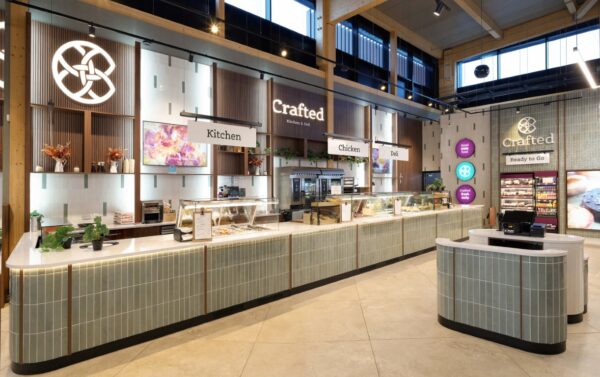
Read together, this year’s entries show operators in very different markets arriving at similar conclusions. The best-performing sites design around customer missions rather than a standard template. They treat food quality and coffee as the foundations of loyalty. They invest in the people and systems that make freshness repeatable, and they give customers reasons to stay longer than they planned.
None of these operators worked this out together, and that is exactly why the competition’s format is valuable. A family business in rural South Africa, a Gulf mobility group, an Irish forecourt chain and an Argentine energy company have answered the same questions, often with real numbers, in public. The result is a shared evidence base that no single operator could assemble alone. Three years in, it is fast becoming one of the clearest pictures of where convenience is heading, and one of its best tools for getting there together.