

German convenience retailers should adopt food first strategy, say experts
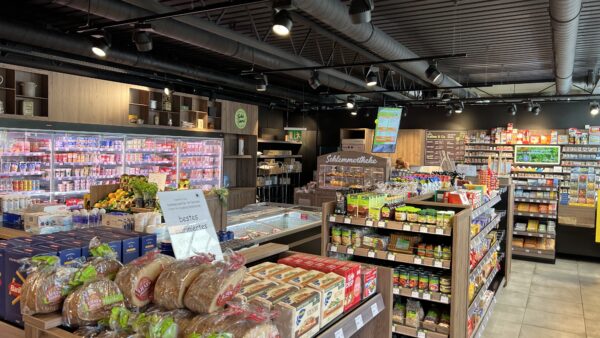
German convenience retailers need to move from a fuel first to food first position, according to two leading sector specialists.
Christian Warning, founder and managing director of Hamburg-based consulting firm The Retail Marketers and Harry Milloff, CEO of The Moseley Group, one of the world’s most sought have food and beverage consultancies, advocate retailers introduce a compelling foodservice proposition, which they can become famous for and the duo have top tips for enabling retailers on that journey.

For Warning, it’s not about optimising the existing model but reinventing it.“Operators who are focused on marginal improvements to their current offer — a slightly better coffee machine, a slightly wider range, a slightly cleaner store — are not building toward the future,” he maintains. “They are managing the decline of a business model that is running out of road. The fuel volume decline is real. The tobacco decline is real. And the competition from foodservice, grocery, and new convenience formats is intensifying every year.”
Instead, Warning advises retailers to build a clear, honest picture of what their business looks like in 2030 if they do nothing — and then use that picture as the motivation to do something genuinely different.
“Not incrementally different. Not ‘food-adjacent’. Different in the way that 7-Eleven Denmark is different from a German forecourt today,” he says. “The operators who make that cognitive leap — who stop asking ‘how do we improve our forecourt?’ and start asking ‘what kind of food and mobility destination do we want to be?’ — are the ones who will still be here and thriving in 2030,” Warning says.
Ripe with opportunity

With unparalleled insight into the German market, Warning is well placed to comment on the evolving retail landscape and future direction of convenience retail. While Germany presently lags behind other markets in terms of foodservice development, it has firm financial foundations.
“I think we are world leading in convenience retail when it comes to profitability per square inch,” Warning says. He highlights the strong performance of the top oil majors Shell and Aral. Germany may be a ‘cokes and smokes’ driven market but it’s a big one; as is fuel, which has attracted the likes of Circle K, with parent Alimentation Couche-Tard’s TotalEnergies deal; and EG Group’s acquisition of the German Esso service station network.
CEOs risk rocking the boat with new propositions at their peril, Warning says. “Making a profit, fulfilling growth expectations and looking five to 10 years ahead is a challenge for shareholder-driven companies,” he suggests.
Implementing radical change is also harder to achieve across 2,000 versus 100 sites and necessitates a scalable solution, he adds.
For Milloff, the high volume and strong profitability metrics of the German convenience market and an underdeveloped foodservice platform have created a perfect storm of possibilities.
“There’s an opportunity to build a bridge to a high quality QSR-level standard, and to build substantial revenue streams. It will be interesting to see the different pillars come together and will signal a change to the broader convenience industry and to customers’ lives – that they can pick up a high quality meal at a service station. It will add value to the business ecosystem,” he says.
Foodservice potential

For Warning, the challenge for c-store operators is navigating that paradigm shift from fuel to mobility and food and giving people a reason to visit their locations. It will help them to take a bigger slice of the pie – currently forecourts capture just 1.5-2% of total foodservice spend. Food-to-go in supermarkets and other outlets accounts for €13bn a year in Germany out of a total €90bn food market.
Devising a menu list of different formats is also crucial, he adds; as a one size fits all approach will not fly in the German market.
Heading up a company that’s developed and optimized QSR formats across c-stores around the world, Milloff is certain that every store format in Germany is relevant for foodservice. “Each type of format is applicable and an opportunity for a foodservice platform that can really connect the different locations and brand with a consistent and high quality offering that the operator becomes known for and is craveable,” he says.
Milloff highlights small format, modular designs which have been developed throughout the global QSR industry such as Starbucks or Chick-fil-A, who operate small sites at airport locations or from kiosks in hotels. These units can provide customers with exactly the same offer from a small, non traditional environment as at a full flagship store in an ideal environment, he says.
Foodservice equipment is also highly versatile, he adds. This enables operators to offer full menus from the counter top in a small format store.
Similarly, there are systems with no extractor hoods or HVAC, which are tailored for small formats but still enable full menu offerings. Further, c-stores can take advantage of supply chain opportunities that can create pre-prepared items to limit the amount of in-store preparation to a high degree.
Crucially, the growth and development of food and beverage programs is never to the detriment of other high performing categories, Milloff asserts. “It’s not a cannibalistic effect. Rising tides raise all boats. Stores increase the level of traffic and sell more ‘cokes and smokes’ if they have a highly frequented food and beverage offer. It drives higher volumes, revenues and profits,” he says.
Build out tobacco but add in foodservice
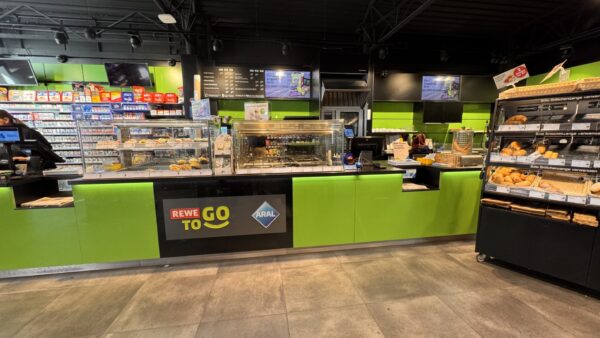
Both Milloff and Warning suggest c-stores up the ante with regard to traditional categories like tobacco and chilled beverages, while they can; but adopt a foodservice-first approach including both hot and cold beverages.
According to Milloff, there are opportunities for increasing tobacco presence in c-stores as the industry evolves ie with non-smokeables and these can be created in-store with the right layout and sight lines to ensure the category still has high impact. “Tobacco and food don’t mix,” he adds. “You want to feel hungry in a foodservice establishment. Lighting and design are key and there are ways to create different zones in a layout that feel separate, even if they are directly adjacent. Stores need to be able to protect the perceived quality and level of trust in food and beverage,” he explains.
Warning suggests coffee would be a quick win for roadside retail, which is underserved in Germany, especially with drive-thrus.
“Retailers can get the fundamentals of coffee then add on day part offers – their own foodservice offer and then clip-ons of QSR foodservice brands,” he says. “They have to turn that advantage into a compelling customer value proposition.”
Milloff agrees the hot beverage and coffee category could be a driving force for the future. “People treat it similar to cigarettes: they select a brand, select a store and have a routine, high repeat purchase. If you capture a coffee customer you capture them two, three or four more times a week. That level of opportunity to build relationships is one of the highest value consumer behaviours that could be created,” he says.
C-stores are also better placed than restaurants to benefit from labour synergies, Milloff adds. “The foodservice team can be cross utilised around a location in a c-store versus a restaurant, where there’s just one form of revenue generation.” Leveraging strategies like these have a synergistic effect across the different categories i.e. building a great fuel offer will impact foodservice.”Everything has become hyper connected – you build one category, it builds another,” he says.
Delivery and digital opportunities
Delivery is another future opportunity for foodservice-led forecourt sites, Warning suggests. Currently there’s no delivery from these locations yet dark kitchens could be established to fulfil this need.
Lockers also enable stores to participate in last mile delivery and services like these will become more important than ever.
Warning reveals 50% of German consumers who are refuelling at sites are not buying anything in the shop and they are not paying at pump either.
That presents a huge opportunity to convert them, especially younger shoppers and digital natives who are looking for fresher and more sustainable offers.

Research by The Retail Marketers found two thirds of under 30s appreciate iconic design and visible food prep and nearly 60% are sold on the ‘barista moment’; 25% of under 25s would drive up to 20k for the most ‘Instagrammable’ petrol station post and one in three Berliners fancies a date at a petrol station.
But it has to be a digital proposition too, Warning observes.
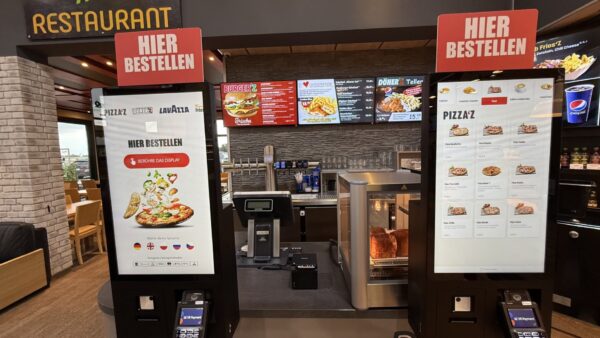
“If you want to be good in foodservice, you have to be good in digital. If you don’t have a self-order terminal, for instance, consumers do not see you as competent in that space. You also need a compelling loyalty system and app.
Milloff stresses the importance of simplicity and focus too. The top performing QSRs globally are associated to a certain product or category, he says. In stark contrast there are a plethora of offerings in c-stores: burgers, chicken, pizza and hot dogs etc.
As a result, operators are stepping over the opportunity to be known for a hero product that they can deliver better than anyone else.
“It highlights the importance of gaining insight from your customer base and surrounding consumers to understand what your brand means to consumers and what it stands for,” he says. “You then need an authentic thread to connect to a selected product or category. Find that connection, lean into it and create a level of simplicity so that consumers can understand why you are the best. Then train your team to a high degree and in a fast manner on how to make your products perfectly every time.”
“It’s a massive opportunity,” Warning says. “It sounds easy but it’s not. The secret sauce is the orchestration of these offers,” he concludes.
