

CEO Joe Boyle on how FreshStop differentiates with food, franchisees and fast service
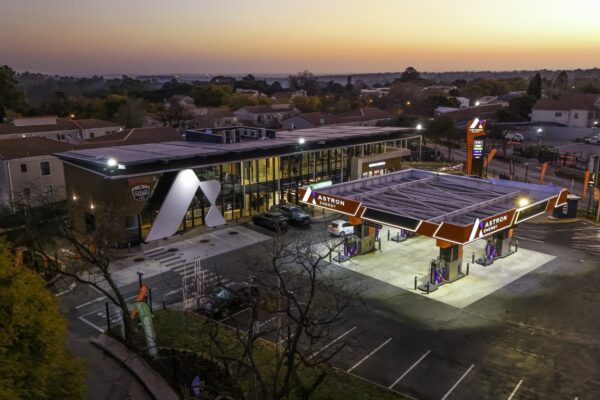
FreshStop, South Africa’s largest convenience store brand, is expanding its presence on Astron Energy forecourts and winning traction with its invested franchisee model, a differentiated foodservice offer and fast service.
FreshStop, part of the Food Lover’s Market Group, the largest family-owned retailer in South Africa, has fresh produce literally on tap with access to 10 distribution centres, five production facilities and two meat packing centres.
The retailer is leveraging this capacity as it expands on Astron Energy forecourts. Astron Energy previously operated the Caltex brand in South Africa under a license agreement from Chevron. Now, following parent Glencore’s acquisition of Chevron in 2018, the company is rebranding the Caltex service stations to Astron Energy, a South African petroleum brand.
To date, 600 sites out of the total 850-strong Caltex network have been converted. The remainder will be finalised by June 2026.
FreshStop at Astron Energy Oaklands, a finalist in Insight’s Best Foodvenience Store in the World 2025 contest, was the 500th rebrand and aims to align with the new Astron Energy brand image.
Oaklands, which was a complete knock down and rebuild, is a flagship store, reports FreshStop CEO Joe Boyle. It is sited in an affluent suburb of Johannesburg, providing a premium convenience experience to residents, which once numbered Nelson Mandela.
Roll out plans

Now FreshStop, with a newly-negotiated 10-year agreement with Astron Energy, aims to roll out its convenience store brand and its unique ‘foodvenience’ programme across the Astron network.
Whether the roll out will encompass the total chain is unclear. According to Boyle, South Africa is already over-served with 4,800 fuel stations, while international brands, including Shell and BP, are reported to be divesting of their South African operations.
At the same time, central business districts have evolved and, what were once smaller sites, are being displaced by new bigger stations, which are more relevant to their surrounding markets, Boyle says.
“There’s a tier that’s going to be lost,” he says, “but there’s a big potential for knock down and rebuilds. We are working with Astron to see what size of store we can put into different areas ranging from 40sq m to 400sq m,” he says.
Sites will be developed in towns, where there is sufficient space but also the right level of demand. Locations, which are well served by taxis and buses, have less need, for instance. An EV offering is further down the road but likely in the next five to 10 years. In the meantime, fuel retailers can capitalise on the extended distances travelled by drivers of diesel and petrol cars, Boyle says.
Foodvenience expertise
In the short term, FreshStop is targeting 25 new sites for 2026.
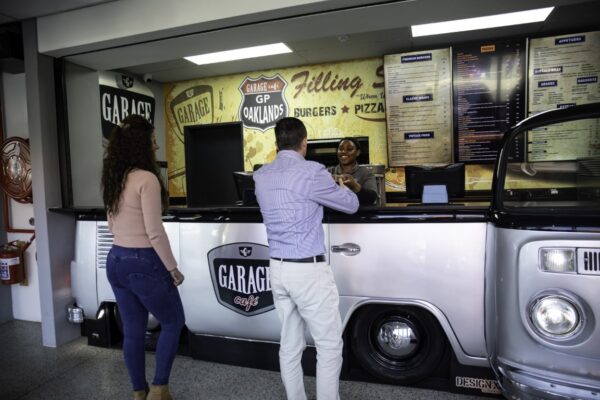
The company has honed three store concepts based on size – small, medium and large but will then overlay these with its different and wide-ranging product offers. These include Seattle Coffee Co., Crispy Chicken, Doughnut Delight, Schwarma & Burrito, Hooked on Fish & Chips, Urban Eats (fast food) and Smash’d Burger etc.
Stores in more upmarket locations will offer flame grilled chicken or smashed burgers, while sites in more industrial areas will offer a deep fried product range, for example. Coffee will be similarly flexed with a barista offer in affluent locations and a push button concept in other stores but also a mid-market barista brand, Manhattan, offered as a half-way house. Once sites hit circa 100 cups per day, Manhattan will switch to Seattle, Boyle says.
These foodservice ‘plug ins’ are known internally as Alternative Profit Centres, he says. They occupy between 6-9sq m and will be added alongside the base category requirements of fruit and veg and top-up convenience on a location-by-location basis.
In South Africa, a country with 11 official languages and different product requirements, this level of flexibility is paramount.
At Oaklands, for example, the Urban Eats offer is focused more on healthy options, while at other sites the offer is more tailored to comfort food such as burgers, chicken and hot dogs, Boyle reports.
FreshStop at Astron Energy Oaklands covers all the key day parts, meanwhile.
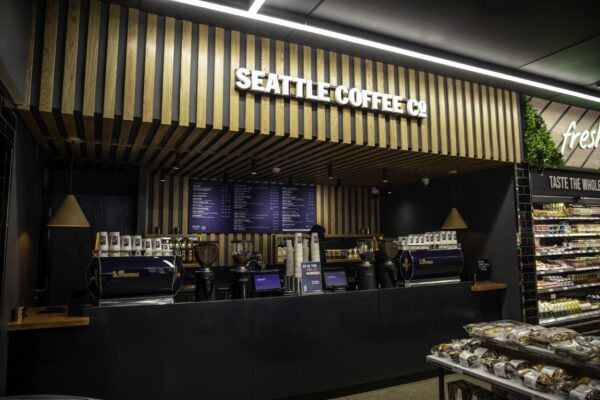
Early morning drivers can choose from the Seattle Coffee Co. bar as well as Crispy Chicken’s speciality Morning Riser and breakfast buns. These customers are often looking for something more substantial than a muffin or sweet treat, says Boyle. They also want a product they can easily eat in the car or at the office. A later morning wave of customers follows and then lunchtime, where office workers are seeking out Crispy Chicken two piece Chicken & Chips, in particular; but also healthier options such as salads and poke bowls. Variety is key, so customers have a least four categories to choose from each day, Boyle asserts. In the evening, Urban Eats and fast food options are popular choices, he adds.
In addition to own brand product offers, FreshStop provides two national brands, one in pizza and a second in flame grilled chicken, as an alternative to its deep fried Crispy Chicken brand.
Franchise operation and buy-in

Out of the 350 FreshStop sites, just four are corporately-owned and run. The remainder are franchise stores.
That said, FreshStop operates two out of the five top performing sites with the number one store in Cape Town. These provide a good benchmark for franchisees but are also test beds for trials and NPD, Boyle reports.
Consistency across the network is maintained via a strong set of KPIs and working closely with its retail partners.
The Fresh Stop Franchise Forum is another key lever. The Forum convenes three to four times a year to discuss trends and the key business drivers. According to Boyle, these sessions are crucial in harnessing different regions, cultures and class of trades.
“FreshStop has to achieve a model that meets all of these backgrounds. We need the buy-in of franchisees,” he explains. “Rather than sending out a message stating “This is what we are doing”, we say “This is the plan. How do you see it working?”.
The format works well with Forum meetings, which are attended by retailers, FreshStop and Astron Energy executives, followed by regional meetings to distill the findings and feedback.
Franchisee support goes further, however. Each year, FreshStop takes 10-20 retailers to the NACS Show and empowers this group to share their learnings with the wider network. “We let them package it and sell to the rest of the retailers so that they see it coming from another retailer,” Boyle says. As well as trips to the NACS Show in Las Vegas and Chicago, FreshStop has taken retailers to the NACS Convenience Summits in Ireland and France.
It’s events like these which help retailers to shape the company’s latest innovations such as the introduction of an authentic Eastern tea range from Tuk Tun Karak at Oaklands. Boyle reports the retailer now sells 2,500 cups of tea per week, on top of the 550 barista-served cups of coffee per day.
Speedy service
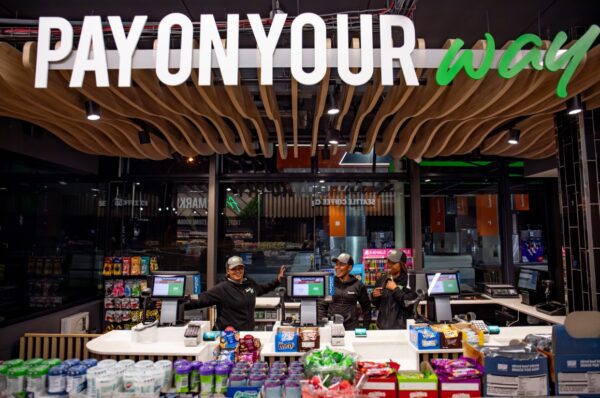
Speed of service is another game changer for FreshStop. The essence of a convenience store means not having to wait for more than five minutes, Boyle maintains. “Customers want to get in and out as quickly as possible,” he says.
At Oaklands, where 50% of sales are generated by food and coffee and food participation has increased by 30% and profitability by 50%, fast service is critical to throughput.
Processes are key in this respect, says Boyle. At FreshStop this means flame grilled chicken is pre-cooked to 95% and sealed with sauces to enable an entire chicken to be cooked in just eight minutes at the site.
In South Africa’s price regulated fuel market, fuel is always a grudge purchase so the differentiator has to be food, Boyle opines.
“Speed of service becomes much more important and, in affluent areas like Oaklands, time is money,” he says.
FreshStop also ensures a speedy service by cross training staff around the product offers and providing touch-screen customer ordering. Further, the retailer benefits from daily replenishment from Food Lover’s Market, a first-mover advantage in a sector that’s notoriously tight on storage space.
New technology and future outlook

New technology is driving FreshStop forward too. Working with Food Lover’s Market, the retailer has developed its own POS, Fresh POS, which has been developed from a convenience-first approach and has then added on fuel.
Rolled out to 60 stores to date, it enables customers to pre-order foodservice items via an app, which are freshly prepared and ready to pick up on arrival. “Tech is expanding at a rapid pace – it’s a huge differential advantage over our competitors,” Boyle says.
FreshStop is on a roll. In addition to developing stores that can slot into sites all over South Africa, it’s looking beyond those borders in Sub-Saharan Africa. It opened six stores in Namibia two and a half years ago and plans three stores in Zimbabwe next year; following in markets where Food Lover’s Market already has a presence so that the supporting infrastructure is already there.
Zambia is also close by, Boyle hints, excited by the prospect of expansion and taking FreshStop and its ‘foodvenience’ offering to new heights.
