

The concession gap in the age of labour scarcity: How to modernise
The traditional staffed concession model is buckling under the weight of chronic worker shortages, rising wages, and 24/7 traveler demand. A new generation of fully autonomous Smart Stores are addressing these challenges.
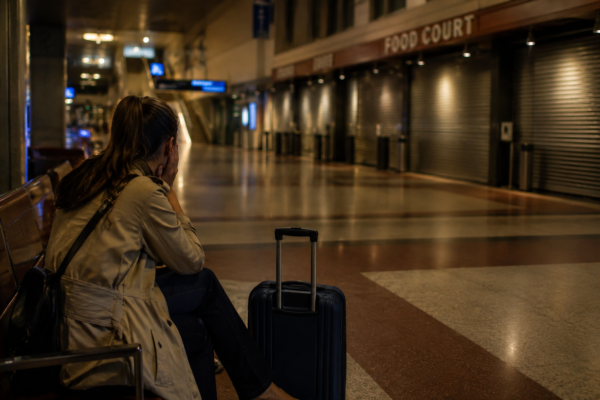
Shortly after midnight on a Tuesday, a delayed Amtrak passenger arrives at Los Angeles Union Station. The shops are shuttered. The food court closed hours ago. Her options are a vending machine offering a slim selection of chips and a candy bar, or nothing at all. She has a three-hour wait.
This scenario plays out thousands of times a day across transit hubs, airports, and rail terminals throughout North America and Europe. And it represents one of the most persistent, and surprisingly under-addressed, failures of the modern passenger experience: the concession gap.
The problem is not a lack of appetite or demand from travelers. Dwell time is money. Passengers waiting for connections, delayed trains, or shuttle pickups will spend if something is available to buy. The problem is a workforce that, structurally, can no longer reliably fill the overnight shifts, the early morning gates, and the low-traffic-but-still-essential service windows that define transit retail.
“The old model assumes a worker will always show up. The new reality is that in transit retail, that assumption increasingly is outdated.”
The Labor Math That No Longer Adds Up
Transit concession operators have faced workforce headwinds for years; but the structural shifts since 2020 have been qualitatively different. Ground handling and retail workers were among the hardest hit by pandemic layoffs — and many moved on to other industries, never returning. As a Fast Company analysis of aviation labor trends noted, the industry has found it “tough to entice them back.”
The numbers illustrate a difficult story. Across aviation, food service, and ground-level retail — industries where nearly 80% of roles are fully on-site, according to the U.S. Chamber of Commerce — employers are competing for a pool of workers who have more options, more leverage, and less tolerance for the specific demands of transit environments: federal background checks, irregular hours, airport access procedures, and wages that have historically lagged comparable roles.
At Dallas/Fort Worth International Airport, the staffing crisis reached such a point that the airport’s senior executive sent a letter to concessionaires warning them not to poach one another’s employees. The message itself was a signal: the labor supply had become so constrained that competition was occurring within the fence, not just outside it.
Meanwhile, a recent survey of air cargo workers found that 59% had seriously considered leaving the industry, citing unpredictable schedules, outdated technology, and limited career development as the primary drivers. In transit retail, where the hours are often longer and the margins thinner, the retention challenge is no less acute.
The result for transit operators and concessionaires is a service model with chronic gaps: stores that open late, close early, or don’t open at all on the exact shifts when certain traveler populations; overnight rail passengers, pre-dawn departures, late-arriving international connections need them most.
What is Actually Needed
Transit authorities are increasingly focused on improving passenger amenities and expanding convenience retail to drive ridership and generate non-fare revenue. But the traditional concession model — reliant on staffing stores around the clock — is becoming harder to sustain amid ongoing labour shortages, rising wage pressures, and inconsistent operating hours.
What operators increasingly need is a retail model that works reliably without constant labour dependency: one that enhances the passenger experience, requires minimal operational oversight, and scales efficiently across busy transit hubs.
VenHub Global’s autonomous Smart Stores are designed around that need. Combining robotics, computer vision, and mobile-first checkout, the stores operate 24/7 with no on-site staff, offering passengers fast access to snacks, beverages, and travel essentials in as little as 90 seconds. Built for high-throughput transit environments, the stores also feature hardened security systems and can be installed and operational within days, minimising disruption to station operations.
“Partnering with VenHub at the LAX/Metro Transit Center station reflects our focus on innovation and our Board’s directive to explore retail and other station-based amenities that improve the overall rider experience.” — Jennifer Vides, Chief Customer Experience Officer, LA Metro
The Los Angeles Blueprint: Two Transit Case Studies
The story of VenHub’s transit deployments in Los Angeles offers a useful early-stage blueprint for how autonomous retail can integrate into live transit infrastructure at scale.
LAX/Metro Transit Center

In June 2025, VenHub launched its flagship Smart Store at the LAX/Metro Transit Center, a critical multimodal node connecting rail lines, bus routes, airport shuttles, and millions of travelers annually at the gateway to one of the world’s busiest airports. LAX served 73.71 million passengers in 2025 alone, and the Metro Transit Center sits at the nexus of that traffic.
The installation was made in anticipation of the 2026 FIFA World Cup and the 2028 Los Angeles Olympic and Paralympic Games, two events that will bring tens of millions of additional visitors through Southern California’s transit infrastructure. For LA Metro, which has a Board directive to explore retail and amenity enhancements for station-based rider experience, the partnership represented a concrete answer to a question that has proved elusive: how do you provide consistent retail access across a transit network without building a labor-intensive operations team to manage it?
The LAX location marked VenHub’s first deployment in partnership with LA Metro. The store provides travelers with access to snacks, beverages, travel essentials, and everyday convenience items; fully contactless, fully autonomous, fully available whether the time is 6am or 3am.
Los Angeles Union Station

Five months later, in November 2025, VenHub opened its second Metro partnership at Los Angeles Union Station, the largest railroad passenger terminal in the Western United States and, as the press widely noted, “the last of the great train stations.” The 52-acre hub serves more than 60,000 daily passengers across rail, bus, subway, and regional connections.
Union Station is precisely the type of environment where the concession labor problem manifests most acutely. The station operates around the clock, serves a diverse range of passengers with varying dwell times and needs, and is embedded in a historic architectural context that limits build-out flexibility for traditional retail concepts. A fully assembled, drop-and-deploy Smart Store format offering more than 400 products addressed each of these constraints simultaneously.
The Union Station store was delivered, installed, and activated within days, without disrupting station operations or passenger flow. In the words of Jeff Brown, VP and General Manager of Morlin Asset Management, which operates Union Station: “Seeing VenHub’s Smart Store come to life at Union Station is an exciting milestone for us. It perfectly reflects our ongoing efforts to enhance the guest experience with forward-thinking, tech-driven solutions.”
With Union Station already designated as a central hub for both the 2026 FIFA World Cup and the 2028 Olympics, the pressure to deliver consistent, scalable passenger amenities is significant. The autonomous retail model is increasingly looking like a core part of the answer.
“Retail should work for people, not the other way around. — Shahan Ohanessian, Founder & CEO, VenHub Global”
The Economics of Autonomous Transit Retail
Autonomous retail offers a more predictable and scalable alternative to traditional concession models, which are increasingly pressured by rising wages, staffing shortages, and inconsistent operating hours.
Rather than relying on large on-site teams, VenHub’s model combines hardware, software, remote monitoring, and managed maintenance into a structured operating platform. The result is lower operational volatility and the ability to maintain 24/7 convenience retail access without the labour challenges associated with staffed stores.
The economics are particularly attractive in high-footfall transit environments, where unattended retail can generate consistent around-the-clock transactions while keeping overheads comparatively low. Additional revenue opportunities, including integrated digital advertising panels, further strengthen the non-fare revenue potential for transit operators.
Deployment speed is another advantage. While traditional concession buildouts can take months, VenHub Smart Stores can be installed and operational within four to ten days, accelerating revenue generation and minimising disruption to station operations.
The model also scales efficiently for major events. As Los Angeles prepares for the 2026 FIFA World Cup and the 2028 Olympic and Paralympic Games, autonomous retail allows transit operators to expand convenience access quickly without the staffing surges and operational complexity required by traditional retail formats.
Beyond major events, the broader appeal is strategic: creating a reliable, passenger-focused retail layer that improves convenience.
What This Means for Transit Operators Globally
The trends driving VenHub’s traction in Los Angeles are not specific to Southern California. The autonomous retail market is projected to grow from an estimated $22.4 billion in 2025 to $35.6 billion by 2029, a compound annual growth rate of 12.3%. The unmanned convenience store segment specifically is projected to grow from $67 million in 2019 to $1.6 billion by 2027, a 52% CAGR that reflects structural demand, not novelty.
Transit and airport operators across Europe, the Middle East, and Asia are confronting the same labor dynamics that have made Los Angeles a test case. Passenger Terminal World has documented the ongoing expansion of retail and food and beverage programs at Frankfurt Airport Terminal 3, Glasgow Airport, and other major hubs, all of which are operating in labor markets with similar structural constraints. The question is not whether autonomous retail will reach those environments. It is how quickly, and in what formats.
VenHub is already preparing retail deployments for transit hubs and commercial sites across North America, the Middle East, and Europe. The platform is designed from the ground up to accommodate various languages, currencies, and mobile applications a deliberate architectural decision that reflects the global ambition of the autonomous retail model.
For transit authorities considering their concession strategy for the next three to five years, the relevant question is no longer whether autonomous retail is viable. Los Angeles Union Station and the LAX/Metro Transit Center have answered that question. The relevant question is whether the authority is positioned to capture the passenger experience and non-fare revenue benefits that come with it and whether waiting for the traditional concession model to solve its labor problem is a viable alternative.
VenHub Smart Store — Key Specifications
- 24/7 fully autonomous operation — no on-site staff required
- 400+ everyday SKUs including snacks, beverages, health, and travel essentials
- Transactions completed in as little as 90 seconds
- 99% order accuracy via robotic arms and computer vision
- Up to 80 customer orders per hour per unit
- Bulletproof glass, steel-framed security, 24/7 remote monitoring
- Installation in 4–10 days depending on unit format (Monolithic, Standard, Flatpack)
- Three unit formats: indoor, outdoor rugged, and fully assembled drop-and-go
- LCD advertisement panels available on Monolithic format for ancillary revenue
- Remote inventory management, AI-driven analytics, and operator dashboard via SaaS platform
- Mobile app ordering via iOS and Android; contactless checkout
- Designed for airports, transit hubs, campuses, EV corridors, stadiums, and government facilities
About VenHub Global, Inc.
VenHub Global, Inc. is a developer of fully autonomous retail technology headquartered in Las Vegas, Nevada. The company designs and builds autonomous Smart Stores that operate 24/7 without on-site staff, combining robotic automation, real-time inventory tracking, computer vision, and mobile-based checkout. VenHub is deployed in partnership with the Los Angeles County Metropolitan Transportation Authority (LA Metro) at the LAX/Metro Transit Center and Los Angeles Union Station, with expansion planned across North America, the Middle East, and Europe.
Sources: VenHub Global press releases (June 2025, November 2025); LA Metro; Los Angeles World Airports; Mass Transit Magazine 2026 Mobility Outlook; U.S. Chamber of Commerce; Air Cargo Week; Fast Company; Chain Store Age; IMARC Group; The Business Research Company.
