

‘The Big Green Reset’ in the Convenience Store and on the Forecourt

The global pandemic has created new retail priorities and big shifts in consumer behaviour. But sustainability issues have not gone away; carbon footprint, food waste, plastic waste and health. Is the planet kicking back? How can retailer and supplier brands best respond? What does a good sustainability strategy now look like in the convenience store and on the forecourt?
Shop Talk LIVE will put green issues under the microscope over two episodes on Friday 16 October and Friday 30th October; the first will focus on sustainability in the store, whilst part two will look at the forecourt.
Part one will launch with a presentation from leading insights business, Global Data, assessing where the consumer is globally on the sustainability journey. The edition will lead up to a panel discussion featuring Andrew Thornton, founder of award-winning Thornton’s Budgens; Debbie Robinson, Chief Executive at Central England Co-operative and Nate Marsh, Chief Revenue Officer at Greenprint. Register here.
Adapting McKinsey’s ‘Great Reset’ terminology, the ‘Big Green Reset’, will argue that despite Covid-19 and the global impact of the pandemic on society, sustainability issues have not gone away. Indeed, far from it, states Shop Talk LIVE host and Insight managing director, Dan Munford.
Instead, the crisis has caused the reset and a need to reconsider why issues such as plastic waste and carbon emissions are still crucial, Munford says.
Writing in the September issue of NACS Magazine, Marsh agrees.
Despite the pandemic creating new priorities, sustainability should still be a focus for retailers, he says.
“We’d like to challenge retailers to think of sustainability not as its own bucket but as part of a problem-solving mindset that will put them in the best position for success, both during and after the pandemic. Sustainable business practices create long-term value and help retailers thrive as consumer behavior shifts rapidly,” Marsh says.
Further, Marsh believes the pandemic has accelerated sustainability trends, in a similar way it has hastened other retail trends such as the move to online shopping and contactless payments.

“A growing body of research shows an accelerated shift in consumer behavior toward sustainability. While these shifts aren’t new, what’s surprising is the scale and pace-compressed into a matter of weeks are big changes that would likely have taken years,” Marsh says.
Marsh goes on to offer three strategies convenience retailers could adopt to show they are supportive and committed to sustainability.
They are:
- Make it relevant: In the sustainability industry this is called Materiality. Address what is most relevant to you and your customers. This can be done through a series of formal surveys or even through social media polls for an instant pulse check.
- Build awareness: Your customers won’t know what you’re doing unless you tell them. Promote sustainability efforts, including positive impact metrics generated, at the forecourt. Sustainably marketed products grew 7x faster than conventionally marketed products and continue to grow despite COVID-19, according to an NYU Center for Sustainable Business study.
- Tout community support and partnerships: Feeding America, the nation’s largest network of food banks, reported a 98% increase in demand due to the pandemic. Consumers want to do business with brands that have proven themselves to be good corporate citizens. Retailers can illustrate their commitment through partnerships with local nonprofits.
“Where a retailer is on their sustainability journey will dictate the most appropriate actions, but here are three things most retailers can incorporate,” he states.

For Thornton, winner of the 2019 NACS European Convenience Retail Sustainability Award and the Excellence in Sustainability Award in the Convenience Awards 2020 for his North London store, sustainability remains staunchly high on the agenda and is centred on four key themes:
- Carbon footprint
- Food waste
- Plastic waste
- Health
According to Thornton, the Covid crisis has brought forward the thinking on carbon footprint and he references BP’s announcement to write down $17.5bn worth of assets as it expects oil demand to remain lower for longer and an acceleration to cleaner energies – an unprecedented move. “That’s huge,” Thornton states. “One, their share price went up and two, Greenpeace praised them.”
Thornton also highlights a Thornton’s Budgens supplier, Cotswold Fayre, a speciality and fine food wholesale distributor, supplying independent retailers and a B Corp business. The company has gone carbon neutral with a three pronged approach: relocating its depot to create a better fit with its customers, turning its whole fleet electric and then offsetting the rest.
“If they can do it, why can’t Tesco or Walmart?” Thornton argues.
On food and plastic waste, however, Thornton maintains that Tesco, under the leadership of Dave Lewis, has done an amazing job.
“Tesco has done the most with plastic in the UK but like us has been set back by Covid,” he says. The retail giant has also been the most transparent with regards to food waste, he maintains.
Thornton highlights Tesco’s new initiative with the social enterprise Hubbub.
Tesco and Hubbub are collaborating on a ‘No Time for Waste Challenge’ seeking to reduce the 6.6 million tonnes of food wasted by UK households every year. The innovative six-week trial is running with 55 households from across Britain. Families are testing a series of interventions, from help with meal planning to leftover-inspired cooking sessions with professional chefs, to help them reduce their food waste. Families are logging and weighing their food waste daily to understand which interventions have the greatest impact.
The trial is taking place at a time when the UK lockdown has led to a dramatic change in the nation’s food habits. New polling commissioned by Tesco has revealed that food waste is down, more of us are finding ways to use our leftovers and cooking from scratch has significantly increased.

“It’s a great example of a business saying they can make a difference,” Thornton says. “One third of all food in the western world is thrown out – that’s shocking,” he continues. According to Thornton, there are ways of dealing with the issue of food waste such as influencing the supply chain and partnering with organisations like FairShare, which redistribute surplus food to charities that turn it into meals.
In his own store, meanwhile, Thornton promotes recipes that can be made with left over vegetables and provides tips for freezing products like herbs to reduce waste.
Health is on the sustainability agenda for Thornton as the pandemic has catalysed its importance – the health of people, as well as the health of the planet.
Health unifies the key sustainability themes, Thornton maintains. Micro plastics, for example, are being shown to have an impact on health; while the world’s unhealthy carbon footprint has been spotlighted during the crisis with Covid being “the planet kicking back”, he argues.
Britain, meanwhile, has the second highest obesity rate in the world and the highest in Europe. Further, over a third of children aged 10-11 are overweight or obese and one in five children aged 4-5 years are classed as obese.
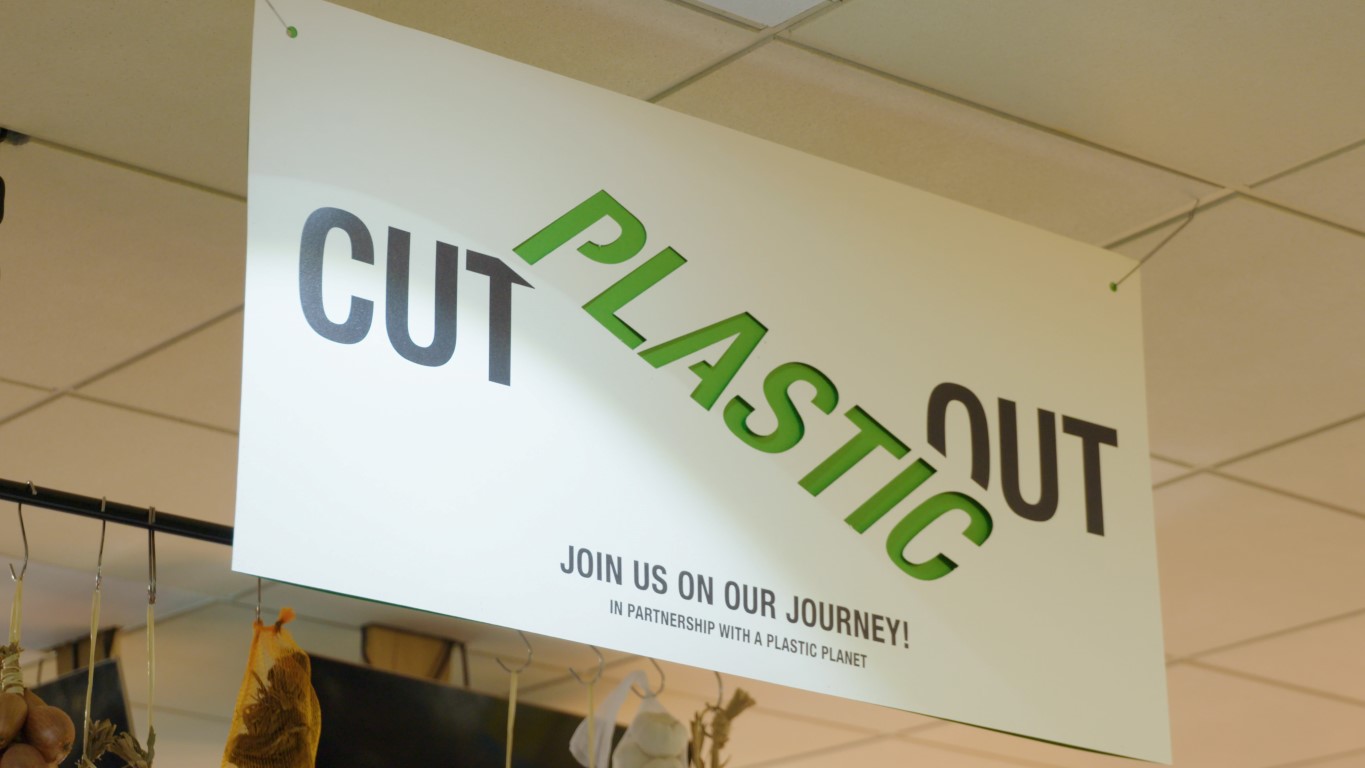
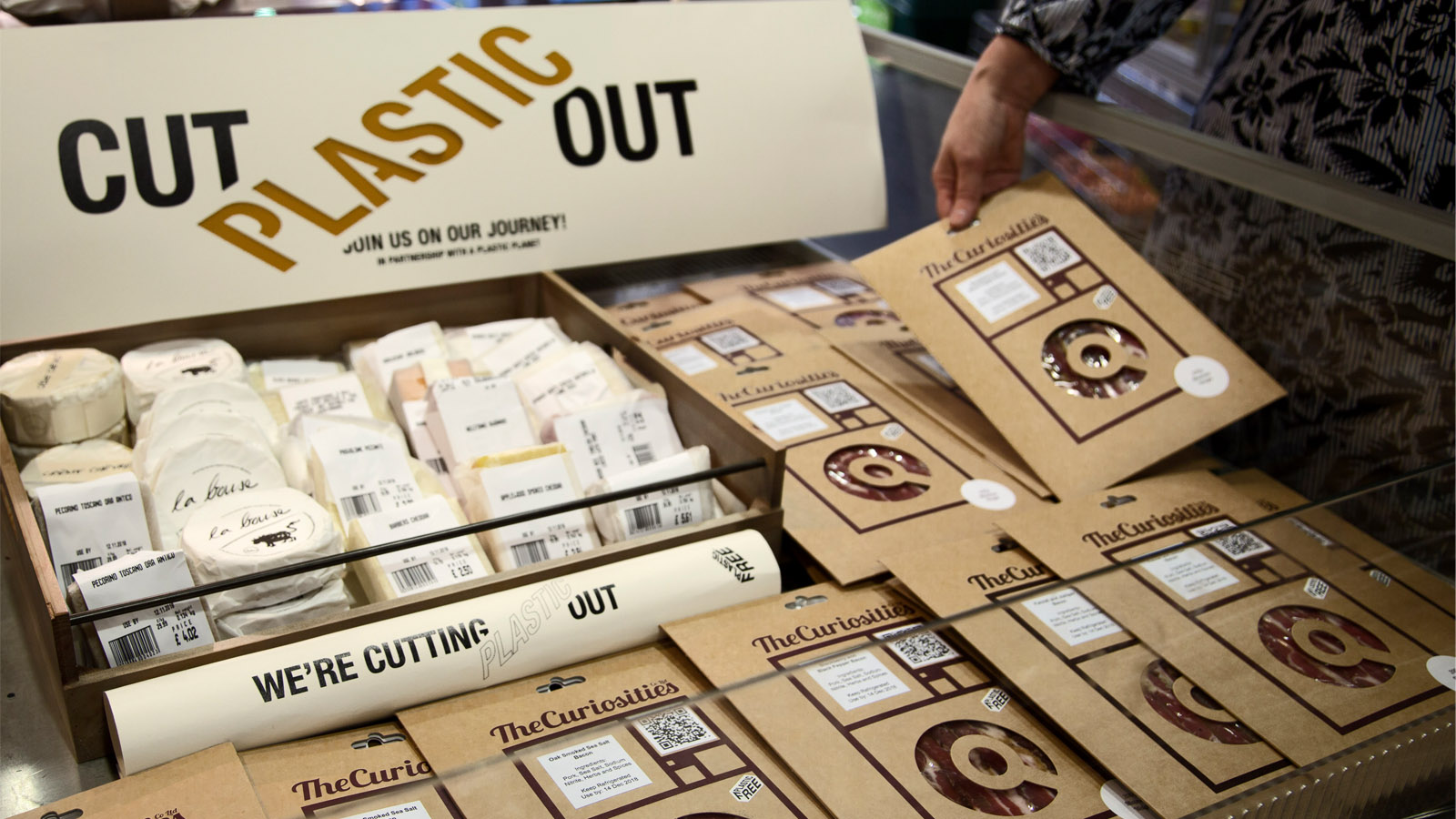
On plastic waste – Thornton’s Budgens has helped to set the bar in terms of what can be achieved in reducing packaging with a zero packaging zone launched in-store in November 2019 and up to 2,600 plastic free SKUs introduced. These span both dry and wet goods.
While Covid has understandably retrenched the advances of going plastic-free, it’s still an issue, Thornton says.
“It’s gone a bit backwards but fundamentally the issue that existed has not gone away,” he says. “Pre-Blue Planet II a lot of people were talking about it but David Attenborough brought it into the living room and we got a massive consumer response.”
The challenge, Thornton maintains, is in making plastic-free pay since the return per square foot is much lower than for traditional packaged products.
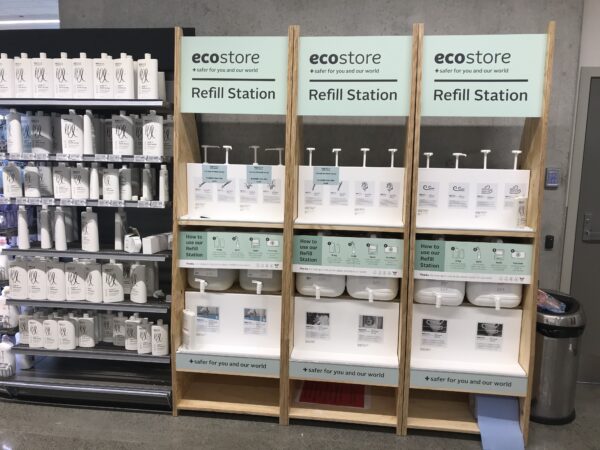
Thornton looks across the channel to France, where plastic free is more mainstream and there are substantial sections for this category in-store, for inspiration. “Price is also an issue. Plastic free is cheaper but I’m not sure that customers have got that message and it’s an angle that needs to be developed along with more brands going plastic free,” he says.
For Marsh at GreenPrint, the pandemic is unleashing a tidal wave of plastic waste. But retailers can still be sustainable if they are able to adopt one or all of the following:
1. Explore compostable/biodegradable alternatives to replace plastic items, especially cutlery and straws.
2. Reuse/recycle: Bring any current recycling efforts to the forefront with simple and clear consumer education. (Even if retailers are already recycling, now is the perfect time to make sure consumers are aware, making it easier for them to reduce what ends up in a landfill.)
3. Offset: Retailers can implement plastic offsets immediately without supply chain or operational disruptions. Through plastic collection credits, plastic waste is removed from the environment proportionate to what is sold.
For Thornton, the emphasis is all about adaption going forward and not jettisoning those efforts that have been made to date.
“Brands that had a good sustainability strategy should not abandon it,” he says. “That would be a fundamental error.”
Greenprint’s Nate Marsh will return for Part two: The Big Green Re-Set on the Forecourt’ on Friday 30th October, 2pm UK time, where he will be joined by Brian Donaldson, CEO at Maxol and other special guests – registered attendees will also have the chance to view an exclusive pre-watch video featuring Circle K Norway’s latest flagship forecourt site as we consider what the ‘big green re-set’ looks like on the forecourt.
Shop Talk LIVE: ‘The Big Green Re-Set in the Convenience Store’, Friday 16th October, 2pm UK time. REGISTER NOW
