

Taking a ‘Farm’ stand
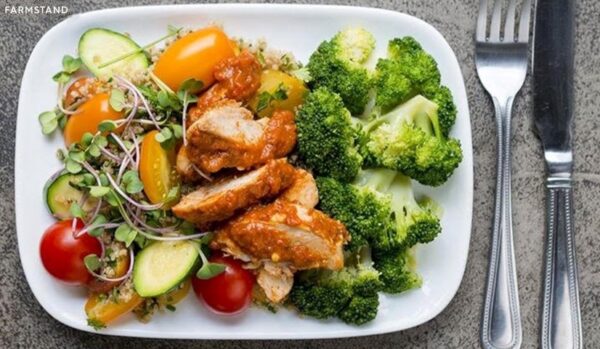
The growth of foodservice in convenience retail is gathering pace in markets around the world. It’s a trend, which Insight has dubbed ‘foodvenience’, and appeals to busy, on-the-go shoppers who are increasingly looking for healthier options to eat-in or takeaway.
For those convenience retailers looking for inspiration in foodvenience, Farmstand is a great place to start.
The independent, healthy fast casual restaurant and online food delivery service was founded by Steven Novick in London’s Covent Garden in January and has already carved a niche and won plaudits for its take on fast casual food.
The business takes its inspiration from the roadside stalls of the American Midwest – Novick was born in Milwaukee, Wisconsin, across the street from a farm – and the majority of produce comes from farmers in Britain.
“We’ve completely redesigned the approach to fast casual food,” says Novick. “We’ve improved the ingredients, tell you where we source them from, and have elevated the look and taste. At Farmstand, fast casual food is not only delicious but also healthy, sustainably sourced and fairly priced.”
It’s a concept Novick neatly bills as “Whole Foods Market meets Soho House”, providing healthy food enjoyed in a fast casual, aspirational environment or delivered to where you need it.
“We do one thing well – we make food, that’s it,” smiles Novick. Farmstand offers breakfast, lunch and dinner with extensive options to choose from (meat, fish, vegetarian and vegan). Customers can personalise their choices in a ‘build your own section’ or select from the ready to go options.
Its aim is to offer environmentally friendly food that enables people to eat better, (and hopefully) feel better and live longer.
For Novick, who was diagnosed with cancer in 2006, there’s a real resonance in that mission. Indeed, he founded Farmstand as one of three goals following his diagnosis. The other two were to become closer to friends and family and see the world by climbing the seven summits including Mount Everest, which he conquered in 2008.
Consequently, Farmstand’s food philosophy has both health and environmental motivations, which are supported by a raft of statistics, which Novick has at his fingertips:
Health related statistics:
•Global cancer rates could increase by 50% to 15 million by 2020
•Worldwide obesity has more than doubled since 1980 (39% of adults are overweight and 13% are obese)
•Over 10% of our calorie intake is in added sugar (more than double what is recommended)
•Fewer than 30% of us eat the recommended five portions of fruit and veg a day;
•Nearly 75% of the world (25% in the US and 15% in the UK) is lactose intolerant
Environment related statisics:
•We waste 2.5 million kilos (5.6 million pounds) of food every 60 seconds (equivalent of 10 million Big Macs)
•Using locally sourced ingredients reduces the 1,300 miles food typically travels from ‘field to plate’
•The global fish harvest could be 40% higher if it was sustainably managed
•It takes 7x the amount of water to produce a bottle of water as it does to fill it
•There will be more plastic than fish in the oceans by 2050
“Food used to be simple and ingredients were recognisable and unadulterated. We wanted to get back to basics,” Novick explains.
What that translates to at Farmstand is seasonal produce; internationally-inspired food but without the carbon footprint ie locally sourced ingredients; food that is free from refined sugars; food that is ethically and sustainably sourced; no GM, hormones or antibiotics; packaging which is 100% compostable and no plastic bags plus free still and sparkling water.
Team members, meanwhile, have been hired for values and behaviour, and are experienced chefs or experts in disciplines including street food, foodservice, nutrition, FMCG, consultancy and sustainability.
Growth market
It’s a compelling proposition, which is pitched at the burgeoning fast casual food market. According to Novick, the sector is valued at $23bn and has enjoyed double digit growth for the last 10 years, capturing 5% of all restaurant traffic, up from 1% in 2000. The takeway and food delivery market, meanwhile, is worth another $70bn with only $9bn online.
The Farmstand restaurant combines fast casual with a fine dining approach, using linen trays, instead of linen tablecloths; proper plates from 6pm and at the weekend; plus craft beer and wine served from midday.
There are two ‘lanes’ to cater for eat in and takeaway diners with 52,000 menu combinations available in the ‘build your own’ option.
A ‘delivered to where you need it’ service was launched from the Covent Garden site in March in partnership with Deliveroo; plus catering for 10-300 people, offering breakfast, lunch, afternoon tea, dinner or snacks. A subscription-based service, provided by Farmstand’s central kitchen will launch in Q1 2017 offering one to five cold meals, two to five days a week.
A second bricks & mortar restaurant will launch Q4 2017, Novick reveals. The business has been identifying prime locations in London – Kings Cross, Oxford Circus, Victoria and Waterloo – and other key cities around the world and anticipates opening in the US, Asia or another European city in the first quarter of 2019.
Novick financed the initial start up, along with seed financing from family and friends. A venture capital round is tipped for March 2017, as investors have already been reaching out, he reveals.
Press plaudits
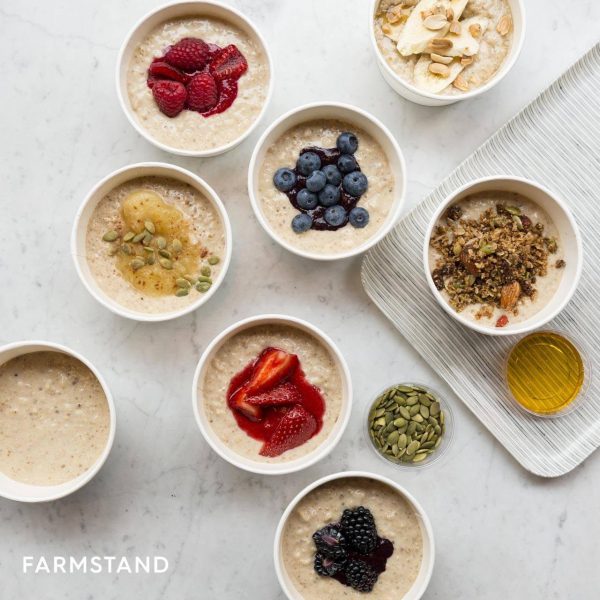
It’s all moving in the right direction as recent positive press coverage testifies: British Airways’ High Life magazine recommended Farmstand as the first place to go on a visit to London; while Time Out featured the business as a breakfast champion and as a top 10 best new restaurant in London. “People found us and thought it pretty interesting,” he says, “but then people like good food and fewer and better ingredients that don’t sacrifice on taste.”
With the unrelenting trend to foodvenience, that’s a crystal clear direction for why and how convenience retailers should step up to the plate.
