

Place, craft and conscience shape Westmorland Family business
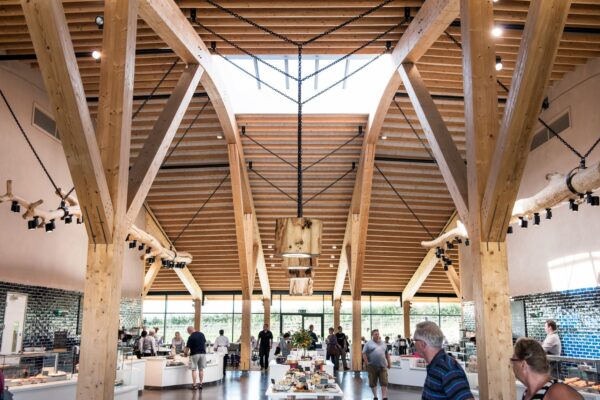
Westmorland Family, operator of the award-winning Tebay and Gloucester Services, has a distinct business model, which is rooted in its unique origins.
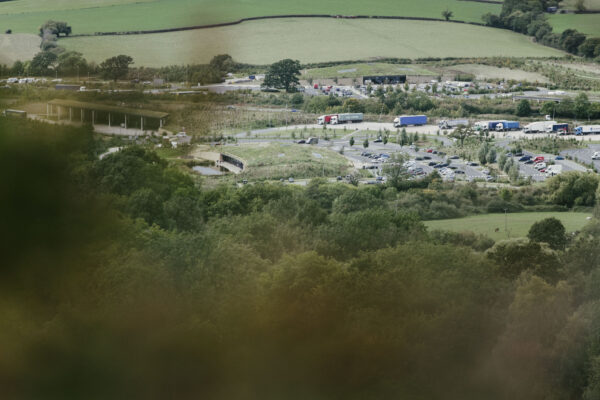
Founded 50 years ago when the M6 was built across John and Barbara Dunning’s farm at Tebay, the business began as a farm diversification with Tebay Services opened on the northbound carriageway in 1972.
“It’s a very different model to any other type of motorway services area and the differences go back to the origins,” states Sarah Dunning, John and Barbara’s daughter and Westmorland Family chairman.
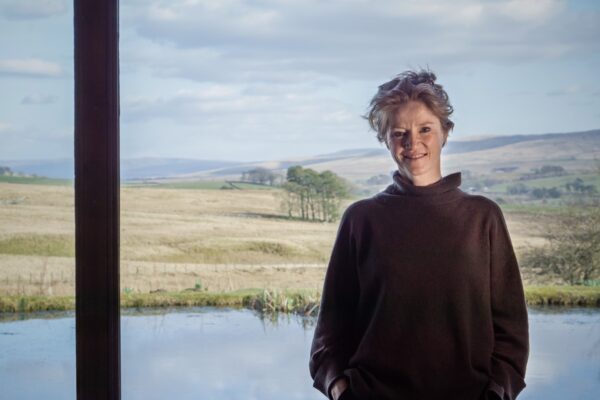
Sarah Dunning, Westmorland Family Chairman
“My parents knew that if they wanted to stay in farming they would have to diversify in some way and that quickly became the entity with the opportunity.
“Those origins made it very different. No other motorway services station was born in that way and we’ve kept that connection all the way through. The essence of Tebay 50 years ago is still the same today,” she says.
Today the business comprises three motorway service station locations: Tebay Services (north and south), Gloucester Services (north and south) and Cairn Lodge Services in Douglas, Lanarkshire. A planning application for a fourth service area on the M56 in Cheshire was submitted earlier this year.
In addition, there’s a hotel at Tebay Services; Rheged, a cafe, gallery and cinema space in Penrith and Junction 38, a dedicated truck stop on the M6 in Cumbria.
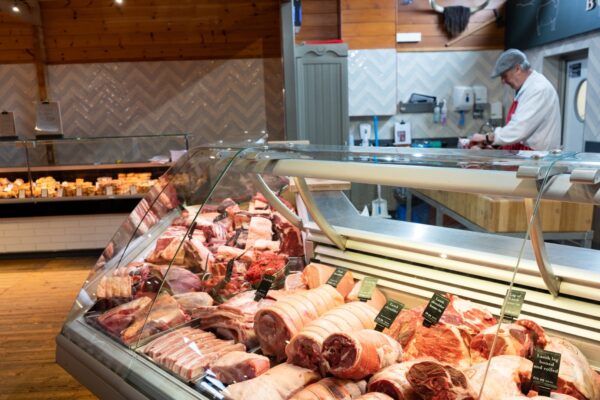
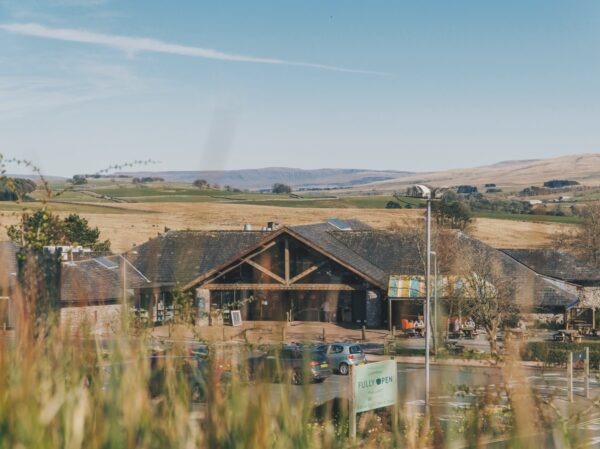
The company works hard to maintain the connection between the farm and the site at Tebay and emphasise its points of difference, Dunning reports. It rears its own cattle and sheep and in 2004 it opened a cutting room at Tebay southbound to butcher and sell beef and lamb direct from the farm to its customers.
And, while most motorway service areas operate as a franchise model with a a broad spectrum of branded franchisees, Westmorland has never gone down that route.
Instead it operates what Dunning describes as a “simple farm shop and kitchen model”.
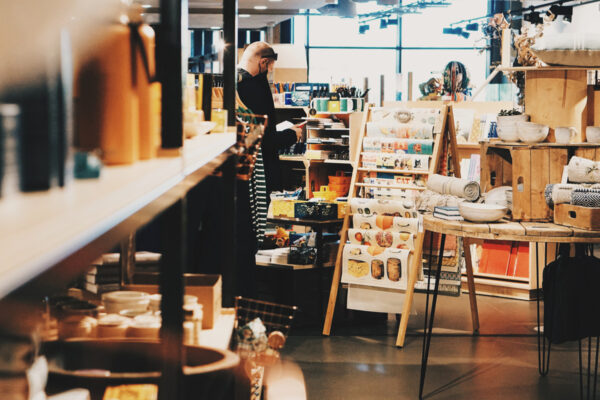
“We make the food ourselves and in the farm shop we work with small, local craft producers who are willing to partner with us and create something different,” Dunning says.
“We are always looking for the producer who you don’t see everywhere and is doing something different and unique,” she adds.
In total, Westmorland Family works with 400 local producers, those located within a 30 mile radius of its sites.
But it’s not a standard business supplier relationship, Dunning states. Rather, Westmorland Family prefers to partner with those smaller, craft producers who don’t necessarily know all about pricing, packaging, marketing and logistics but can combine both parties’ expertise in order to create the best ideas and win.
Place, craft and conscience
While many businesses make mission statements in an attempt to outline their purpose and how they serve their customers, Westmorland Family ploughs a different furrow with three meaningful principles that underpin its approach to business, Dunning says.
The first is ‘Place’.
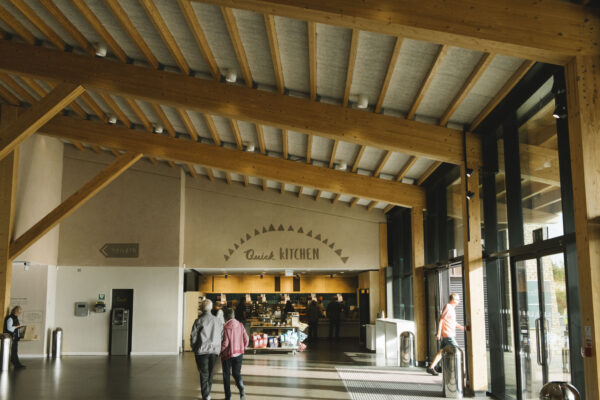
“We know our place and we want to be a champion of our locality,” she says. “We want customers to come into our sites and really feel the place they are in through the landscape, the building, the interiors and design, the product and the people. That benefits us, our customers and our community,” she says.
The second is ‘Craft’. “We delight in our craft,” she smiles. As a vertically integrated business, Westmorland Family makes the food that it sells in its own kitchens. “We love the fact we curate our offer from end to end and don’t use external agencies or designers,” Dunning says. “It’s an in-house offer – it may not be perfect but it’s an expression of us. We are authentic to ourselves and locality – even if it’s not always 100% polished there’s power in that.”
Thirdly ‘Conscience’ or what Westmorland Family refers to as ‘taking the right road’.
“We are a business with a conscience and strongly believe that business can have a positive impact in many ways with customers, colleagues and the local community. Business has huge ability to have a positive or negative impact in those areas,” Dunning says.
Measuring across all these principles, while simultaneously ensuring the company turns a profit, means the customer has a single vision or experience of the business and its holistic approach, Dunning says.
Looking at it from a sustainability perspective, for example, the vision spans the sites’ landscape and bio diversity, the energy used in the buildings, the company’s fleet of mini buses which are used to transport colleagues around the business, as well as the food that it sells.
But it’s a journey, as Dunning admits. “We never reach perfection – it’s always work in progress,” she says.
Cost of living crisis
The impact of the cost of living crisis on the business, which is compounded by rising inflation and escalating energy costs, is very difficult to judge, Dunning reports.
“There’s the complexity of not just reacting to one crisis. There’s a number of big movements in our business, which are not easy to separate out,” she says.
Plus, there’s been significant behavioural changes due to Covid, which still haven’t settled, she adds.
Westmorland Family, for instance, has found that the number of transactions is down but average spend is up. Summer 2022 was busier than pre-pandemic times, due to staycations, but quieter than last year.
Work from home policies have also changed the shape of the business, which is quieter in the week but busier at weekends.
“Plus, everybody has got a dog now, so we have to adapt to that,” Dunning smiles.
“Pre-Covid our industry was quite stable and predictable but Covid has brought so many changes and we are still watching to see what will stick and what will be temporary.”
While inflationary pressures are affecting both retailers and suppliers, Dunning says Westmorland Family works closely with its partners to try to maintain a fair price. “We are conscious of that relationship but equally, we are in an industry that by its nature is premium priced, and so we are conscious about passing prices onto customers.”
It’s also a specific challenge for the Westmorland Family farm shop and kitchen model, which operates at motorway locations unlike conventional farm shops.
“We provide for everybody, not an educated elite,” Dunning says. “That means everybody who drives: HGVs, caravaners, families, working people etc. It’s a positive challenge for us – inflationary challenges put pressure on us all.”
Retail innovation
Westmorland Family keeps ahead of the game – its Tebay and Gloucester service stations were named best in the UK by Which? in May 2022 – by focusing on its unique qualities.
“The most important thing we can do is stay unique. We start with what makes us unique and work to ensure our ideas are always born out of that,” Dunning says.
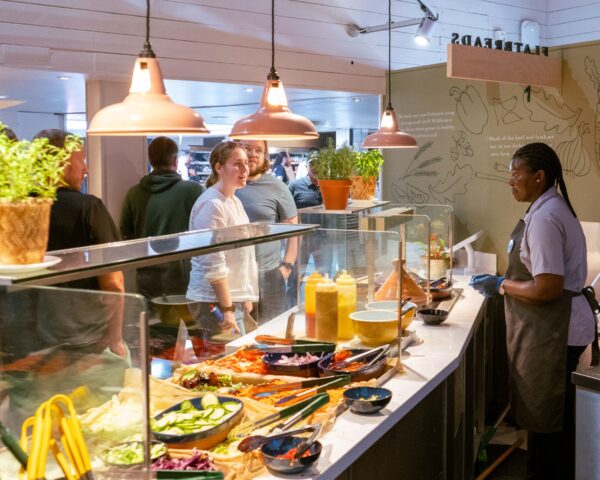
One recent retail innovation created by this approach is the introduction of flatbread stations at Tebay and Gloucester Services. While flatbreads are not new, the retailer makes its own in front of the customer and the lamb in the flatbreads is from its own farms and the salad is homemade in its kitchens. “The flatbread is unique to us. That’s how we like to approach innovations. If an idea is born out of what makes us unique, it will be innovative. And we don’t need to tell people they are homemade, they can see – it’s show not tell,” Dunning says.
Colleagues and community
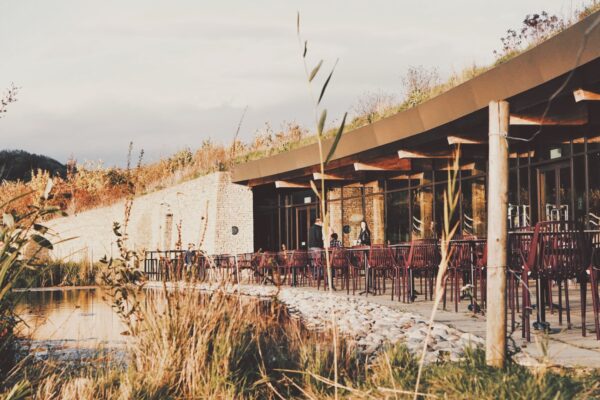
In a similar vein and being a business with a conscience, Westmorland Family is partnering with the mental health charity Growing Well to open a mental health and horticultural project at Tebay Services. The initiative will see volunteers with mental health difficulties work in a new market garden to supply salads and vegetables to Tebay Services Farmshop & Kitchen.
“Again, it’s an idea born out of what makes us unique – we have big rural sites with space and need vegetables in our kitchens and farm shops,” Dunning says.
Growing Well is a local, Kendal-based charity, which was looking to expand in order to meet the substantial mental health need that cannot only be addressed by the NHS.
“It’s a charity local to here and a social prescribing model for mental illness. People go to a Growing Well site and the art of growing vegetables is therapy. It’s less about talking and more about doing,” Dunning explains.
“It’s a beautiful connection: we will be growing fresh, organic vegetables for our sites just a few metres from our building whilst at the same time helping people in the community with mental health problems.”
Westmorland Family colleagues, who are already given the opportunity to volunteer one day a year at a local charity, can also get involved in the project; while the Growing Well brand will benefit from the platform provided by the 2 million people who visit Tebay Services each year.
Westmorland Family is also eliminating food waste with a recent investment in five big food composters. All the food waste from Tebay northbound will go into composters to produce compost for its own sites, colleagues and customers.
In addition to the fleet of five mini buses at Tebay, which are used by a significant proportion of colleagues to enable them to get to and from work, critical in households where they may just be one car; there’s a Helping Hand fund – an interest free loan to help colleagues who may be having a tough time such as an unexpected bill.
“They are small gestures but important when you have a particular need. It’s understanding how you can help colleagues,” Dunning says.
Labour does, however, remain a key challenge for every industry including hospitality. “People are struggling with recruitment and particularly at this time last year as we were coming out of Covid. We had slimmed down and were then hit by a huge holiday market. Now we are getting ourselves in a more stable position but it’s very challenging,” Dunning says.
The Westmorland Family’s greatest response has been to tap into the market of young people with Dunning revealing that today over 40% its colleagues are aged under 23.
In turn that’s created an opportunity for the company to understand future trends, what makes young people tick – their views on the environment and business culture, for example.
“It’s a huge opportunity having so many young people in the organisation – it makes you think about what people want. We really enjoy being an employer of younger people,” Dunning says.
Inspiration and next steps
As a uniquely differentiated business, it’s no surprise Westmorland Family and Dunning take their inspiration from multiple sources.
“There’s never one reference point that gives you the answers but lots of reference points that give you ideas,” she says.
From a personal perspective, Dunning loves spending time in cities, which she believes are hubs for food innovation and she cites Eataly London, the high quality Italian food eatery and store as one of the best examples of blended hospitality and retail with a focus on artisan produce.
She also takes her cues from small independents and farmers’ markets. “It’s about taking fabulous ideas and trends and thinking how they might be relevant to a model like ours,” she explains.
And, while she keeps an eye on the motorway services sector, she’s certainly not blinkered by it. “It’s important not to be so focused on your industry that you are consumed by it too,” she maintains. “It’s a fine balance of being aware of what people are up to but being willing to try new things, that the industry hasn’t done before.”
Expect to see some of that newness if planning consent is granted for the new M56 motorway services station site.
As Dunning says: “We’ve gone from being a local business on our door step to having a more geographical spread with Gloucester and Cairn Lodge. We want to look for growth opportunities, not growth for growth’s sake but because it helps you make a better business.”
