

New mobility and tech – What we saw in 2023
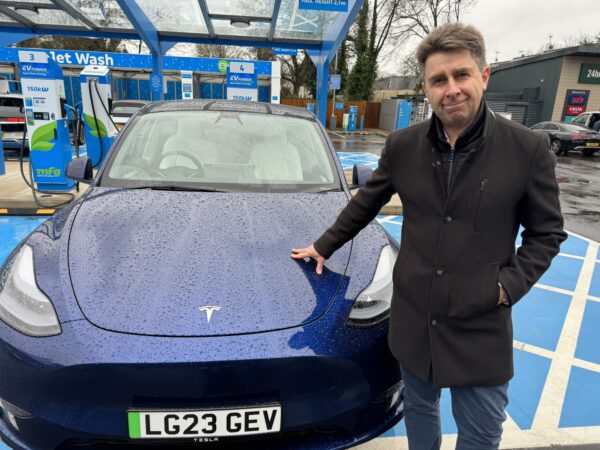
While GCSF put the spotlight on convenience retail innovators in 2023, there was an equally strong and parallel focus on new mobility and technologies, which are helping operators differentiate and stay ahead of the competition.
It’s no surprise that emobility and EV charging were hot topics of conversation for convenience and forecourt retailers in 2023. But our coverage also considered alternative transportation solutions, including hydrogen, and we looked behind the scenes at game changing technologies and new solutions, which are transforming operations including refrigeration, drive-thru automation and fuel pricing technology.

Shop Talk LIVE started the debate about EV charging last year with a panel exploring how the UK EV charging network is developing and considering what the future may hold. The line up for this episode featured GRIDSERVE CEO, Toddington Harper; Ade Thomas, founder at Green.TV Media; and James Purton, global key account manager at Kempower.
Insight managing director Dan Munford hosted the panel and began by presenting the company’s own research findings and experience of the Norwegian market, which leads the field in terms of EV penetration. The UK, while not in Norway’s league, is also moving pretty quickly in terms of EV penetration, Munford said. However, the provision of an on-the-go charging infrastructure in the UK is not moving fast enough for EV drivers, he warned.
Thomas agreed and suggested the EV charging experience in the UK was “pretty ragged” unless you were a Tesla driver. Purton discussed how Kempower was aiming to simplify and guide the EV charging experience for drivers; while Harper revealed how GRIDSERVE is developing better propositions for EV driving and presented Braintree, the company’s first electric forecourt, which was designed to give the best customer experience both for charging vehicles but also for the customer. Electric forecourts serve local areas and businesses and they increase the uptake of electric vehicles as businesses transition, Harper said. The GRIDSERVE sites offer a number of convenience opportunities for customers including Costa Coffee, WHSmith and M&S with more to come. They also have lounges with sofas and meeting pods. In addition, the sites are used as locations to test drive electric vehicles.
Purton agreed that in developed markets, like Norway and the UK, customers want a richer experience than simply being able to charge their cars. They want to visit an attractive site and they want a canopy, for example. They also expect new payment options and to receive receipts, he said.
Kempower’s latest solutions can recognise frequent visitors when they plug in and push out offers to encourage visits to retail locations at a site, giving them an excuse to get out of the vehicle but keeping them within the retail eco-system. In addition, the speed of charge can be flexed, according to the location, to help visitors get quickly back on their journey at a motorway service station, for example, or to encourage dwell time for drivers visiting a retail park.
The panel moved on to discuss sustainability and GRIDSERVE’s solar farms. Harper said the company is building an eco-system to deliver sustainable energy at the necessary speed and scale required to mitigate the climate crisis. By building this type of infrastructure, GRIDSERVE has discovered that for every acre of land in the UK, if it builds a solar farm, it can generate enough energy a year to drive a million miles in an electric car.
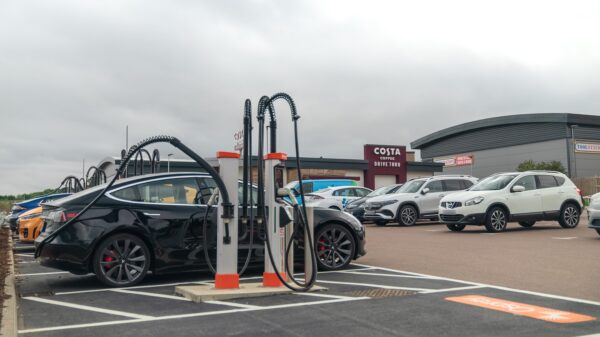
In June, GCSF interviewed Kempower’s CMO, Jussi Vanhanen, to discover how the company was powering DC charging technology for EVs around the world. Kempower is the leading Nordic EV charging solutions provider and is uniquely differentiated, Vanhanen said. “We are EV drivers who design and manufacture EV chargers – all the company cars in Kempower are EVs,” he says. “We are committed to creating a really user-friendly experience for EV drivers interacting with our chargers.”
Customer feedback suggests EV drivers appreciate the ease and user-friendliness of Kempower’s solutions, Vanhanen added. “Users really like the product. For retailers who install chargers that EV drivers like, it attracts more EV drivers and that’s attractive for both retailers and CPOs (Charge Point Operators),” he said.
Established in Finland just five years ago, Kempower’s business model has been focused on DC (Direct Current) charging. Initially launching with Finnish customers for public charging, the company brought something totally new to the market with its fast battery charging time of around 30 minutes. As such, Kempower’s EV charging solutions turn refuelling on its head. “When you have an EV, your attitude towards energy changes,” Vanhanen said. “You don’t go to the gas station any more to fill your tank but to connect to the charger and then do other activities such as shopping,” he said.
Vanhanen discussed Kempower’s expansion outside of the Nordics including its plans to enter the US market and begin production in North Carolina later in the year. He also showcased the key features and benefits of Kempower’s chargers: cables that are light and easy to handle, the provision of multiple payment functions – RFID and app payments, credit card (including contactless and Chip and PIN options), Apple Pay and Google Pay; as well as electronic receipts.
Kempower’s latest feature – Plug and Charge – simplifies the EV charging experience even further by automating the communication and billing processes between EVs and the company’s charging stations. It’s poised to have wide appeal with all the major car manufacturers planning to upgrade their EVs to support Plug and Charge. The Kempower charging process is intuitive with a screen that guides users through the necessary steps. A particular popular feature is the ability for a user to scan a QR code and take the information screen of the charger onto their phone so that they can see the status of the charging process while they are shopping or dining, for example.
Looking to the future, Vanhanen was bullish about the EV charging opportunity. “We see that it’s a huge mega trend that will continue,” Vanhanen said. “There’s an opportunity to provide energy and serve those EV drivers who need to charge their cars somewhere. It’s already a big business but in the future it will multiply many times. We want to build our chargers so that they will integrate better into our customers’ business environments. They will be more intelligent and pushing those features our customers need – total solutions for customers, that’s our future,” Vanhanen said.
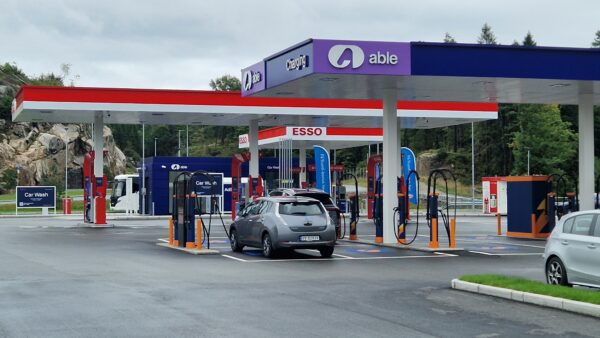
Later in the year, GCSF caught up with Kempower again to win insights from the company’s participation in the Insight EV Market Focus in Norway, which took a deep dive into everything EV and included site visits to Esso, Circle K, Uno-X, 7-Eleven, and Shell service stations, some of which feature Kempower EV fast charging solutions.
Erling Sandstad, Kempower’s segment owner for public charging, took part in the EV Market Focus in Norway to learn what delegates from markets including the UK, Canada, America, and Europe think about EV charging.
“It’s not about selling and constant pitching but learning from people when they come to Norway,” he said. “Some do not have that much experience, but we know what will happen – what’s happened in Norway with EV will happen in Sweden, Canada, Australia, Denmark, Germany, etc,” he said. “We were there promoting chargers in general and the business opportunities,” Sandstad added. “We were saying ‘this is what will happen with you – you should have chargers outside your fuel station’.”
Following on from the Norwegian event, Sandstad joined the Pre-NACS Show Insight Market Focus in Boston and the NACS Show in Atlanta.
It was another big learning curve due to Kempower’s expansion in the US. “It’s very interesting for us because it’s a country of cars,” Sandstad said. “We’d like to repeat the success we’ve had with Kempower in the Nordics and the European market in the US.”
In 2023 it quickly became apparent that if you were looking for expertise in EV charging, the Nordics was the go-to location. In June, GCSF interviewed the Norwegian company Elywhere to learn how it was meeting convenience needs with rapidly deployed super chargers for EV cars.
Elywhere’s ES300 solution provides up to 300kWh of charging and combines battery technology in combination with power from the local grid. It’s what makes the product unique and is deliberately customised for locations with weaker grids, according to Elywhere founder and CEO Kenneth Hauge. With a growing number of EV markets worldwide but a lack of overall capacity in the grid, Elywhere is literally ‘plugging’ an important gap. Further, the company is aiming to infill all those locations between big charging hubs and CPOs (Charge Point Operators) and is helping to regenerate those towns and villages as businesses launch new offers and services to meet EV drivers’ needs.
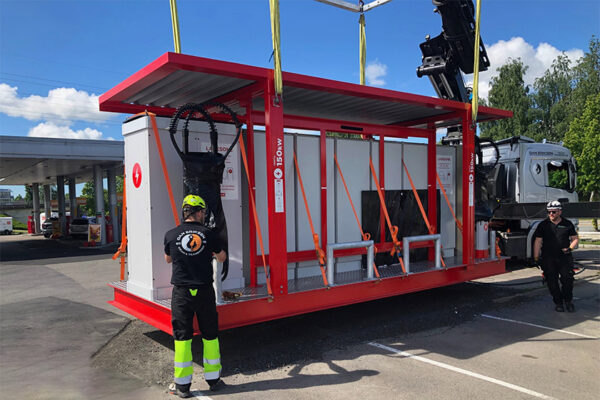
The company secured its first pilot with Circle K in Norway in January 2022 and showcased the first branded unit at The Electric Vehicle Symposium in Oslo later that year. The unit, which has the same footprint as a 20 ft container, measuring 6.5m by 2.4m by 2.8m and weighing in at 7.2 metric tonnes, was loaded onto a truck and transported to the exhibition centre. It was unloaded into the hall and within two hours it had started to charge the first test cars.When the exhibition was over, the unit was transported to a Circle K location at Ski, just outside Oslo, and has been running there since late July with great success, Hauge reported.
In terms of the charging technology, the ES300 offers 300kWh of battery storage with two satellites and four hoses (to charge four cars) and can charge up to 150kW on each connector/outlet. The minimum grid requirement is just 400 volts and 63 amps, which is particularly critical for c-stores.
“The market in total has a challenge because of the lack of capacity in the grid,” Hauge reported. “If you are building a standard charging station, you might have to wait a long time before you can get the power you need. The big difference with us is you don’t need new power from the grid because we use the existing power on the location,” he said. The other key selling point for convenience retail is the rapid deployment.
“From ordering to placement it is six to eight weeks and, from placing on location, the unit can be up and running in six to eight hours and can charge the first EV cars.”
Elywhere has expanded at pace, installing more Circle K units and supplying markets including Ireland, France, Portugal, Spain and Iceland.
With a strategy to site its chargers away from large charging hubs and CPOs but everywhere else in-between, Elywhere is helping to regenerate towns and small cities, which have been bypassed by new highways and bigger roads. As a result, new businesses which meet the needs of EV drivers, who need something to do during the 20-40 minutes they are charging their cars, are emerging and growing. Hauge reported one customer has increased their convenience store sales by 60% following the installation of one of his company’s units nearby their location. “If someone is charging from 5-10% to 80% they need to have something to do. With a petrol station, you just fill up and drive. Here you have to wait a little while, so it’s especially beneficial for convenience stores,” he said.
GCSF has also looked at innovative solutions and technologies inside the c-store, which directly benefit retail operations and deliver a great return on investment too.
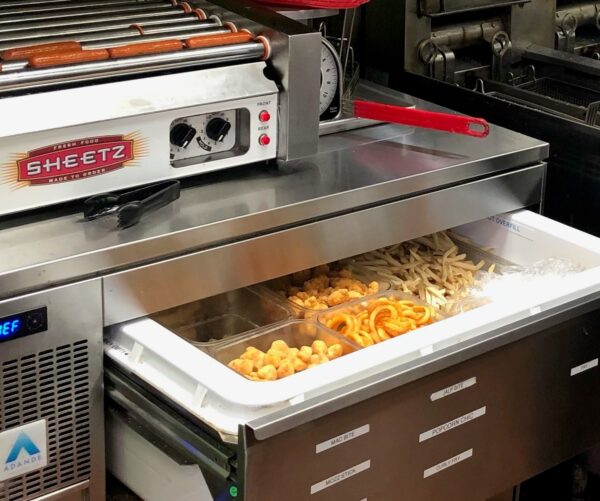
Adande’s patented refrigerated drawers are doing just that and have been adopted by retailers around the world to benefit their foodservice businesses. The insulated drawer container concept ensures no cold air is lost when the drawer is opened, in contrast to a traditional upright or under-counter refrigerator with a door, which allows cold air to fall out as you reach in.
“With an Adande drawer the cold air has no where to go when opened, instead the air sinks back into the drawer and means your food produce is kept at the right temperature and in the best condition,” said Karl Hodgson, managing director at Adande.
The company’s big breakthrough came in 2008 when it landed a partnership with KFC in the UK, quickly followed by McDonald’s in both the UK and Europe. Other fast food chains started to follow, along with numerous pubs. “We supply everyone from a QSR to a Michelin star restaurants.” Hodgson reported. Today, Adande’s units are sold across Europe, the Middle East, Asia Pacific and Australia and most recently the US to retailers including Sheetz, GetGo Cafe + Market and EG America’s Cumberland Farms.
Adande’s key message to c-store operators is that its refrigerated drawers will provide a return on their investment, as well as numerous operating efficiencies, Hodgson said. For convenience stores who prioritise the quality of their food and foodservice offers, Adande’s refrigerated drawers offer better storage due to the stability of the temperature.

In October GCSF discovered how EdgePetrol’s fuel pricing software is helping hundreds of independent forecourt retailers make better pricing decisions so that they can adapt their businesses to changing market conditions and keep ahead of the game.
EdgePetrol’s chief revenue officer, Mark Truman, shared the company’s journey and its solutions.
EdgePetrol helps forecourt retailers make the best pricing decisions by taking into account their fuel volume, margin and competition. “We help them make fuel pricing decisions by connecting to the information that they already have and bringing that to them in real time,” Truman said. Those key elements help retailers to determine and set the ideal pole sign price.
Today EdgePetrol is the number one pricing software provider in the UK, working with 30 of the top 50 independent retailers and hundreds of other stations. The business has also signed several supplier deals with major oil companies, who pay for EdgePetrol for their dealers to ensure that their businesses are running effectively.
Truman provided plenty of helpful advice for operators and pinpointed clear market opportunities such as social media and creating differentiated retail angles and vibes. He referenced a number of UK players with USPs including Inner Space Stations in York and GHSL’s RaceTrack Pitstop brand in Glasgow.
He also discussed EdgePetrol’s planned US expansion. The company launched in the US in April 2020, just as Covid hit, so has had to manage the business remotely. Now the company is in the process of getting customers live on its app and anticipates good growth from companies of a similar size to those it works with in the UK. The potential is huge with EdgePetrol eyeing the 80,000-90,000 sub-150 site US stations, Truman said.

Drive-thru has become increasingly popular in markets around the world, accounting for two-thirds of all fast-food purchases in the US, data shows; while drive-thru traffic has increased 30% between 2019 and 2022, according to the foodservice research firm Technomic.
As such, an interview with Humdinner, the drive-thru technology company, was sure to hit the mark. Humdner offers automated multiple-lane drive-thru and curbside designs, including a contactless, no-touch system.
The business was founded in Ottawa, Ontario, Canada, in May 2020 by Kevin Bessy but conceived prior to the pandemic as he observed market trends. Growing brands like Tim Hortons, for example, had extended their offerings to better compete with rivals, but that created bottle necks in their drive-thrus and roadside queues, deterring customers who were simply driving by. Additionally, Bessy noted McDonald’s had begun to innovate and change its store interiors, rather than focus on the business generated outside of its locations.
“For most QSRs, 75% of the revenue is at the drive-thru, which is why I came up with the innovative idea to build a multi-lane drive-thru and Humdinner was born,” Bessy said. “The aim was to create more throughput and decrease the wait time.”
As well as driving volume and decreasing wait times, ensuring food quality was top of mind for Bessy. Today’s consumers want fast service but also freshly prepared, high-quality food, he maintained. “It was key to use the technology to the best advantage in the restaurant without compromising food quality,” Bessy said. That’s achieved at Humdinner through predictive ordering and analytics, rather than adopting a demand-led strategy. Bessy’s system still manages inventory effectively but enables QSRs and restaurants to provide fantastic fresh product output. Slim Freddy’s, a Humdinner customer with several sites in France, is capable of freshly producing 420 of its bitesize burgers in one hour and 40 minutes with just two employees, Bessy reported.
Bessy shared Humdinner’s technological advances including AI innovation to process speech-to-text orders to a store’s PoS system and geo-fencing and geo-referencing technology, which lets QSRs prioritise orders based on the customer’s proximity to the restaurant and the time it takes to prepare each individual order so that they are ready to go as soon as the driver pulls up at the location. Meanwhile, the no-contact solution, which Humdinner has devised, delivers food in a completely contactless fashion – it even incorporates an extending tray at the point the customer collects their order.

While the focus on new mobility largely centred on EVs and EV charging in 2023, GCSF also put the spotlight on hydrogen as an alternative fuel with an interview with HVS (Hydrogen Vehicle Systems). The Glasgow-based OEM is transforming the trucking industry with its hydrogen propulsion systems, which are helping the industry achieve its zero-emissions targets. The company has been on a strong growth trajectory since its launch in 2017 and in April this year it unveiled the UK’s first zero-emission hydrogen-electric HGV.
Daniel Musenga-Grant, head of sustainability at HVS, said HVS was set up to provide an option for decarbonisation for HGVs. “We saw options for decarbonisation for other vehicles but, when it comes to the heaviest vehicles on the road, HGVs which are working every day and keeping our economy going, there was no option for decarbonisation and pure battery-electric technology was not working for a lot of the use cases in these largest of vehicles and HGVs,” he said.
“It’s why we went for a hydrogen powertrain with its quick refuelling and long ranges and ability to keep those heavy payloads moving and get them into operation with minimal upheaval for the operators,” Musenga-Grant explained. “We know there’s a big transition coming and there’s going to be changes across the whole of society, the economy and logistics industry. We wanted to make sure it could be as painless as possible for HGVs, while also achieving decarbonisation, which is a big challenge,” he added.
Karen Preston, HVS sales and marketing director, said there was a growing interest in hydrogen solutions due to the shortcomings of (BEVs) Battery Electric Vehicles for HGVs.
Downtime during charging is a lengthy process for HGVs and an obstacle to adoption, for instance. “Uptime is the main priority for all of the operators in logistics,” Preston said. Operators cannot afford to take vehicles offline for 12 hours to charge overnight, she says. Plus, in many instances, trucks are double or triple shifted and continually on the road so, when one driver runs out of hours, another will hop on board.
“This is the way the logistics industry is set up,” Preston explained. “It’s very streamlined, with optimised routes and very tight margins. Operators are going to struggle to adapt battery electric to longer haul operations.”
In addition, operators are having to invest significant sums of money to install fast chargers. “Some only have the capacity to run five vehicles out of a depot, where they need 100,” Preston said. “They’re not going to make that work with battery electric technology.”
HVS highlighted growing governmental support for hydrogen in world markets. “There’s a real focus on building out the infrastructure but it is very slow,” Preston said. “The UK strategy has been for battery electric but they now see the value of hydrogen to support those net-zero targets but we need a lot more focus and drive to meet those targets.”
The company also shared its heat map analysis of the UK logistics road network, which estimates that just seven strategically placed H2 refuelling stations could cover the majority of UK logistics movements.
“There’s a real chance for HGVs to be the first hydrogen vehicles on the road because of this ability to have this strategic network and, once that’s built out, you can expand to medium vehicles. Then, as there are more stations, hydrogen becomes more applicable to other vehicles and even down to private cars,” Musenga-Grant said.
“It’s important to remember a hydrogen vehicle is an electric vehicle, it’s just you are producing electricity on board instead of having to take it from the grid,” Musenga-Grant added. The need is to push against fossil fuels and continued use of diesel and petrol and find the use cases where different types of electric vehicle work for decarbonisation,” he said.
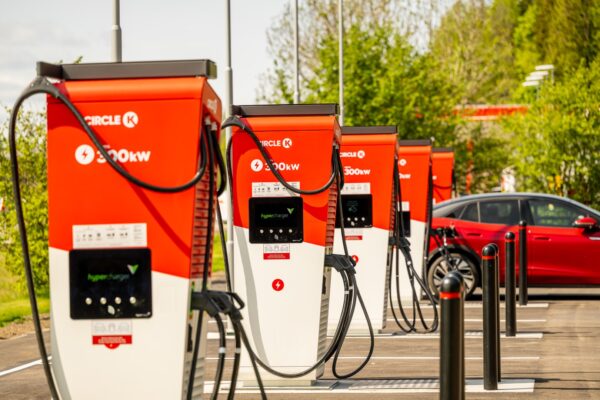
GCSF started the year with a focus on EV and closed the year with a interview with Christian Ellneby, director and head of finance & strategy for global emobility at Circle K. The article showcased how Circle K is aiming for a premier position in e-mobility and its journey to date.
Ellneby presented the EV market in general and specifically across the Nordics, which alongside China, leads in EV development globally and the factors influencing fast charging on-the-go.
As with HGVs, uptime is a critical factor, Ellneby said; and he revealed Circle K’s uptime across Scandinavian chargers in 2023 was above 96%, which is believed to be above industry average. Ellneby also presented Circle K’s competitive edge and the differentiators required to capture a premier position in European mobility.
Those differentiators include:
- Circle K has strong positions in all markets with highly valuable locations, and is the market leader in six out of eight markets
- A leading convenience and wash offering – providing strong value beyond charging alone
- The company has strong and proven track record in operational excellence and cost discipline, which enables the company to operate with industry leading profitability
- With 3.4m active users in its loyalty program EXTRA, Circle K is in a unique position to use insights on the EV customer to build tailored offers
- The company’s European podium position in B2B will generate significant value as EV adoption increases in the European B2B segment
Ellneby said Circle K was now ready to scale out its Scandinavian emobility proposition to the rest of Europe and that its recent TotalEnergies acquisition provided an opportunity for growth in the most attractive emobilty markets in Continental Europe. “Building a leading European EV charging network, featuring both Circle K and partner chargers, is delivering stellar growth,” he said.
In North America, where the company doesn’t have the same market leading positions as it enjoys in Europe, Circle K is starting to install chargers in key markets so, that when EV adoption starts growing, it will be present and ready to take positions.
Ellenby shared Circle K’s customer promise at its EV sites and latest results. Around 40% of the Circle K network in Norway is now electrified and the company has grown on-the-go charging in Scandinavia by 95%. On-the-go transactions are up by 70% and customer numbers are up 52%. Circle K has also measured the shopper behaviour of its EV and ICE EXTRA Club members and revealed the EV customer is a more frequent store visitor versus the ICE customer and has a basket size which is an impressive 15% higher. Further, when it adds carwash traffic to this comparison, Circle K is experiencing an uplift of 27% in gross profit versus the ICE customer.
“These are highly promising numbers and a very strong signal to our belief that providing a combined store and charge offer is holding water. Also, this added value from the EV customers is mitigating the loss in fuel traffic we will face in the years to come as the transition to electric mobility continues,” Ellenby said.
