

Péter Ratatics, EVP at MOL Group shares expansion plans, on and off the forecourt

MOL Group, the international oil, gas, petrochemicals and retail company headquartered in Budapest, Hungary, is accelerating its consumer services strategy to become a digitally-driven retailer and integrated mobility services provider by 2030.
That ambition is seeing the business expand its fuel network and its Fresh Corner convenience retail brand but also step out from the fuel station environment with standalone stores, reports Péter Ratatics, EVP Consumer Services, MOL Group.
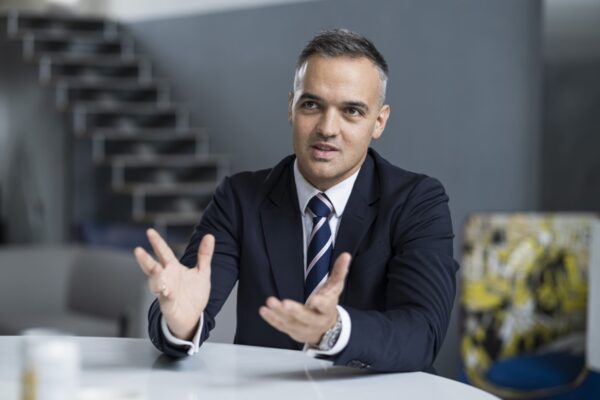
When we last spoke with Ratatics in November 2021, the company operated just under 2,000 forecourt sites in Central and Eastern Europe (CEE). Since then it has made two major acquisitions.
The company acquired 417 Lotos service stations in Poland at the end of 2022 following the merger between PKN Orlen and Lotos. Following network optimization and regulatory adjustments, MOL Group currently operates 370 of these stations in Poland.
The move gave MOL Group access to the largest market in CEE with 40 million potential customers. Today, the network represents around 7% market share, with further potential to grow.
“We have made a very strong start but it’s our intention to grow our market share further. GDP in Poland is growing and the population is growing, from the impact of Brexit and Poles returning from the UK but also the Russian war in Ukraine – a lot of Ukrainians have moved over to Poland,” he says.
MOL Group also acquired 120 OMV stations in Slovenia in July 2023 but a net 80 after it sold stores to Shell in order to address competition issues. Slovenia is a much smaller market, comprising 2.5m people but an important transit country on the East-West transport corridor, explains Ratatics.
“From a volume point of view, the market is high although the number of citizens is low,” he says. Following the OMV deal, MOL Group is the second largest fuel retailer in Slovenia with a 32% market share.
Fresh Corner expansion

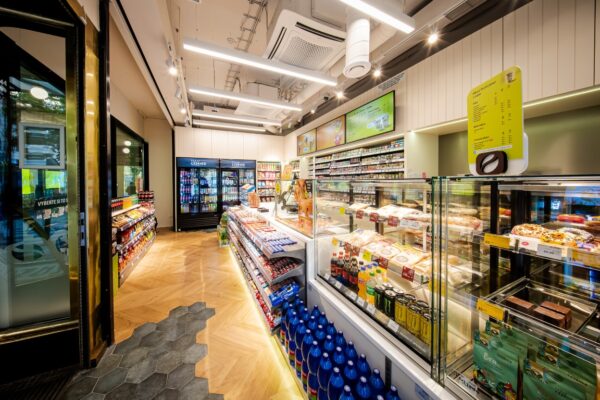
MOL Group has continued with the roll out of its Fresh Corner convenience store brand, which is now offered in 10 countries in CEE. Four years ago there were 955 stores, covering 50% of the network. Today there are close to 1,400 sites with more than 60% of stations now covered.
The company has also recently celebrated the 10th anniversary of the Fresh Corner brand and marked it with the launch of Fresh Corner 2.0.
Fresh Corner 2.0 encapsulates all of the learnings from Fresh Corner to date. According to Ratatics, that includes both smart improvements in layout and design but also operational efficiencies. “It’s not just touch and feel,” he smiles.
By the close of the year, there will be five new concept Fresh Corner stores across two MOL Group countries and, moving forward, all new stores and revamps will feature the new design.
In food, meanwhile, the business has massively expanded its hero hot dog product – it now sell as over 45m pieces per year. Ratatics claims Fresh Corner owns this category in CEE and seals that lead with exclusive partnerships with the sausage and bread bun producers but also with Heinz with a unique range of sauces.
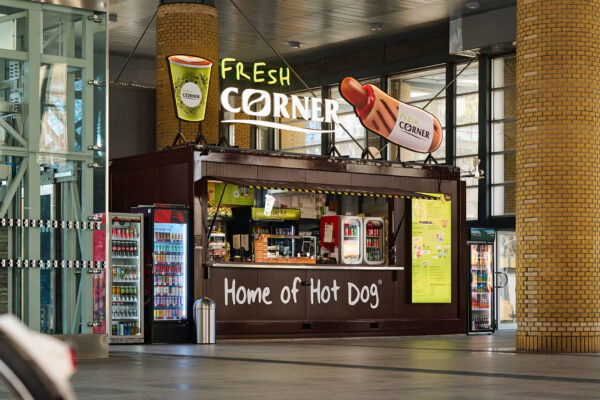
In addition, the company has enhanced its offer in pizza, fresh sandwiches, pre-packed sandwiches and bakery; and has created a Fresh Corner hot food strategy, a new bistro concept.
Why is this important? Stand-alone units provide access to new customer segments, from commuters to tourists, and offer flexibility in format, from kiosks to full-service cafes. Based on early results and growing demand, MOL Group sees significant potential in this strategy.
According to Ratatics, the Bistro concept will be introduced at selected and larger stores and will feature hamburgers, pizzas, and a variety of over-the-counter products—broadening the Fresh Corner experience beyond coffee and snacks. Looking further ahead, MOL Group aims to operate 360 bistro-style units by 2030, creating a strong presence in the fast-casual dining segment.
Fresh Corner’s expertise in hot dogs and coffee has given the brand credibility in foodservice, Ratatics maintains. “It’s proven that you can offer delicious, quality products quickly, which you can consume on-the-go and on the road,” he says.
Standalone stores

The MOL Group is taking its popular Fresh Corner brand to new heights with the introduction of a standalone concept designed for busy, non-fuel retail locations. This move represents a bold shift in the company’s convenience strategy, bringing Fresh Corner closer to consumers where they live, work, and travel.
From airports to train stations, university campuses to office buildings, the standalone format has already made its mark. In Prague, a Fresh Corner store has opened in a busy tourist area. In Hungary, shoppers can enjoy the Fresh Corner offering at Blaha Lujza Square, at Corvinus University, and MOL headquarters. This summer, MOL introduced kiosks at railway stations and introduced a pilot train service offering Fresh Corner products. In Slovakia, travelers can enjoy a coffee at the airport Fresh Corner and so on.
The expansion is far from over. By the end of 2026, MOL plans to open 25 more standalone units in Hungary and another 25 in the group’s regional expansion area. These new locations will complement the existing Fresh Corner network at gas stations, reinforcing MOL’s ambition to become a leading player in the convenience goods market.
Why is this important? Stand-alone units provide access to new customer segments, from commuters to tourists, and offer flexibility in format, from kiosks to full-service cafes. Based on early results and growing demand, the MOL Group sees significant potential in this strategy.
App potential
MOL Group continues to get closer to customers via its loyalty app, MOL Move. While plans for a marketplace-style platform have been shelved, following the war in Ukraine, rising energy prices and sky high inflation, the business has grown its app downloads to ca. 5.5 mn with more than 4 mn active customers, who use the app on a frequent basis. The business is expanding the type of services members can access via the app, such as travel and vehicle insurance, highway tickets, parking solutions, and third party offers on different banking products and e-commerce services.
“It’s very efficient to attract these online customers and very easy to engage,” Ratatics explains.
Mobility moves
In terms of mobility, MOL Group is following two key streams. In EV it has installed 600 public charging points but the EV market has slowed, hampered by the 2022 energy crisis, difficulties in European car manufacture and an increase in Chinese imports.
“We are not clear about the growing pace of electric cars. We are in a ‘wait and see’ mode but we are learning all the time and measuring whether we go towards home or office charging,” Ratatics says.
Car sharing, the second mobility stream, is growing however. In Budapest the service is getting better and now near to break even, Ratatics reports.
“It’s a good product for a city with 2.5m customers and a lot of customers without cars – brand engagement can be very high,” he says.
MOL Group also has a fleet operation – the second largest in Hungary with 22,000 cars. With experience of car sharing within the day rental space and fleet services with three- to four-year lease arrangements, MOL Group is eying opportunities for its fleet and customer management capability moving forward, Ratatics says. Following the announcement that San Francisco company Waymo plans to bring its robotaxis to London, this includes building capability to manage self-driving vehicles, Ratatics says.
“I’m sure it will come in a few years’ time – these will be completely new services,” he says.
Next steps

MOL Group will continue on its journey of providing a digital customer experience with many AI-driven initiatives, Ratatics reports.
“AI capabilities are really important to us – for data analytics and optimizing operational costs but also for customer offers and personalization,” he says. The aim is to provide one-on-one offers based on a customer’s profile, purchase history and recommendations from data analytics to anticipate what that they would like to buy next, he says. The app platform provides a lot of flexibility and possibilities in this respect with MOL Group aiming to double the number of app customers to 10m by the end of the decade.
MOL Group has made huge strides in an unstable environment shaped by the Covid pandemic, war in a neighboring country, energy price hikes, high inflation and huge wage pressure “Despite all these difficulties, we have been able to grow the network and penetration of Fresh Corner and increase EBITDA from consumer services between 2021-2025,” Ratatics says.
The consumer services strategy is working.
