

Why is Irish convenience and food retailing world class?
By Scott Annan.
It’s been my privilege to visit both parts of Ireland since the 1990’s. Its population of 6.8 million is the equivalent of a combined Birmingham, Glasgow and Manchester and is approximately 10% that of the UK. The Republic has 5 million and Northern Ireland 1.8 million. Why does this small green island punch above its weight in convenience, roadside and food retailing? Why are family-owned retailers so successful? At the core is the intense level of competition and that Irish consumers are accustomed to excellent in-store standards.
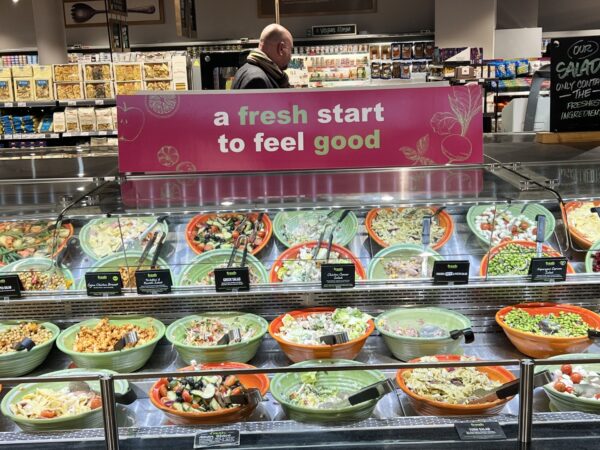
These high customer expectations need to be met consistently such is the competitive nature of the market. Retailers need to preserve their margin while retaining a continuous improvement mindset. The Irish like to try new food ideas around the world and bring them back to Ireland. This together with a cosmopolitan population has driven a strong fresh food and al fresco dining culture. Traditional brown food remains hugely popular alongside tastes from across the world. The consumer is very aware about food quality be that the ingredients in their baguette, salad, or hot meal. They will quickly move retailers if quality compromises are made!
Irish food retailing is very competitive and underpinned by an inter-connected supply-chain. A significant proportion of market share is held by indigenous, family-owned retailers operating under the SuperValu, SPAR, EUROSPAR, Centra, MAXOL and other collective brands as well as family fascia such as Milestone Rathfriland and Hughes of Camlough. The overall market leader is the family owned and operated Dunnes with a 23.5% market share. The two German privately-owned retailers Aldi and Lidl have a combined 25% share. The closest market to the Irish structure is Germany with family retailers trading under the EDEKA and REWE facias.
Bank of Ireland data confirm the profit margin generated by these retailers over the past year has remained consistent while maintaining significant employment and investment in local communities. The bank has funded over €100m to independents this last year to increase store portfolios and revamp existing stores to maintain excellent standards.
See Irish convenience excellence for yourself at Insight Market Focus Island of Ireland, 21-23 February 2024. Learn more here>>
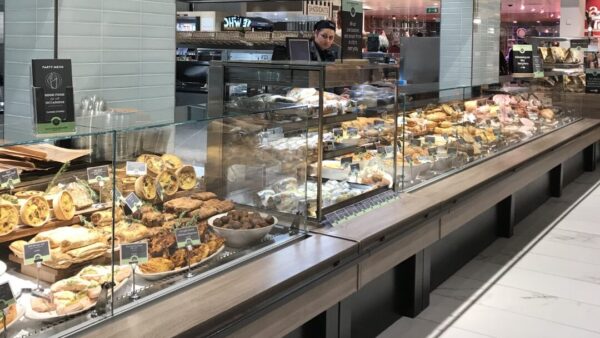
Energy efficiency was a significant catalyst for store investment over the past year – LED lighting, new refrigeration systems, solar panels, electronic shelf labels support a more efficient cost base. Revamps also focused heavily on fresh food for today, dine-in, coffee, produce and butchery: SuperValu, Dunnes, Centra, SPAR, Fresh and MAXOL all to the fore in this regard. When revamps are implemented well, sales increases of 5% to 10% and margin increases of 1% to 1.5% are typical.
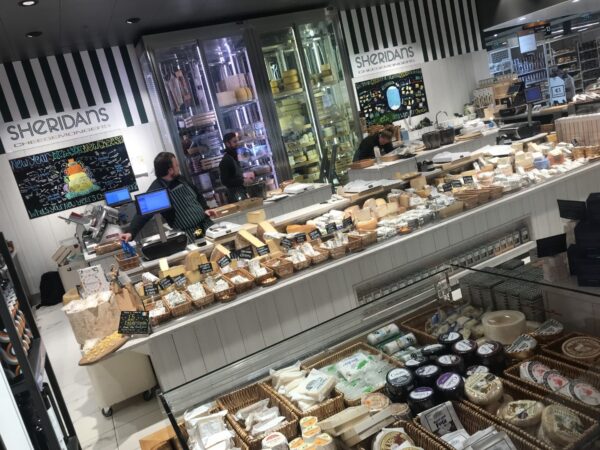
The Irish grocery and convenience sector is recognised internationally as an exemplar in respect of store standards and innovation. It is a ‘go-to’ destination for international retailers seeking ideas to improve their own proposition. Retailers from the UK, Europe, USA, Japan and China have visited Dublin, Belfast, Derry and Newry with me. A large group from the Australian United Convenience Buyers is visiting in October.
Some of the key areas of focus for Irish retailers are:
- Proprietary products. Saving money on food remains a top priority across all income groups. This has led to increased purchases of own-brand products and a constant improvement in own-brand range/options. As consumer confidence improves, more premium, healthy and sustainable proprietary products will be required to meet customer expectations and preserve margins.
- Personnel development. The shortage of personnel has prompted a dual-approach from retailers: the development of flexible/proactive employee development plans incorporating up-skilling/management opportunities and more automation of manual intensive tasks. The use of electronic shelf labels (ESLs), self-scan checkouts and smart rostering systems are helping to deliver a better work-life environment when balanced with maintaining customer service values.
- Margin management. Grocery retail is a high-volume, low margin business with leading European grocers reporting EBIT averages of 3-8%. When compared with the leading consumer packaged goods (CPG) businesses at 19%, the need for robust margin management is clear.
- Store revamp/investment is a key component within the strategy of fulfilling customer expectations, preserving margin and driving overhead efficiencies. My own experience aligns with Bank of Ireland data in that a store revamp will deliver a sales uplift up to 10% and a store margin growth of around 1%.
- Automation investment: Retailers recognise that relevant investment in personnel, store design and product offering is key to preserving profitability.
- Sustainable business. The Irish are pragmatic and good at sniffing out greenwash and selfish motives! Milestone Rathfriland works diligently to reduce plastic and cardboard waste across every department. A large percentage of the store’s plastics are compostable. All the plastic on the prepared fruit and vegetables is bioplastic meaning it is made from plants. The store has a biomass burner and burns much waste for heat.
In 2005 Dublin retailer Thomas Ennis Ennis opened his first store on Merrion Row and I was privileged to be involved in the planning. As Thomas states “The store was a bit different compared to all the other convenience stores that were out there. Ireland’s reputation for providing high quality, fresh food-to-go comes from taking chances. We are not afraid to make mistakes”.

This city centre store pioneered the move from grocery top-up to destination day-part fresh food. Thomas’ retail philosophy is repeated across Ireland: “If it works, brilliant. If it doesn’t work, we learn from failures and move on”. Thomas has again innovated with the world’s first SPAR pop-up shop in Dublin city centre. It provides a short-term viable commercial venture in an unused premises with the fitout taking a plug and play approach to set up quickly and support recycling and eco consciousness. The external fascia of the store is a replica of the original 1963 Spar sign, while the store looks to Spar’s origins with 1960s imagery as part of the store décor. This venture is in keeping with the entrepreneurial spirit of Irish independent retailers and an example of retailing innovation at its finest.
Owen Clifford, Head of retail sector at The Bank of Ireland contributed to this article. Originally published in coordination with Newtrade Media.
