

Building bridges to a more sustainable future

International sustainability company GreenPrint is partnering with retailers to help them on their environmentally sustainable journeys with easy to implement solutions. Fiona Briggs reports
GreenPrint’s purpose is succinct: the business is centred on ‘making sustainability convenient’.
For GreenPrint’s CEO, Pete Davis, that means empowering individuals to make better choices and that small actions and changes in behaviour can snowball and have a positive impact in helping to preserve the planet over time.
The ripple effect
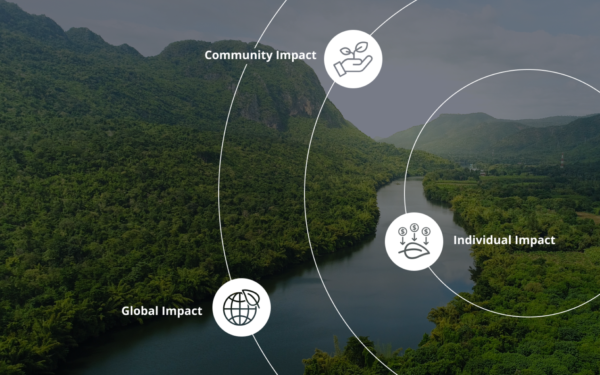
It’s what Maxol CEO Brian Donaldson has termed the ‘ripple effect’.
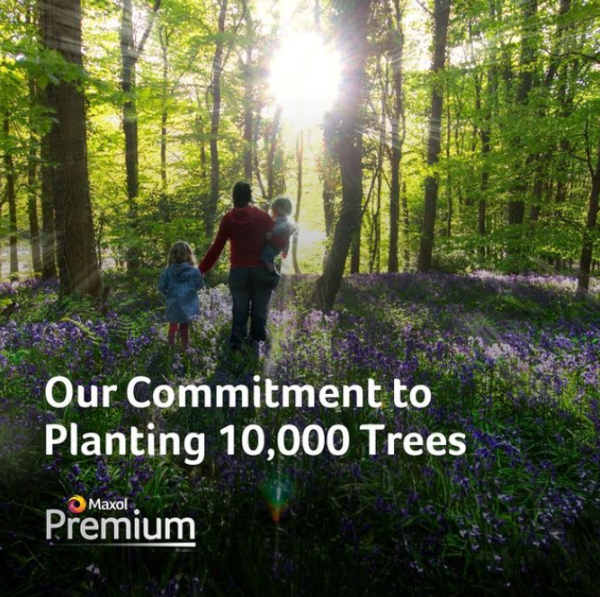
The family-owned Northern Ireland and Irish forecourt retailer has just partnered with GreenPrint to launch a carbon off-setting programme for its new Premium fuel range, including the planting of 10,000 trees across the island of Ireland, local community projects and global projects designed to offset carbon emissions, including fuel emissions.
“Brian shared the concept of the ‘ripple effect’ and how the strategy empowers individuals to make better choices, committing to positive impact at the local level through non-profit partnerships and the positive global effects that come from lots of small behaviour changes over time,” says Davis.
According to Davis, Maxol’s carbon offset initiative is a bridge to the future, which stands alongside other initiatives ranging from EV charging to renewable energy and sustainable packaging and sourcing initiatives, which together create a cohesive, meaningful and impactful sustainability initiative.
“Change doesn’t happen overnight,” he says. “The notion that you can set a series of events in place that will change behaviour overtime to make a long-lasting positive impact is an incredibly powerful way to create a bridge to a better future.”
Addressing the climate crisis
Founded six years ago by a team of former loyalty experts, GreenPrint had noticed that customers in general were becoming more purpose-driven and changing their buying behaviour accordingly, says Davis.
At the same time, there was a large unmet need to address the climate crisis.
“There was a lot of talk, few regulations, and much promise of action in the future,” Davis recalls.
The major automotive manufacturers had not yet begun to tout EVs, Elon Musk was just beginning to unveil plans for the Tesla….and all the analysis said we were 30 years away from the mass adoption of EVs, Davis says.
“We recognised that there was an opportunity to marry the two ie the consumer need and the transition to the future of transportation,” he says.
With that focus and, until everyone is driving EVs and pulling from a renewable energy grid, GreenPrint’s aim is that all fuel should be carbon offset ie carbon neutral.
Today, GreenPrint works across 4,500 retail locations in 14 counties to calculate tailpipe emissions and carbon footprints.
It designs plans to reduce and address its clients’ waste and environmental impact (emissions) and provides reports and with ongoing recommendations to adjust plans.
“Our goal is to help companies begin or complement their sustainability journey and to be a first mile or last-mile solution,” Davis says. “We design and implement plans to immediately address their environmental footprint, and tell their story to purpose-driven stakeholders in order to increase loyalty.”
There is a heavy focus on justifying the expense of sustainability, he adds.
GreenPrint taps into both employee and consumer loyalty in this respect and reports that its programmes have driven an increase in customer loyalty of 24% on average, based on Net Promoter Scores. That strengthens your mission and culture and galvanises your employees, Davis says.
“At GreenPrint, when we ask potential employees why they want to work with us, 100% of them say because they want to work for a company that has a purpose and is making a difference,” he adds.
Focus for change

While GreenPrint’s early focus has been on carbon offset – it has an initial goal of helping clients implement plans by 2025 that will reduce or offset more than 100 million tonnes of carbon emissions – it’s since expanded from pure petrol/fuel to corporate fleets, financial services retail, travel and hospitality, consumer products and other industries.
Davis reports the business is now focused on four key areas of environmental impact: CO2e, water, energy and ocean-bound plastics.
These overlap with the four key areas identified as a focus for sustainable change in Insight’s two recent Shop Talk LIVE (STL) webinars (The Big Green Reset in the Convenience Store and on the Forecourt).
Presenting in the Convenience Store STL, Mark Dempsey, consulting director at Global Data, suggested sustainability issues were now on the back burner due to the Covid-19 pandemic and that the focus was now on comfort amid uncertainty, health and wellbeing, ease and affordability.
Davis agrees: “Single use plastics are back because of safety. That’s maybe for the next six months or year.
“That has set us back a bit,” he concedes, but is a result of the retail and restaurant businesses reasonably prioritising safety and pivoting formats to accommodate more carry out services.
“A silver lining to this is during the height of the pandemic in June, we partnered with a retailer (SpeedyQ) in Michigan to offset their hot and cold cups, enabling them to make a positive step amidst these challenging times,” Davis reports.
“We’ve also seen a +300% increase in 2020 in our CPG business with wellness, snack, and organic brands looking to neutralize their plastic and carbon footprints.”
Taking local cues
Dempsey also highlighted other factors heightened by the current pandemic including the importance of local and community.
“The pandemic has accelerated the desire for consumers to “do good’ and specifically support local. While reducing environmental footprints remains important to them, through the pandemic we are also seeing local sourcing and supporting local communities rise in importance,” Davis says.
Maxol’s new programme adopts these local cues with support for a local conservation group in Northern Ireland, The Conservation Volunteers, which is preserving the genetic heritage of native Ulster provenance trees at the Native Tree Nursery project at Clandebove; while in Ireland the retailer is working on local community projects with Crann Ireland to raise awareness for the environmental importance of trees, hedgerows and woodland.
Dempsey also showed how the pandemic has prompted ‘ease and affordability’ to increase in importance.
“Now 60% of customers consider it when making decisions. This fits in nicely with our goal of making sustainability easy,” Davis says. “We normalize and democratize sustainability – that makes it easy and actionable so everyone participates.”
For GreenPrint, making it easy for customers to make sustainable choices is critical to winning their lifetime loyalty.
Davis highlights a consumer survey conducted by one of its major international retail partners, which showed customers wanted the retailer to make sustainability easy for them.
“90% of Americans say they would switch brands to one associated with a good cause, given similar price and quality,” he says. “That’s why it’s not only important to have a sustainability programme, but to make sure customers know about it and to get them involved through community events like tree plantings.”
Maxol is committing to planting 10,000 trees across the island of Ireland over the next two years in collaboration with a cross-border initiative, Trees on the Land, as part of its off-setting programme. The 10,000 trees are being planted on behalf of the people of Ireland and Maxol is kickstarting this element of the campaign by planting and dedicating 1,000 trees to its employees. The company is also inviting the public to nominate someone special, on whose behalf they will plant a tree.
Environmental Commitments
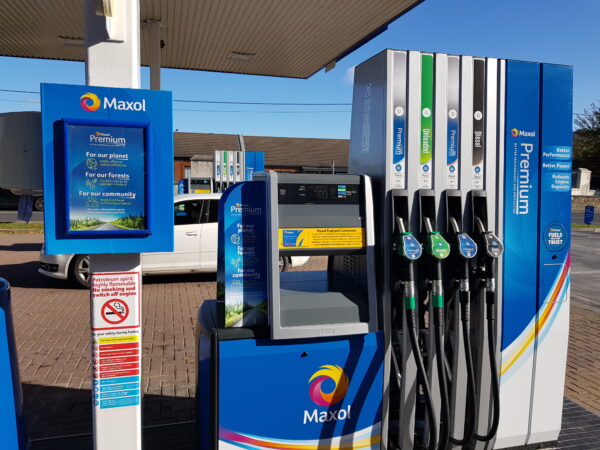
For Maxol, the off-setting initiative is just one of many environmental commitments, which span its operations and include compostable coffee cups, energy efficient systems, EV charging points, green energy and harvesting rainwater. It’s a genuine and transparent journey, not greenwash.
“Transparency is absolutely critical,” states Davis. “We would shy away from companies that only want to do this [carbon offset] piece but Maxol are a way on their journey,” he says.
“Consumers are smart and also skeptical,” he continues. “Building and maintaining trust is critical. The way to build trust is by doing what you say you are doing. At GreenPrint, we go one step further to ensure transparency and accuracy of our solutions and programmes by having a Big 4 accounting firm annually attest to the entire programme – from the environmental impact and carbon calculations to the verification of the credits and their retirement. Being honest and accurate is more important than ever – those who aren’t will be called out quickly. Trust is synonymous with loyalty, which is critical to the bottom-line success of any business.”
The Maxol programme

Maxol CEO Brian Donaldson checks in on one of their community projects
GreenPrint is helping Maxol to take another step on its journey to build a more sustainable future that will complement longer range and more disruptive strategies like EVs, Davis says.
The company is also working with the retailer to educate and engage the consumer through simple and authentic messaging that is transparent…inviting them and making it easy for them to take part.
Maxol’s Carbon Neutral Programme purchases offsets across a variety of global carbon offset projects to neutralize customers’ environmental impact. For every litre of Premium fuel bought at Maxol, the retailer calculates the carbon emissions and offsets them at 100% through investments in certified carbon offset projects around the world and local environmental initiatives across the island of Ireland.
Donaldson says: “Environmental issues have never been so pertinent and all of our green initiatives, including the recent launch of bright energy, are part of our group’s journey towards a more environmentally sustainable company.” And, he echoes GreenPrint’s views about the importance of lots of small changes in behaviour having an impact over time.
“The transition will not happen overnight, but we are taking important steps to get there,” he says.
