

German convenience market is reshaped by global trends

Germany’s convenience retail market is evolving across every channel – in supermarket and independently-run c-stores, forecourt sites, discounters and bakeries – as operators seek to meet changing consumer needs, increased mobility and the trend towards casual food formats, delivering offers for immediate consumption.
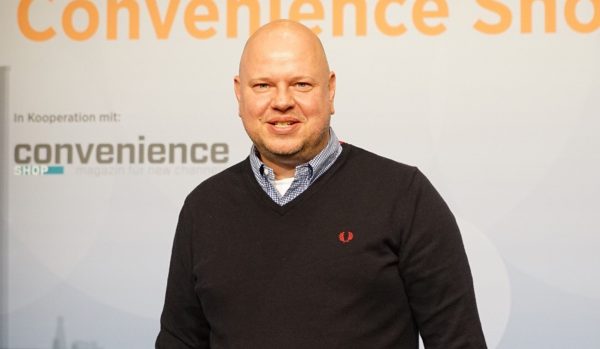
That’s according to Christian Warning, the NACS Insight representative for German-speaking markets. Based out of Hamburg, Germany, Warning is well-placed to dissect and analyze the German convenience landscape and the changes underway – some unique to Germany but many mirrored in retail markets around the globe.
Take for instance the expansion of the US burger chain, Five Guys, in Germany; or the launch of Amazon Fresh in Munich, offering one hour delivery slots.
“Amazon is disrupting the industry online and in fresh formats and it’s hitting the German market too with its online grocery service in Munich. It’s a global trend,” says Warning, “Classic bricks and mortar retailers, like Wal-Mart, have failed in Germany but the power and aggressiveness of disrupters like Google, Amazon and Facebook is winning consumer acceptance and changing consumer behaviour in Germany.”
In terms of discount retailing, Germany is ahead of the curve versus markets like the UK and Ireland. The leading players, Aldi and Lidl, were both founded in Germany, and have an established market share, competing head on with major supermarkets. But Aldi and Lidl’s UK and Irish strategy to improve the quality of the offer, enhance the consumer experience and introduce more convenience goods to the range, is apparent in Germany too, Warning reports.
“There’s now a significant number of convenience articles in the discount channel such as an improved fresh assortment. And other discounters, including Penny with its Penny To Go assortment, have that too.”
Keeping pace with the pure discount operators, Germany’s major grocery chains, including Edeka and Rewe, have invested €1.54bn in the last year alone in upgrading their supermarkets and discount formats, enhancing the quality of the offer and simultaneously boosting the convenience range.
Bakeries: day-part offers
Elsewhere in Germany, bakeries, which occupy corner store locations often reserved by mainstream c-store players like 7-Eleven in other markets, have been making great strides to transform their operations over the last five to 10 years, Warning reports.
Traditionally, bakeries have relied on early morning trade, targeting immediate consumption.
“Now they have made a very clever move into day part offers and have introduced hot snacks. The leading bakery chains now have a really good food-to-go and to-stay offer and convenience products,” Warning says. Now, 50% of their sales are driven by foodservice and 50% by traditional products – rolls, bread and cake. Again, it’s the discounters, which have been helping to drive this kind of change. Aldi and Lidl, for instance, have added fully fledged, self-service bakery offers to their mix, appealing to Germany’s price conscious consumer. “They have challenged the traditional bakery chains to do more,” he says.
Forecourt focus

The traditional convenience store channel in Germany – the forecourt – is also being transformed. According to Warning, the sector has lagged behind other convenience channels, where dedicated convenience store formats such as Rewe To Go, have emerged at high street and railway locations and at airports.
But, big change is afoot. Rewe has partnered with Aral, BP’s brand in Germany and the leader in the German service station market with a network of 2,345 sites, to introduce Rewe To Go stores on forecourt locations.
Warning reports there are plans for 1,000 stores in the next four years. The move capitalises on BP’s global brand strength and entry into convenience, already seen in the oil major’s partnership with Marks & Spencer in the UK and Ahold in the Netherlands.
It’s provided a much-needed wake up call to the forecourt market and is backed by global trends, Warning says.
To date, 50-60% of sales at an average petrol station, turning over €1m, has been generated by tobacco. Telephone cards and cold beverages are other key categories but the higher margin, foodservice elements, seen in other developed markets like the Nordics and UK, have been decidedly absent.
Now the focus of new format development is providing extra consumer convenience and to offer coffee and higher margin, foodservice products.
“It’s designed to improve the customer experience and make the gas station more attractive,” says Warning.
Shell, the number two forecourt retailer, with 1,957 highway stations and 55 Autobahn service stations, is making similar moves. It is piloting the Albert Heijn To Go format on forecourts in Germany and has teamed up with Subway to offer the brand’s signature sandwiches at its sites. The Anglo Dutch oil giant is also investing heavily in its own Deli to go Select format, Warning reports.
Orlen, the Polish forecourt chain, has also introduced a new c-store format to Germany; while Jet, which accounts for a fuels volume market share of 10.5% from only a 5.7% market share in terms of site numbers, equivalent to 805 sites, has recently won the German Oil Station of the Year Award for its one-of-a-kind petrol station format. According to Warning, it delivers a new experience on the forecourt with digital technology deployed for petrol prices, using a Kindle-like display and a new and improved fit for purpose convenience offer.
Lekkerland Frischwerk Award entry
Or look to Lekkerland, shortlisted in this year’s NACS Insight International Convenience Retailer of the Year Awards, for a very fresh take on convenience forecourt retailing. Its new Frischwerk concept has been carefully curated and finely tuned to provide a profitable petrol station format with an exceptional consumer convenience experience.
It was developed on the back of numerous customer studies, in tandem with Professor Sabine Benoit, an expert in convenience trends from The Competence Center for Convenience; plus the company’s own in depth interviews with consumers in four German cities. The research provided Lekkerland with deep insights into the concerns, needs and expectations of customers from modern, petrol station shops. The scoping also included visits to the latest, leading edge convenience concepts, foodservice formats and petrol station shops across Europe; and was combined with consumer interviews, data crunching and camera analysis of customer flow. The analytical approach has helped to transform the shop layout with the positioning of a counter in the middle of the shop to engage customers with the bakery offer as soon as they enter the store. According to Lekkerland, this feature also helps to “break” the habits of petrol station customers and opens them up for new experiences. Lekkerland’s entry in this year’s Awards programme is driving engagement with NACS in Europe and will provide an impetus for further interaction, Warning believes. “More and more German retailers will tie into NACS and Insight throughout the next few years and will see the benefit of sharing best practice,” he says.
But it’s not just the oil majors who are innovating in Germany. Independent operators, such as the regional 255-strong Westfalen chain, are in the driving seat in terms of introducing new convenience offers. Westfalen has launched a drive-in food counter for coffee and rolls, not dissimilar to the Starbucks and MacDonald’s drive through formats. It is also introducing Chopstix, the British noodle bar brand, to Germany this month (June) and already operates co-locations with Burger King. Coffee Jungle is another innovator and successful format, providing a strong coffee and convenience store brand to independent forecourt owners, excelling in foodservice. As Warning states: “Everybody is doing something and moving the market forward.” And the potential has not gone unnoticed, he adds. International players are reported to be eyeing the forecourt market in Germany, due to the recent developments. Factor in the statistic that Germany has the highest number of registered cars on the country’s roadside within the EU, and it’s another huge draw.
Off the forecourt
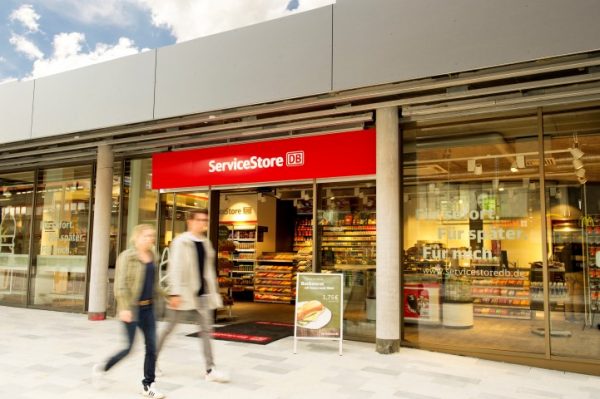
Off the forecourt, further innovation abounds in Germany, with the Swiss-owned Valora with its Avec convenience brand and ServiceStoreDB concept, leading the way. The extremely competitive nature of the German market, which has some of the lowest margins in the world, is keeping operators like these on their feet, Warning reports. Coupled with cost conscious consumer behaviour – shoppers will pay a deposit for a returnable bottle system that is equivalent to the cost of the bottle’s contents – that has kept international players at bay. Yet, while price awareness will manifest itself in the weekly shop, it disappears when Germans purchase a favourite brand for immediate consumption, Warning adds. And behaviours vary radically in different locations too. Unlike the UK or Ireland, where one power centre – London or Dublin – dominates, Germany has 12 different power centres, which are spread across the country, rather than being centered on Berlin, Warning reports. And, while there are similarities in convenience and food-to-go formats and consumers in those metropolitan areas, the behaviour is very different in rural areas, where shoppers are not used to seeing a coffee offer at every corner, Warning adds. The German convenience retail market is undergoing monumental change, as it adapts to changing consumer behaviour and key global trends but it’s also developing its own, unique facets and formats to meet German shoppers’ needs.
