

Energy-Saving tips to optimize convenience store refrigeration this summer
This summer, convenience store kitchens face the dual challenge of maintaining food safety and keeping energy costs in check – optimizing refrigeration is crucial.
Refrigeration accounts for a substantial portion of energy usage and adopting energy-saving practices can significantly reduce costs and environmental impact.
In this article, Adande Refrigeration provides valuable tips to ensure smooth operations and maximum efficiency during the scorching summer months.”
1. Choose Energy-Efficient Refrigeration Equipment:
When upgrading or purchasing new refrigeration equipment, prioritise energy-efficient models. Look for units that show an energy label, as they meet strict energy efficiency standards. These appliances are designed to use less electricity without compromising performance. Additionally, consider the size of the equipment you need. Oversized refrigerators and freezers waste energy, so choose the appropriate size to suit your convenience store requirements.
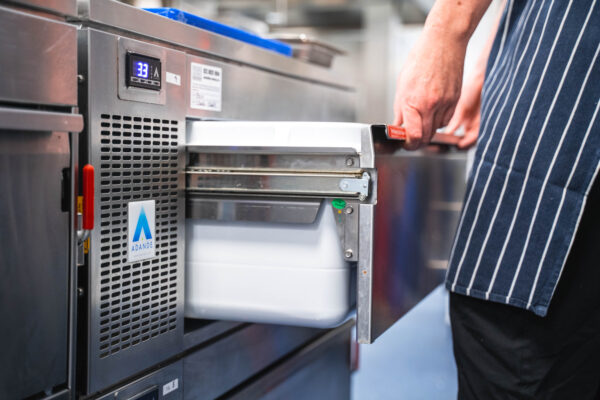
Adande refrigeration is the perfect choice for operators who are looking for refrigeration that can preserve food in the best way possible yet keep energy bills low. Adande’s unique drawer refrigeration has unrivalled temperature stability and quite literally holds the cold. When the drawer is opened there is no loss of temperature, and the unit does not gain humidity.
It is all down to science. Warm air rises, cold air sinks – hence with a traditional upright cabinet as soon as you open the door the cold air quite literally falls out. This alone is a hazard for operators, in keeping temperatures stable and consumes far more energy than an Adande variable fridge freezer drawer. A single Adande drawer operating as a fridge or as an under-counter freezer is super energy efficient, using far less than other models.

2. Regular Maintenance is Key:
Proper maintenance is crucial for optimal performance and efficiency. Schedule routine inspections and cleaning of refrigeration units. Check and clean condensers regularly to prevent dust and debris build-up, as this can hinder heat transfer and increase energy consumption. Ensure that door seals are in good condition and seal tightly to prevent cool air leaks. Ensure ice does not build up and defrost regularly to maintain efficiency.
Adande’s under-counter refrigeration units are built to withstand the demands of convenience store operations, ensuring long-lasting performance. The intelligent design means that Adande units do not ice up, instead holding the set temperature. Fridge or freezer, operators can themselves set the temperature needed. Adande units are known for their robustness and are used in the busiest foodservice and hospitality venues around the world. They are low maintenance and low maintenance cost, which are protected under warranty providing businesses with peace of mind and the assurance of a reliability.
3. Keep Refrigeration Units Well-Ventilated:
Proper ventilation is essential for refrigeration units to dissipate heat effectively. Ensure that the units are not located too close to walls or other appliances, as this can impede airflow and reduce efficiency. Allow sufficient space around the refrigeration equipment to promote air circulation and prevent heat build-up. Regularly clean and clear any obstructions around the condenser area to maximize heat exchange.
Adande’s units offer the flexibility of ventilation options, as the engines can be located on both the side and rear of the module. This design feature allows for efficient airflow and effective heat dissipation, contributing to enhanced energy efficiency. By providing multiple ventilation options, Adande refrigeration units can
be easily integrated into various convenience store layouts, ensuring optimal performance while maintaining a comfortable working environment.
4. Optimize Temperature Settings:
Maintaining the right temperature settings is critical for food safety while minimizing energy consumption. For refrigerators, keep the temperature at around 37.5 °F and freezers at approximately -0.4 °F. Avoid unnecessarily low temperatures as they can increase energy usage without offering significant benefits. Consider using temperature monitoring systems to ensure consistent and accurate temperature control.
Adande’s temperature control systems are renowned for precision and reliability. Adande’s units are equipped with advanced temperature monitoring technology, ensuring that the set temperatures are maintained consistently. This not only safeguards food safety but also optimizes energy usage by preventing unnecessary cooling cycles.
5. Organize Refrigeration Units Strategically:
Efficient organisation inside refrigeration units can save both energy and time. Keep food items neatly organized to allow proper airflow and prevent overstocking, which can obstruct cooling. Regularly check for expired or spoiled items and remove them promptly to maintain optimal conditions. Properly sealed and labelled containers help preserve food quality and minimize energy waste.
Adande drawer refrigeration units not only hold a higher volume than other brands but are highly versatile and easily integrated into various areas of a convenience store kitchen, such as under-counter prep stations.
Strategically placing Adande units throughout the prep area allows for convenient access to ingredients and perishables, unnecessary movement, and energy consumption. Adande units can be used under hot grills and ovens, as well as beside fryers. This flexible placement reduces the need to retrieve items from a traditional refrigeration system, improving workflow efficiency and promoting a streamlined operation.
To conclude, incorporating Adande’s innovative refrigeration technology into convenience stores allows for substantial energy savings. By investing in Adande refrigeration, businesses can enhance their sustainability efforts, lower operating costs, and ensure the preservation of food quality. Choose Adande for energy-efficient refrigeration solutions that make a positive impact on both the environment and a convenience store’s bottom line.
