

Differentiation in the age of digital retail: Key lessons from Asia’s convenience leaders

At the sell out NACS Convenience Summit Asia in Shanghai last week, industry leaders explored how convenience retail is evolving at speed. In his closing reflections at the event, Henry Armour, CEO of International for NACS and Chairman Emeritus, as ever very cleverly captured the defining themes of the summit.
From the growing influence of Gen Z consumers to the rapid integration of AI and experiential retail, the message was clear: differentiation is becoming the most critical competitive advantage in convenience retail.
“Retailers must decide what they want to be famous for. Without a clear point of difference, standing out in today’s market becomes increasingly difficult.”
Differentiation: Retail’s Defining Imperative
Across presentations, panels and store tours, one concept surfaced repeatedly: differentiation. Reflecting on the discussions throughout the summit, Armour noted that the most successful retailers are those that clearly define what makes them unique and ensure customers recognise it.
Retailers today operate in a crowded and rapidly evolving landscape where competing on price alone is increasingly unsustainable. Instead, businesses must identify what makes them distinctive: what they are “famous for” and lean into it. Store tours in Shanghai demonstrated how dramatically this can play out in practice.
Even a simple product such as an Americano coffee could range from 6 RMB to 34 RMB, depending on the positioning of the retailer. Price points reflected very different value propositions, ranging from quick, functional convenience to curated coffee experiences.
For Armour, this variation illustrated a broader point: differentiation is not just about products or pricing, but about the overall proposition a retailer brings to market. Whether through premium beverages, specialised assortments, immersive store environments or hyper-local authenticity, retailers that clearly define their niche are far more likely to stand out in a competitive marketplace.
Gen Z and the New Consumer Journey
Another major focus of the summit was the growing influence of Generation Z, now the largest demographic cohort in many markets. Armour highlighted how this generation is reshaping expectations around retail experiences. While price remains relevant, emotional engagement and personal relevance are increasingly powerful drivers of purchasing decisions.
Speakers throughout the summit emphasised that Gen Z consumers are motivated not only by value but also by meaning, wellness and authenticity. Health-oriented products, experiential retail and brands that demonstrate a clear identity are resonating strongly with this generation. Armour also noted that the traditional linear sales funnel is rapidly disappearing.
Instead, the consumer journey now resembles a continuous engagement loop in which discovery, purchase, feedback and loyalty are constantly feeding into each other. For retailers, this shift means engagement cannot end at the point of sale. Ongoing interaction through digital channels, personalised communications and community-building initiatives is becoming essential to building lasting relationships with customers.
Technology Moves from Future to Present
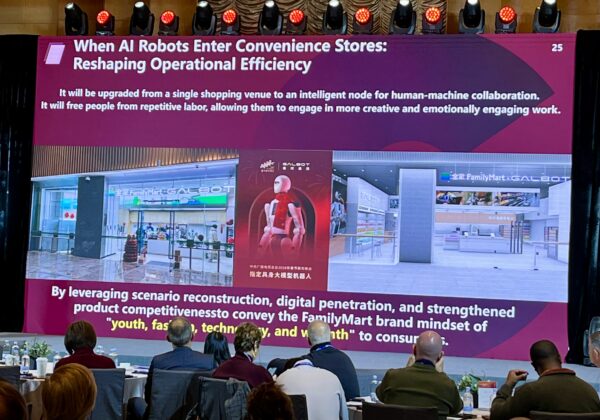
Technology was another defining theme, particularly the rapid acceleration of AI and automation in retail operations. Armour observed that one of the most striking messages from the summit was that artificial intelligence is no longer a future ambition for retailers but a practical reality.
Across the industry, companies are already implementing advanced analytics, robotics and digital benchmarking to drive operational improvements and enhance customer experiences. Examples discussed during the summit included benchmarking tools that allow convenience chains to monitor performance across store networks, robotics that serve both operational and experiential roles within stores, and AI-driven systems that enable more personalised promotions and product recommendations.
At the same time, Armour emphasised that successful digital transformation begins with a clear understanding of business needs. The retailers seeing the most success are not simply adopting new technologies because they are available; they are identifying specific operational or customer challenges and using technology to solve them. In other words, innovation should begin with the problem, not the technology.
“The retailers seeing the most success with AI are not chasing technology for its own sake, they are solving real operational and customer problems.”
Innovation at Speed
The summit also highlighted regional differences in the pace of innovation. Reflecting on the retail environment in China, Armour pointed out that experimentation and rapid iteration often occur ahead of formal regulatory frameworks – innovate … then regulate!
This dynamic creates a marketplace where new retail concepts, digital services and store formats can evolve quickly. For many international attendees, the speed of change visible across Shanghai’s retail landscape was striking. Armour suggested that this willingness to test new ideas quickly offers valuable lessons for retailers in other markets seeking to accelerate their own innovation cycles.
Leadership and Culture Matter
While much of the summit focused on technology and strategy, Armour also emphasised the critical role of leadership and organisational culture. One of the ideas that resonated strongly during the event was the distinction between vision and dreams. Vision provides direction and structure, but dreams, aspirational and emotionally compelling, help inspire teams to pursue ambitious goals.
Armour reflected that the organisations most capable of navigating change are often those that build cultures around shared values rather than simply assembling teams of highly skilled individuals. Determination, alignment and passion frequently prove more powerful than individual brilliance.
Retail leaders were also encouraged to create regular rhythms of reflection and celebration within their organisations. Reviewing progress and recognising achievements every 90 days was highlighted as an effective way to maintain momentum while ensuring strategies continue to adapt to evolving market conditions.
Experiential Retail in Action
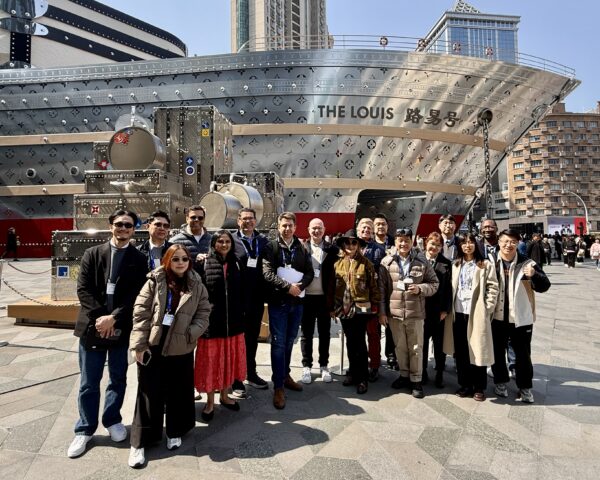
The store tours in Shanghai offered a vivid demonstration of how physical retail continues to evolve. Armour noted that while digital commerce continues to grow, physical stores remain central to the convenience sector, but their role is increasingly expanding beyond simple transactions. To remain relevant, stores must deliver excitement, discovery and memorable experiences alongside efficiency and convenience.
Several examples observed during the tours illustrated this shift. Robotics was being used not only to streamline operations but also to create moments of retail theatre that capture customer attention. Smaller, highly specialised store formats were designed to meet the specific needs of neighbourhood communities.
Family-oriented merchandising strategies were also visible, broadening the appeal of convenience stores to a wider customer base. Equally notable was the level of hospitality demonstrated by many store teams. Armour highlighted the welcoming culture observed at several locations, where staff engagement and customer interaction were clearly seen as integral components of the retail experience.
Preparing for Demographic Change
Another long-term issue discussed during the summit was the global demographic shift toward aging populations, often described as the “silver tsunami.” Armour pointed to Japan as an example of a market already adapting to these demographic realities. Retailers there are experimenting with new product innovations, digital services and store concepts designed to meet the needs of older consumers. E
xamples include targeted private-label products and technologies that simplify the shopping experience. For many Western retailers, the lesson is clear: demographic shifts are already underway and will increasingly influence consumer behaviour. Preparing for these changes now will help ensure businesses remain relevant as populations evolve.
Focus on Core Strengths
Throughout the summit, another theme that emerged was the importance of maintaining clarity about core business strengths. Armour noted that while retailers are often tempted to diversify rapidly as new opportunities appear, the most successful companies tend to remain disciplined about where they invest their energy.
Many leading retailers are choosing to focus on what they do best while forming partnerships to deliver complementary services. One example discussed during the summit involved retailers maintaining a strong focus on their core fuel business while collaborating with partners to introduce additional services. This approach allows companies to expand their offerings without diluting the capabilities that originally made them successful.
Recognising Industry Leadership
The summit also provided an opportunity to recognise organisations and individuals driving progress across the convenience sector. Among the notable recognitions highlighted in Armour’s closing remarks were Stefane Coum, CEO of Central Food Retail Group for leadership, 7-Eleven (DFI) for convenience retail excellence, GS25 of Korea for innovation and Sinotech for Store of the Year.
These examples demonstrated the many different ways retailers are advancing the industry, from operational excellence and customer experience to bold experimentation with new formats and technologies.

The Road Ahead for Convenience Retail
Looking across the discussions, tours and presentations that defined the summit, Armour concluded that the future of convenience retail will be shaped by a powerful combination of differentiation, technology and human connection.
Retailers must embrace digital transformation while remaining deeply focused on the needs of both customers and employees. They must continue experimenting with new formats, experiences and technologies while maintaining clarity about their core strengths.
Above all, retailers must ensure they stand for something distinctive in the marketplace. In an industry defined by speed, competition and constant change, being memorable, and meaningful, may prove to be the most valuable advantage of all.
