

When pigs fly: Why AI could be retail’s next big reinvention
Physical retail has stood still for too long – is it finally time to leap forwards? Provocative article from Insight Research’s Anthony Wysome, Co-Chair of Insight’s AI Round Table.

Anthony Wysome has been a leading developer of customer strategy, format development and proposition innovation in UK retail and hospitality over the last 20 years. His work includes the creation of the Little Waitrose convenience format, the introduction of Sushi counters into UK supermarkets and creation of profitable refurbishment models for supermarkets, c-stores, food halls and coffee shops.
In 1916, a Memphis grocer named Clarence Saunders handed customers a basket and let them walk the floor of “Piggly Wiggly”, discovering products as they went. Trolleys, price labelling, the checkout point, the logic of the shop floor: in one hit Saunders provided the supermarket and convenience industry with the operating system that it’s been using ever since. In over a century, this incredibly successful industry has seen nothing close to a comparable reinvention. It’s adapted for larger and smaller, posher and cheaper stores but we are still walking the floor, picking our goods and paying on the way out.
For those that have since become large businesses on the back of Piggly Wiggly’s breakthrough innovation the incentive to reinvent is zero. The existing model rewards scale (low margin high volume). As Doug Stephens (Retail Prophet) points out in his book The Future of Competitive Advantage, once you’re part of an oligopoly of 3-6 retailers it’s far more desirable to incrementally improve the status quo than try anything radical enough to upset a good thing. The result – 110 years and counting of highly profitable focus on execution and incremental improvement.

Why Retailers Don’t Transform Themselves
That large retail organisations aren’t built to innovate is therefore a feature, not a bug. The entire operating model is calibrated around doing tomorrow what you did yesterday, ideally slightly more efficiently. Commercial teams are targeted on annualised sales and margin, operational teams on productivity and customer satisfaction. In-store layout and media is set up to extract funds from suppliers. Projects are green lit based upon the certainty of cost savings. Shops get a refurbishment once every 10-20 years and preferably not much in between. Senior leadership packages favour consistent short-term delivery.
Once these pillars are all in and working there’s not much in the way of career prospects for the executive who proposes radical action. Not too many bonus targeted turkeys vote for Christmas! If genuine change is ever considered, it’s usually at a time of upheaval — a new Managing Director, an embattled board, a collapse in footfall – coincidentally the perfect conditions for innovation to fail under.
The AI Inflection Point
In our 110 years and counting of not changing that much, the retail industry has still heard and given the ‘everything is about to change’ speech plenty of times – it’s just that they don’t then do it (I remember sitting in the IGD conference the week after the 2008 global financial crisis hit listening to one retail leader after another announcing that the world had changed for ever and then confirming without irony that their pre-existing strategy was the right one to help the business through this period).
“AI will revolutionise how customers interact with retailers. It will be seismic.” Ken Murphy, CEO Tesco
“It’s very clear that AI is going to change literally every job.” Doug McMillon, Walmart
“AI is going to fundamentally change every part of our business.” Jason Buechel, Whole Foods
For the last 2 years the “everything is about to change” speech has been AI focussed. On this occasion Peter may just be crying wolf for the right reason. As Insight’s recently concluded smartest store competition has clearly demonstrated, AI really does have the tools to make change happen. But what it changes and for whom remains an open question as 3 takeaways from the smartest store competition show:
It is having a sudden impact
Previous technology waves — EPoS, e-commerce, mobile, self-checkout — arrived incrementally. Retailers could choose to absorb them gradually, deploying new capability in support of the existing model without being forced to question the model itself. AI’s arrival isn’t giving anyone much choice as to timeline – initially there were questions as to whether business cases could be made but the metrics now being achieved by retailers using AI intelligently are growing too quickly to be ignored. Everyone needs a plan.
Model improvement
Efficiency in the existing model is the natural first step (110 years of history is hard to shake) and this opportunity is real and already being captured. Demand forecasting, shrinkage reduction, workforce scheduling, personalised promotions — the productivity gains are hanging low on the tree. For the oligopolists this is great — become even more effective versions of what you already are and keep banking the profits.
Forbidden fruit
But what if the low hanging fruit isn’t as tasty as the new varieties that could be available? Whisper it quietly — are there some signs of reinvention too? Top entries in Smartest Store include 24SJU in Sweden who are using technology to make convenience retail viable again in smaller towns and villages and Żabka in Poland (12,000+ stores and counting) who have blown up the traditional convenience model with their focus on customer need and tech-led innovation. Of course, we were not the only ones to notice this – Circle K’s owner, Alimentation Couche-Tard, agreed an $8.7bn deal in July to take a controlling stake in Żabka, and we reckon the global Circle K business stands to reap major benefits once that deal completes!
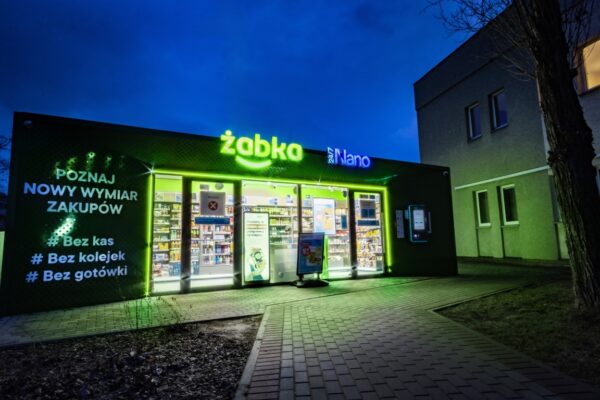
How cool is this?
CEOs saying everything must change, business cases being proven or even exceeded, new formats and models starting to emerge? Don’t tell me that retail innovation is finally getting it’s day in the sun? Opportunities to make today’s business more productive will appeal to everyone (especially to the oligopolists). But my goodness this has to be the best chance we’ve ever had to create something for tomorrow that could be genuinely better! The intelligence required to design a store that works for a specific customer, in a specific community, is now accessible to any operator willing to build the right capability. The opportunity to bring profitable modular formats to meet customers where they are is within reach.
So whilst the oligopolists are racing to embed AI benefits into their existing models, is it perhaps possible that at least some of the retailers defining the next era will be those who make AI an ingredient in a new customer recipe?
At this point we face the awkward reality. The tools to innovate with are finally here – but does anyone know how to use them? After 110 years of being anything but disruptive, who in the industry might know what to do next? Who these days has a serious innovation team anywhere in their business? How many have even considered how to marry tech with traditional design-led store development? How many have run a successful format development project in the last 20 years?
Fear not – we’ve never needed to do this all ourselves. A whole industry has grown up around helping retailers change – the consultancies, the IT vendors, the design agencies – surely this is their time?
The future is out of date
I’ve been leading retail innovation work for 20 years, some of it quite successful. Success doesn’t usually come without a team of capable and motivated internal specialists along with third parties able to support where necessary – strategic and proposition development, design agencies, skilled shopfitters and so on. On top of that you would expect to invest 18-24 months of serious heft to bring at least some of the existing business along for the ride. High cost, high risk and if you did it well, high reward.
So before we add AI into the mix, jump in and get cracking with our game changing innovation, it’s worth considering who (3rd party or existing business functions) is ready to be part of the right formula for today? An uncharitable semi-bitter ex-project lead might for instance suggest that….
- Some management consultancies have no more idea than anyone else what is going on and can’t be honest about what they do know (that we’d be better off using Claude for most of what they offer)
- Innovation agencies have become an indulgence – too much cash to create something that might take 2 years to trial and a decade to scale
- Existing core functions (Commercial and finance) remain a substantial barrier to progress with their insistence on short term incrementalism. Can there be any other reason that 97% of my local c-store is irrelevant to someone with reasonable expectations around healthy eating and animal welfare? OK, innovation lead, can you please knock out a convenience store of the future – but can you also make sure we still flog booze, fags, unhealthy snacks, slushies and battery-farmed chickens?
So the serious point. Retail innovation is back in fashion which is thrilling for those of us desperate to get our hands dirty on the future. But the conditions for innovation have changed and most businesses (retailers and 3rd parties) aren’t yet confident with where the world is going. Which is also, it has to be said, exactly what makes this moment so interesting for those who move first.
It goes without saying that if you’re a successful oligopoly with conventional leadership your choices might be more straightforward. It might be as simple as find the big efficiency benefits, buy in what you need to deliver them, make them work, sack a chunk of your workforce and return to a level of industry equilibrium once all of your major competitors have done the same thing.
But if you’re even slightly up for disruption? I used to always tell my team that one of the keys to successful innovation is knowing when to say you don’t know the answer and then getting curious and energetic about finding it. I’m not sure too many of us know what we need yet but in the interests of being curious and energetic I would maybe start with taking the following three no-regrets steps:
Travel
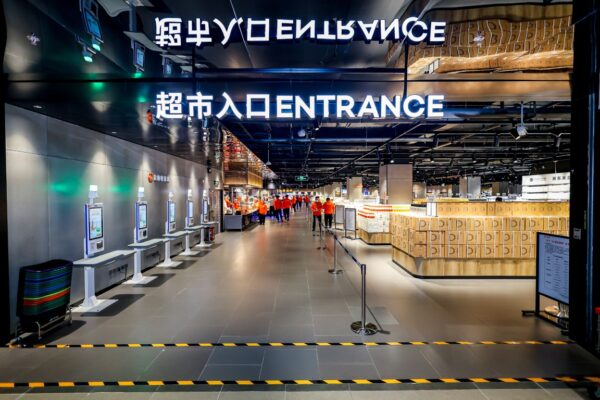
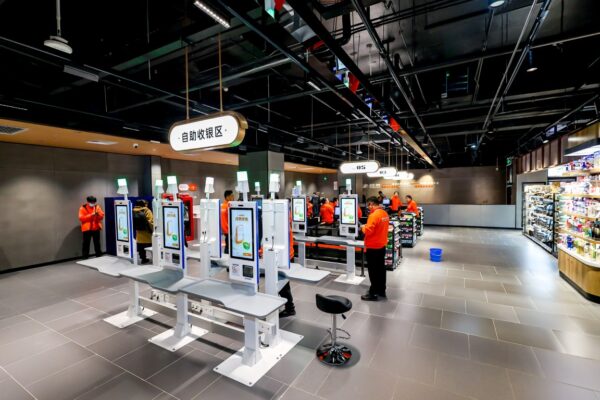
Get out there — especially if you’re the boss. Don’t send your tech team to tech conferences, your store development team to Euroshop and your marketing team to Cannes or SXSW. This isn’t a year for functional trips – it’s one to get out and experience new stuff being delivered in new ways. Where to go? Well – almost anywhere. The Smartest Store in the World competition featured a brilliant set of entrants from right across the world. A Chinese winner (Wumart), runners-up from Singapore and the UK, fantastic entrants from across Europe, Asia and the US. New shops are emerging weekly – get out and find them. Even better – join a network and then go and find them with a bunch of equally curious and energetic learners! For example the AI round table from Insight Research features 15 mainly non-competing retailers and tech businesses coming together to learn and make progress. Increasingly they are sharing ideas, strategies and successes. Last week they were with Żabka in Poland, this autumn they will be with Wumart in China
Self-examine
Take a rigorous, honest assessment of where you are, where the opportunity lies, and what a commercially credible path forward looks like. Find people to help you who have genuinely built things in retail, who understand how innovation projects succeed, who can speak to both customer proposition and technology, and who can deliver a great store and a decent P&L simultaneously. Include contributors who aren’t always asked about opportunities (Location Planning, Foodservice, potential franchise partners) – whatever it takes to get a fresh look at opportunities. Networks are forming to begin to do exactly this work (we’re happy to help you find them) in ways that feel far more contemporary and relevant than the traditional consultancy, agency game.
Fund
Where’s the money coming from? Well – remember to show your FD this one. What’s the point of having new AI tools to work with if you don’t use them straight away? The right team to deliver your innovation should also be equipped to find immediate AI-driven benefits to your business. The first thing I would challenge any innovation team with is to find wins within 3 months that pay for their existence for the next 3 years. If they can’t achieve that, they’re probably going to fail in the longer term too. Transformational innovation works to a longer timeline than most businesses do. When business priorities change, innovation projects die. So put the project into the black from the outset – and then give your team the time and space they need to get it done.
So, even if you start today where could you be by the end of 2026? Inspired by seeing what’s genuinely being built out there, clear-eyed about where your own opportunities lie, with a three-year innovation plan to have AI-driven returns within months that will fund years of ambition. Business planning for 2027 starts to look very different indeed.
The next Piggly Wiggly moment is coming – and for the first time in 110 years, the tools to create it aren’t locked inside the world’s biggest retailers. They’re available to any operator willing to reach for them. Customers are ready for something new and the large players are largely occupied optimising what they already have. The window is open. The businesses that get out and see what’s being built, look honestly at themselves, and back their innovation teams to deliver real returns are the ones who get to write the next chapter of an industry that is long overdue having one.
