

Weigel’s at 95: Ryan Blevins on its chef-led food programme
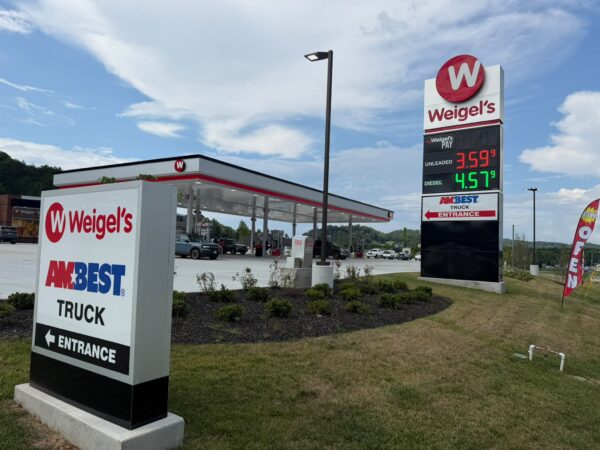
Weigel’s is celebrating its 95th anniversary in 2026. The business traces its roots to Broadacre Dairy, founded in Powell, Tennessee, in 1931. As home milk delivery declined, the family opened a drive-through Farm Store in Knoxville in 1958, followed by its first walk-in convenience store in 1964. In 1970, it became the first convenience retailer in Tennessee to introduce self-service fuel. Today, Weigel’s operates around 90 stores across Knoxville, Chattanooga and the Tri-Cities, with a stated goal of reaching 100 in 2027, mainly through new builds.
Food has been part of the offer since 1985, and the branded Weigel’s Kitchens concept launched in 2015. Stores have grown to accommodate it: the 2008 prototype was around 4,000 sq ft, while the Piney Flats store, opened in 2023, is around 6,400 sq ft. The retailer has also invested heavily in vertical integration, opening Harvest Station Foods, a 110,000 sq ft commissary and bakery in Loudon, in March 2025. Digital is another growth driver: the myWeigel’s Rewards programme has around 605,000 members and 47% loyalty penetration, while delivery more than tripled its annualised run rate between December 2025 and July 2026.
Why a chef chose convenience
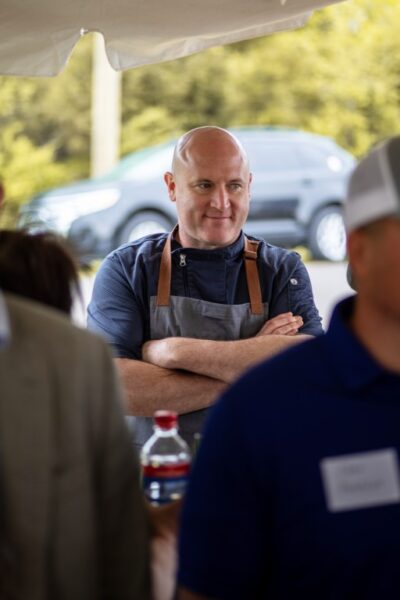
Ryan Blevins
Food is giving customers more reasons than ever to visit Weigel’s for a meal. The retailer’s culinary programme has been supercharged with the appointment of Ryan Blevins, an experienced, professionally trained chef, who was hired to lead menu development five years ago.
For Blevins, who had been working in Atlanta, the Weigel’s opportunity initially raised a question. Was moving into convenience retail a step backwards from the restaurant world?
But it didn’t take long for him to see the potential.
“I think the future of convenience is food,” he says. “Weigel’s was looking to shape out its food programme, and they needed someone with some culinary creativity and a little bit of operations experience. They were going to give me carte blanche to shape the programme. All of that combined made me pull the trigger,”.
The move also offered a change of pace, with Knoxville providing a welcome contrast to Atlanta. But it was the opportunity to work with a retailer that had established strong customer loyalty across East Tennessee, while building something new in foodservice, that ultimately convinced him.
Blevins brought considerable experience to the role. His culinary career began at 18, when he returned home from college for the summer and took a dishwashing job in an Irish pub in Virginia.
Looking down the kitchen line, he became fascinated by the work taking place around him.
“I saw people cooking, having a good time, creating dishes and enjoying that great camaraderie. I wanted to do that,” he says.
Over the following years, he worked across fine dining, country clubs, casual dining and quick-service concepts. His career also took him around the world, helping open restaurants in South Korea, Thailand and China; as well as five locations in Saudi Arabia.
His responsibilities included assembling teams of talented US-based kitchen staff, travelling to new markets, overseeing kitchen equipment set-up and training before handing operations over.
It was an experience that exposed him to different cuisines, cultures and taste profiles.
Although Blevins did not follow a formal culinary education route, he credits the chefs he worked alongside with shaping his approach.
“I was fortunate enough to work for some really talented chefs. When you’re working as a sous chef or a prep chef, you’re reporting to that executive chef, and you learn a lot from different people throughout your career. That’s shaped who I am, my ideologies and where I’ve got to today,” he says.
His appointment at Weigel’s reflected a growing recognition within convenience retail that foodservice requires a fresh approach.
“I think it made a statement. Weigel’s hired an actual trained chef who was going to come and run the food programme. I think it was definitely a unique move at the time,” he says.
Designing food for the convenience environment
Transferring restaurant experience into convenience retail, however, requires a different mindset.
The objective remains the same: serving great food. But the operating environment, equipment, staffing model and customer expectations are fundamentally different.
In a full-service restaurant, chefs have access to extensive kitchen equipment, trained cooks and the time to prepare dishes using multiple sub-recipes. Convenience stores have to deliver food in a much more streamlined environment.
“We have to consider different things. We have different equipment compared with full-service kitchens, and we have to think about how food is prepared and packaged, how well it holds up in a warmer and how it travels in a car,” Blevins explains.
Staffing is another consideration. Unlike restaurants, where employees are generally recruited with cooking experience, convenience retailers often have to train people who may primarily have been employed to work on the checkout.
Consequently, recipes must be designed around simplicity and repeatability.
“We need recipes to be simple, user-friendly, executable and scalable. We can’t have a lot of measuring or knife work. We have to consider the person in the kitchen as well as the customer,” Blevins says.
Building a distinctive food identity

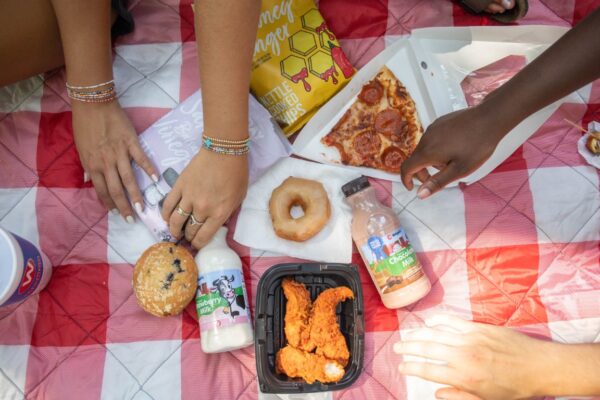
Weigel’s foodservice offer is broad by convenience retail standards, with breakfast, pizza and fried chicken among its hero categories.
Breakfast is the busiest daypart, supported by proprietary stuffed biscuits that are hand-rolled every morning. Pizza is another major component of the programme, while hand-breaded chicken tenders provide a further point of differentiation.
The tenders are never frozen, with chicken hand-breaded and fried in store kitchens throughout the day.
For Blevins, these products help establish an identity that customers can associate specifically with Weigel’s.
That thinking has also informed the recent development of the retailer’s Knoxville Hot Jalapeño Chicken Tender.
Rather than simply introducing another spicy chicken product, the team wanted to create a recognisable local identity around its heat offering.
“Nashville has hot this and that. It’s right down the street, so why can’t Knoxville have its own heat profile?” Blevins says.
Weigel’s developed a distinctive seasoning approach, incorporating the spice into the breading process rather than relying on a conventional hot sauce-led product.
The resulting Knoxville Hot concept was trademarked around six months ago, giving the retailer ownership of a branded proposition it can develop further.
“It’s completely different, but still spicy. We wanted to build out a brand of spicy chicken that is identifiably ours,” Blevins says.
Beverage innovation: from dirty sodas to coffee creations
While food is central to the programme, beverages are increasingly taking up Blevins’ attention.
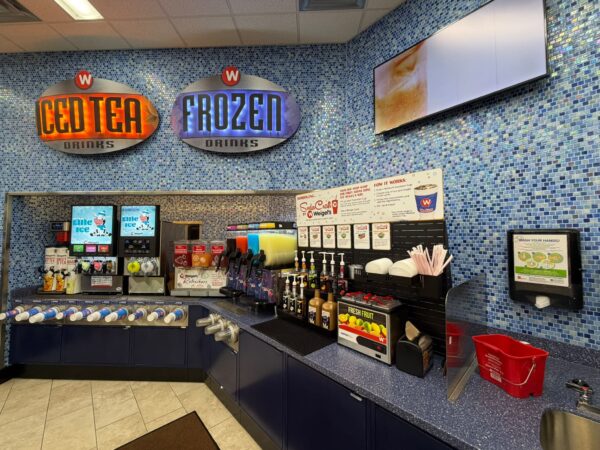
Weigel’s has developed two branded platforms, SodaCraft and CoffeeCraft, designed to give customers more choice and create excitement around drinks.
SodaCraft taps into the popularity of customised and so-called dirty sodas, combining fountain drinks, syrups and other additions through prescribed recipes. The team has also introduced playful product names to make the experience more engaging.
CoffeeCraft takes a similar approach to innovation, using limited-time offers to keep the menu fresh and encourage repeat visits.
Recent creations have included salted caramel coffee and cookie butter syrup, with the latter helping inspire a new drink called the Caramel Kick Starter.
“We’re always looking at what’s cutting edge and how we can be a market leader. We’re building drinks ourselves and looking at what we can bring to the customer next,” Blevins reports.
The retailer is also conscious of the value proposition. Weigel’s believes its award-winning coffee and milk-based drinks can compete on quality while remaining significantly more affordable than premium coffee chains.
One programme, different store capabilities
Delivering a consistent foodservice identity across a 90-store estate also means recognising that not every store has the same capabilities.
Weigel’s aims to keep its food offer largely consistent across its portfolio, but some locations have additional products and preparation options, while smaller or older stores may have a more limited menu.
Newer stores, for example, are increasingly being equipped with flat-top griddles, allowing the retailer to introduce made-to-order smash burgers and breakfast sandwiches featuring freshly cracked eggs, sausage and Texas toast.
The retailer intends to expand the offer wherever possible, including retrofitting existing locations where the kitchen layout makes it viable.
Scalability depends on store location and size. Corn dogs and roller grill products are offered at the basic level but around 90% of stores have a full-scale menu.
Equipment shapes the menu of tomorrow
For Blevins, equipment can determine what a retailer is able to offer and how successfully it can develop its foodservice proposition.
He points to the Merrychef oven as an example of equipment that has served the industry well for many years, particularly when convenience food programmes were built around corn dogs, roller grill products and pre-cooked patty sandwiches.
But as expectations for foodservice have evolved, so too must the equipment strategy.
“We’ve looked at the store of the future, and we have to get out of those ovens. They’re a prohibitive piece of equipment for what we want to do going forward,” he says.
The priority is to think about future menu ambitions before deciding which ovens, fryers and other cooking equipment to install.
Harvest Station: taking complexity out of the store
Another important part of Weigel’s strategy is its Harvest Station Foods commissary, which plays a significant role in supporting the wider foodservice operation.
The concept moves some of the more preparation-intensive products away from stores and into a centralised production environment.
Sandwiches, salads, parfaits and puddings are among the products prepared through the commissary. Pizza production is also supported centrally.
Central production helps ensure those products are consistently available, while reducing the preparation workload for store teams.
“It allows us to do much more. We’re taking some of the prep-intensive items out of the hands of the store, and that reduces the workload on kitchen employees,” Blevins says.
There are also important benefits around consistency, freshness, stock control and cost management.
With trucks running daily, Weigel’s can replenish stores regularly and maintain greater control over availability.
Blevins sees the commissary as an increasingly important part of the retailer’s development.
“There’s a lot of positives, and it’s where we’re headed with it. The sky is the limit with that place,” he says.
Weigel’s works to balance availability and waste, Blevins reports.
His advice to retailers is to make smaller quantities more frequently, rather than overproduce or become so concerned about waste that products are unavailable when customers want them.
“It’s a fine line,” he says. “I like to tell our operators that there’s an allowable amount of waste. If you’re not wasting food, you’re limiting sales,”.
Training teams to deliver the experience
Having the right menu, equipment and supply chain is only part of the equation. Ultimately, foodservice performance depends on the people executing the programme in stores.
Weigel’s has a dedicated foodservice supervisory structure, with a field-based team of three responsible for managing a defined group of locations.
Their role includes coaching store teams, reinforcing preparation procedures and validating that the correct steps are being followed.
Blevins believes that training must connect the different elements of the customer experience rather than focusing solely on food preparation.
“Customers expect friendly service, they expect great food, and they expect a quick experience. Training has to connect all three of those things. If you’re doing all those things, you’re in a good position,” he says.
The next opportunity: winning the dinner daypart
Looking ahead, Blevins sees dinner as one of the biggest opportunities for Weigel’s foodservice programme.
The retailer has built a strong breakfast offer and developed a transition into lunch, moving from breakfast staples such as eggs to products including chicken tenders.
However, the next phase will involve creating a more clearly defined dinner proposition rather than simply allowing the lunchtime menu to continue into the evening.
“One of the big opportunities for us is how we win the dinner daypart in 2027,” he says.
Potential areas include more substantial grab-and-go dinner options and meal kits, alongside products that give customers a reason to think of Weigel’s when deciding what to eat at the end of the day.
Blevins’ advice for convenience retailers
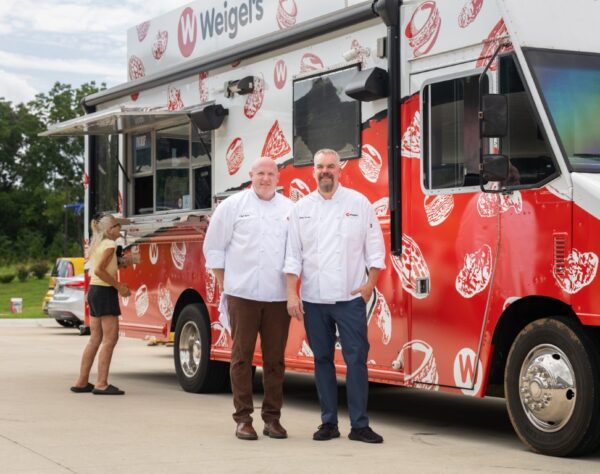
For operators looking to develop or improve their own foodservice programmes, Blevins believes the starting point should be a clear understanding of the business and its customers.
Retailers need to establish what they want their foodservice identity to be, understand the local competitive landscape and identify whether there is an unmet customer need they can address.
But ambition must be balanced with operational reality.
That means considering everything from available storage and kitchen equipment to distributor relationships, staffing capabilities and the characteristics of the local market.
His final message, however, is not to let the planning process prevent experimentation.
“I’ve struck out a couple of times on some LTOs and some pizza flavours that I thought would be winners. Then you get them into the store and they’re duds.”
The important thing, he says, is to learn from those experiences and keep testing new ideas.
“Don’t be afraid to make mistakes. Be okay with trying new things and taking risks. If you’re not taking risks, you’re not trying.”
