

The UK Food & Grocery Market – Adapting to a Post Lockdown World
It has been well documented that the last 15 months has seen unprecedented change to food retail, with winners & losers across a spectrum of formats and propositions. But now the vaccination program is bringing back the freedom we once took for granted – and now desperately crave – what does this mean for the emerging landscape of food retail, and the way we consume it?
To answer this, we must first understand the dramatic impact the pandemic has had on all aspects of food consumption, and the change in customer behaviours and habits.
And it’s fair to say these habits have changed fast. In early March last year, if you had told the average person that by the end of that month supermarket shelves would be empty, the UK’s multi-billion pound hospitality industry would be shut down overnight, and that a pack of loo rolls would be worth more than a barrel of oil, they would question your sanity. And yet…

Supermarkets tend to react well to a crisis, and react well is what they did.
Granted, it made great headlines to show ‘Russian supermarket shelves’ in the Home Counties, and customers fighting over the last bags of pasta, but once the initial shock subsided, the operational might of the grocers swung into action.
Most non essential services paused – either by choice or in the case of hospitality, by Government mandate – to focus on three key essentials; customer and staff safety, huge increases in volume throughput, and the dramatic uptake on online shopping.
Overnight, retailers saw their percentages of online customers double, treble even quadruple, and as a result the face of the instore operation changed. Space was repurposed for a new type of operation, staff were retrained to pick and deliver, and the priority became volume & delivery slots.
The shape of customers’ shopping baskets changed too, with the average basket size nearly doubling overnight. Customers were unable or unwilling to leave the house, with working at home and home-schooling becoming the new norm, and the average family of four now realised that they needed to tackle twelve meals a day in the home environment, making the grocers rethink their operating models while celebrating the ringing tills.
Inevitably, this dramatic switch to home consumption played havoc on other areas of food retailing and consumption.
Hospitality was the biggest victim, with the entire sector forced to close – not once, not twice, but three times to date – causing misery to literally anyone making their business from serving food on the premises.
The best ones innovated quickly, with takeaways, delivery services & dark kitchens, as well as embracing the ‘opportunity’ for outdoor hospitality. It’s easy to marvel at the creativity of the players that made these bold moves – both small scale local operators serving their communities, and the national operators who scaled up their relationships with delivery services – but the reality is these models are costly, the profits are marginal at best (and often not at all), and the sector needs bums on dining seats to support the innovation, otherwise the casualties will continue to rack up.

But of course it wasn’t just the Hospitality sector that suffered.
For the last fifteen years, the food retail sector has expanded into more and more convenient locations, following the demand for eat now / eat soon occasions in workplace locations and commuter routes & hubs.
Major cities, high streets, rail stations and roadsides have all seen an explosion of easy access to food-for-now and for topping up on groceries, having been well placed to access the ever growing transient population. Yet fifteen months ago the unthinkable happened when the vast majority of the workforce were told to stay at home and work from there. Overnight everywhere became deserted, the once hungry workforce on the move now forced to set up their workstations on the kitchen table or spare room. The impact was huge.
Businesses that had placed their bets on serving food to customers in the once convenient and populous locations took big and well documented hits to their trade, as their ever dependable footfall was now under curfew.
And the fallout hurt. Brands such as Pret a Manger – one of the UK leaders in food to go – had no choice but to close down multiples of shops during the pandemic, and Upper Crust – the stalwart of railway concourses – now suggesting its revenues won’t return to pre-covid levels until 2024. Even the multiples weren’t immune, with some of the major supermarkets shutting down selected convenience stores in city centre locations, waiting and hoping for a return of trade.
The story was the same on the roads. If you’re not travelling, you don’t need fuel, and the halo food sales in forecourts and service stations felt the impact too. While some of the forecourt operators saw a benefit in their more neighbourhood based locations – as people became more cautious and stayed local – the transient sites took the blows. The motorway service stations were hit particularly hard, with the big operators feeling the pinch from a huge reduction in both commuter and leisure travellers.

But now confidence in the food industry operators is growing again.
It’s been a long and painful 15 months for so many sectors, yet the signs for the future should give us hope. In the short term, as the UK works towards a full ‘unlocking’ of restrictions, people’s desire to change their lockdown habits can’t come quickly enough. A recently published report from the Office of National Statistics shows that 85% of working adults who are currently homeworking want to adopt a hybrid approach post pandemic. And with the days of home-schooling now feeling like a fading memory (nightmare?), the return of twice-a-day school runs will be music to the ears of many operators who rely on the passing trade of both students and parents alike.
And if there’s one certainty about 2021, it’s that the uncertainty about travelling abroad to holiday this year will remain. Bad news for the travel industry, but better news for the food retailers and hospitality operators. The uptake in ‘staycations’ this year has rocketed – according to a recent survey undertaken by YouGov, 44% of Brits said they are keen to take a ‘domestic leisure trip’ in the next 12 months, with only one in three keen to venture abroad. Food businesses which see a summer exodus of customers to foreign shores will welcome the additional summer trade, and the uplift in road and rail travel for forecourts, service stations and concourse operators will help claw back some of the misery of the first half of the year.
All of these shifts in market and customer behaviours have happened relatively quickly, and for many, the impact and the bounce back will no doubt even out over time. But what the dramatic sea change the pandemic brought has shown us is that the way we engage with our customers has to change if we want to survive and prosper in the future. The macro impacts of the lockdown have been profound. So how will these impacts shape the longer term landscape of food retailing?
Well, the landscape has already moved quickly during the pandemic. At the most macro level, we have seen some big plays from some of the industry’s key players, resulting in some fascinating and strategically advantageous partnerships and mergers of companies and consumer brands. All this activity focuses on bringing more convenient ways to access the customers’ share of stomach across multiple day parts and eating occasions to generate sales and growth, and at the same time provides solutions to space which won’t be generating value in a post pandemic world.
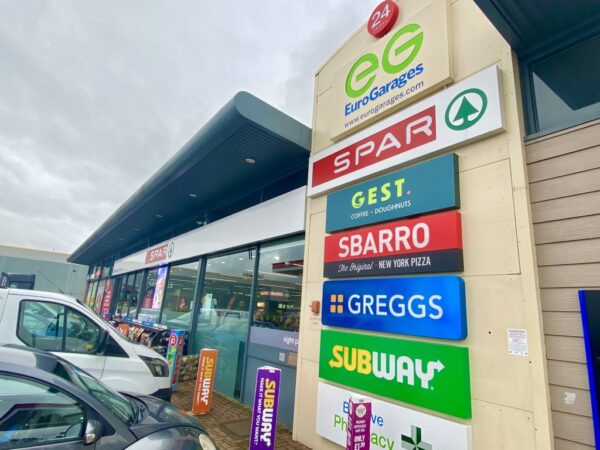
In UK forecourt retailing, perhaps the biggest play came from EG Group, whose shareholders acquired Asda last year. In doing so, they not only secured a solid stake in what is seen as an undervalued sector in the UK economy, but also secured a well loved and recognised own label food brand to supply their extensive forecourt outlets, alongside their franchised food service from Starbucks, Greggs & Subway. Throw in the extensive Asda forecourt network on top, and suddenly you have a portfolio of brands and sites that offer real credibility to the everyday shopper, in locations that perhaps BP/M&S fear to tread.
Other big players are sensing the opportunity for forecourt retailing too. Private Equity firm CD&R – key investors in Motor Fuels Group – are currently making a play for Morrison’s. Should this work, the potential opportunity for future food supply across MFG’s network could tread a very similar path to that of Asda & EG Group. But why stop at food? Morrison’s relationship with Amazon – and the potential access to its limitless inventory of consumer goods – could reshape how customers engage with forecourts of the future.
Even the more traditional operators are upping their game. Shell have had a relationship with the John Lewis Partnership through their Waitrose brand for a number of years, and have recently turned up the volume on both the proposition and the number of locations. Their latest offering is highly credible, addressing both food-for-now and food-for-later, as well as giving access to the wider John Lewis proposition through click and collect.
All of this activity will only serve to build the growing credibility that forecourt retailing is a viable and convenient alternative for sourcing food and eating occasions, especially as the dwell time for customers extends as the EV network expands. Customers who reschedule their diaries around making journeys with built-in time to charge their cars will want to fill that wait time purposefully, and if that can be a food stop, a food shop or a parcel collection, then the best operators are poised to take advantage.
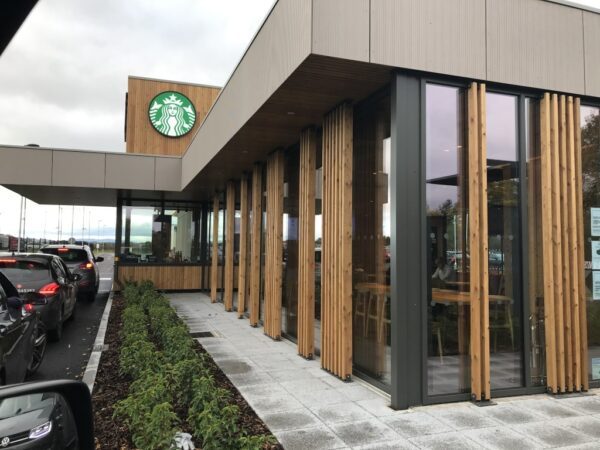
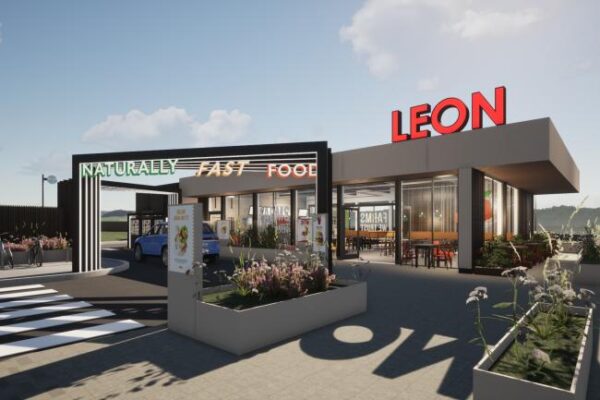
Looking further afield, Bowser Bean Café in Australia proudly markets themselves as a great café that just happens to sell fuel. When will the UK see something similar? With EG Group’s portfolio now incorporating Leon – and their well publicised pursuit of Caffe Nero – as well as MFG and Pret a Manger trialling the Pret offer in a north London forecourt, you wouldn’t bet against it being sometime soon.
So the missions are indeed blurring, and the once clearly defined boundaries of Groceries, Convenience, Food Service & Hospitality are coming together to create exciting propositions that serve customers’ needs wherever and whenever. Away from the forecourts, space in big box grocers is starting to look baggy, now the momentous shift to online grocery is fully underway. The swift reaction to unprecedented consumer demand brought on by the pandemic, means that all of the key operators have upped their game on doorstep service, availability of delivery slots, picking accuracy and all the other hygiene factors for online grocery shopping that customers have always demanded (and complained about). The jeopardy of doing such a great job online is that you remove the need for those customers to ever visit your bricks & mortar operation, and now retailers are having to rethink. Giving space more purpose – and thus giving customers a reason to visit a grocery store – is top of the agenda for most, if not all of the big operators.
In some ways the pandemic, and its knock on effect on customer behaviour, has created the perfect storm for operators of different sectors of the Food, Grocery & Hospitality industries to come together. Got a large shop with space to fill? Can’t afford your high street rents now customers are elsewhere? Looking for another reason for your customers to come back to you? The answer to all of this for many is yes, and the resulting partnerships that have developed in a relatively short space of time is remarkable.
Tesco were first off the mark, revisiting a previously unsuccessful formula of bringing known food service brands into their retail space – remember Giraffe and Harris & Hoole? – by teaming up with Pret a Manger to deliver a shop within a shop concept. This time though, the customers will be ready for it. The food service proposition of eat now / eat soon has evolved since Tesco’s early trials, and snacking, coffee and food for now will undoubtedly trump casual dining in a big box grocer.
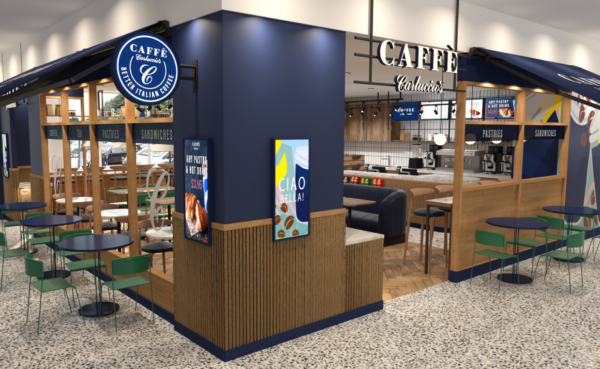
Wherever people meet you can serve them hospitality, so the mantra goes, and other grocers have sensed this opportunity too. Sainsbury’s are working with Carluccio’s to deliver 3 trial formats in their supermarkets this year, and EG Group’s acquisition of Leon will no doubt lead to a test of that brand in Asda. But it doesn’t stop with alternative food options. Grocers have had concessions in their supermarkets for a long time, but are only now dialling up their wider portfolio to give their shops more purpose. Argos collection desks have rolled out at pace in Sainsbury’s, as having two facias in the same town proved to be an unnecessary cost. In Waitrose, the introduction of curated ranges of John Lewis categories in their supermarkets is well underway, and together with their highly successful click and collect operation for JL products, it gives their customer base ever more reason to actually visit their shops.
Other alliances are also forming at pace in our post pandemic world. Now online is integral to the consumption of food, the emergence of different formats for delivery is becoming the norm. The traditional e-com grocery players are getting good, and are being joined by those operators whose bread & butter is fulfilment. During the pandemic, the Ocado / M&S partnership took off, and it’s only a matter of time before Amazon becomes really serious about food. But what if you want something delivered now? Not today, but say in the next 20 minutes? That’s the domain of the likes of Deliveroo, Uber Eats & Just Eat – all who are working with the big grocers (and some of the independents) to get food to their customers in as short a time as possible, and who can provide a fulfilment solution that the big supermarkets just can’t. Don’t fight it, embrace it – the new realisation for savvy consumers and operators alike.
It’s not just instant groceries though. The demand for recipe boxes – think Gousto & Hello Fresh – rocketed in a lockdown world, as consumers looked to replicate restaurant food without having to cook from scratch. And so did the sales of subscription boxes, delivering everything from fruit & veg to cheese and meats to a discerning customer base. Having worked hard to establish a solid footing in a world where liberty was curtailed and easy access solutions were the answer, all of these operators now need to maintain their A game as we unlock and choice returns. The landscape of food and how we access it is changing fast, and the winners are the operators who are adapting to it at pace.

Long before lockdown last year, the shape of the UK’s town and city centres was changing. The pandemic only served as an accelerator. However no-one could have forecast the scale of that acceleration. When shoppers and workers stayed away in droves, the impact was profound, with not only hospitality and food-to-go operators suffering, but general retailers too. And while the Government lent support through business rates relief and furlough schemes, it’s simply not a sustainable solution for the long term. Therefore things will have to evolve for all of retail on the high street. The clues are there already – a lot of retail space is simply too valuable to lie empty for months and years on end. Repurposing town centres for mixed use schemes has begun, but is likely to be accelerated, driven by the requirement for returns from the space. Offices and shops alike are being transformed into accessible residential dwellings, bringing a new lease of life to once deserted areas. John Lewis has already set out its plans to convert surplus floors of its flagship Oxford St store into mixed use, and is leading the way on converting surplus retail space into affordable housing. And where homes spring up, the provision of food retail & hospitality quickly follows. It’s easy to imagine how big retail boxes sitting redundant in towns and cities could convert into residential dwellings on the upper floors, with food stores and hospitality outlets on the ground floor.
So, as the nation emerges from the end of lockdowns and social restrictions, it’s fair to say the pandemic has been the biggest single catalyst for changing behaviours for customers and retailers alike. Who can forget the panic buying, the queuing outside shops, screens and PPE, and the tireless shifts the nation’s food providers put in to keep it all going. But at its best, our industry rose to the challenge, adapting quickly and taking a role in keeping the nation sane when it felt the world was going mad. And those operators will no doubt harness the way in which they reacted, adapted and innovated, recognising that sometimes a crisis brings out the best in the way we can get things done and move on. The real excitement now is where we are moving on to.
