

The last-mile dilemma: partnering with third-party aggregators or seizing the opportunity with first-party solutions?
It is not necessary to revisit the reasons why many retail sectors have been forced to embrace an omni-channel approach. Despite these disruptions, fuel convenience has largely remained a brick-and-mortar industry with little incentive to change.
This resilience is primarily the result of the industry’s strength in selling a regulated commodity that most consumers rely upon every day. However, retailers are likely to face structural headwinds in fuel demand in the coming decades. At the present moment, technology companies are competing to perfect new models of last-mile delivery for immediate consumption convenience goods.
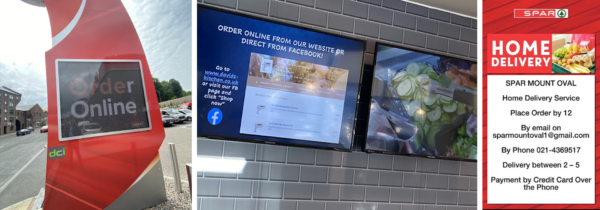
All of this adds up to a situation where retailers must reconsider their approach to “convenience” and consider solutions beyond their four walls.
The roadside convenience store of the past relied heavily on the fuel canopy as a source of foot traffic. It then sold a largely commoditized form of convenience that catered to the impulses and needs of a captive audience at the forecourt. Beyond the occasional impulse buy from consumers who lived in the immediate vicinity, these stores were not typically thought of as destinations.
The convenience store of the future will need to leverage its real estate and proximity to do more than service the needs of motorists. The ability of the fuel canopy to drive foot traffic will wane as electrification fractures the customer base, fuel economy continues to improve, and consumers in certain communities embrace remote work arrangements.
Consumer definitions of convenience have also changed. Beginning with Amazon and continuing with various pure-play eCommerce retailers, today’s consumers increasingly expect to get what they want, when they want it, on their own terms. The gap between when a product is purchased online and when it arrives at one’s doorstep has shrunk to the point where impulse snacks and beverages are often available in thirty minutes or less.
Indeed, the last-mile delivery of immediate consumption goods has become a hotly-contested battleground, attracting investments from the likes of SoftBank’s Vision Fund. Beginning in 2013 as an idea between two roommates at Drexel University, delivery platform goPuff now operates approximately 250 warehouses at a valuation of $8.9 billion.

While companies such as goPuff manage their real estate and conduct their own deliveries, aggregator platforms like DoorDash, Uber Eats, and Deliveroo rely primarily on restaurant and retailer partners who want access to their driver networks and sticky consumer marketplaces. The flywheel fueling the growth of these companies gained tremendous momentum from the Covid-19 pandemic and not only fueled many years worth of projected growth in a matter of months, but drove the formation of new consumer behaviors.
The delivery aggregators originated primarily as platforms for restaurants. Despite rapid growth since early 2020, few companies have posted profitable quarters, and they share a growing realization that a restaurant-only approach will limit their potential for profitability and scale. One alternative has been the expansion into groceries and convenience products-specifically the small basket sizes and impulse behaviors that require immediate, rapid delivery.
This poses both a threat and an opportunity to convenience retailers. Although 7-Eleven is credited with making the United States’ first commercial drone delivery in July 2016, the industry as a whole adopted a “wait and see” approach with delivery as they had never been forced to react in the way that department stores, for example, were forced to respond to Amazon. This changed with the COVID-19 pandemic. Almost overnight, retailers were compelled to accept partnerships with third-party aggregators since very few had made investments in infrastructure of their own.
To be fair, there are advantages to using third-party platforms. Many consumers limit their decisions to the options presented on their platforms of choice, and the aggregators are attempting to increase stickiness with memberships that provide economic incentives for frequent users to avoid competitors’ services. From brand discovery to sales growth, incentives are lined up to encourage individual retailers and chains to partner with the likes of DoorDash-provided they adjust their prices to offset the steep fees.
However, reliance on aggregator platforms does present serious risks. Not only does it limit the ability to control the customer experience, but it often limits access and control over one’s data. Access to retailers’ data provides aggregators the ability to strategically disintermediate and deploy their own virtual brands and dark store warehouses. DoorDash now does exactly that with its DashMart dark stores. Announced officially in August 2020 with locations in eight cities, posts on Reddit reveal “dashers” visiting early test stores as far back as January 2020. As of February 22, 2021, job postings reveal open DashMart positions in 51 US cities and 11 in Canada.
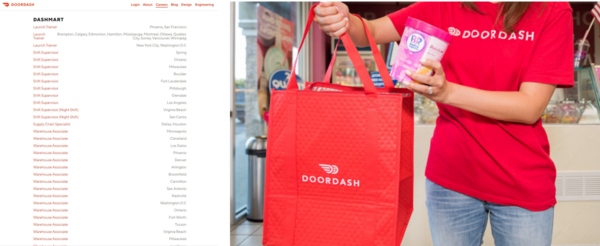
Retailers now face a fundamental dilemma. If they pursue short-term gains by partnering with third-party aggregators, they will add momentum to the growth of these platforms and increase the potential for disintermediation. In other words, they may be creating their own version of the Amazon Basics problem. Even if these companies prove to be less nefarious than they appear, retailers still have to question the utility of relying on third-party infrastructure to power what may become a crucial sales channel in coming years.
On the other hand, retailers can seize the opportunity to deploy first-party solutions in their respective markets and, perhaps, convert customers from third-party platforms using a variety of incentives and preferential pricing.
The next ten years will certainly present new considerations that are not apparent today. Even now, there is strong demand from many retailers and restaurants to control the front-end ordering experience but leverage the logistics capabilities of the aggregators to complete the delivery. It is possible that the dynamics will change as new business models are explored.
But convenience retailers should not ignore the advantages they enjoy through proximity and real estate. Leveraged together, there is an opportunity to create contextually-relevant last-mile solutions that speak to the needs of their respective communities in new and exciting ways.
The risk of doing nothing is that retailers may lose access to specific customer segments and moments, at best. The worst case scenario is they become perceived as a dated and inconvenient channel that’s only relevant for motorists.
“The other significant shift in behaviour which the channel embraced quickly was the ability to pivot into home delivery as well as click & collect services. We believe that this shift will continue to dominate the shape of convenience for years to come. The question …is if this will deliver a long term benefit or become a major threat”.
Theo Foukkare, Australian Association of Convenience Stores
By Frank Beard, from the paper ‘The Shape of Food Retailing in the New Normal 5’ read in full here.
