

The Applegreen story: The art of disruption

In a University College Dublin (UCD) Business Impact podcast, double UCD Business alumnus in BComm and MBA Joe Barrett discusses building the Applegreen retail empire and charting the journey from one to over 600 service stations
Hosted by Emmet Oliver, financial editor and journalist and lecturer at UCD, the podcast explores the Applegreen journey as a disrupter and consolidator. Applegreen has grown from one single store in Ireland to a business with 600+ stores, 18,000 employees and operating in the UK, US and Ireland.
Oliver also focuses on the Applegreen CEO’s retail career. Barrett, who was a student at UCD between 1984 and 1987, studied for a commerce degree focusing on entrepreneurship and transport.
After leaving UCD, there were few job opportunities in Ireland so Barrett joined John West Foods in Liverpool. He was there for just under two years. The role provided a valuable introduction to computers and software, he recalls. He left John West to join Tesco in London, completing a management training programme at the retailer’s head office. “It went really well. I learnt about information, trading, the buying department, creating new products and just all about the experience within retail – that it’s all about volumes and margins,” he says.
He remembers a project called DPP (Direct Product Profitability), which focused on the profit per product on a shelf. It provided a good insight about the use of data and analytics within business, Barrett says.
He then received a call from Bob Etchingham, now a colleague and Applegreen Chairman, to join him in a new business start-up in Ireland called Blue Gas, which operated in the same space as Calor.
Barrett returned to Ireland and worked in the business for about two years. It was an exciting experience and Barrett recalls doing everything from finance and accounting though to selling and marketing and recruiting.
“It was a really good experience and I really got the buzz of a start-up company versus a large company,” he says. He left to complete an MBA at UCD in the Smurfit School in 1992. It was the first full-time MBA at UCD. Barrett relished the learning and in particular the opportunity to complete the Masters having worked for a few years rather than dive straight in from a primary degree.
In the meantime, Etchingham had sold the Blue Gas business but acquired two service stations and he asked Barrett to get on board.
“I said ‘fine, I’ll join if I can get some equity’ and that was 32 years ago,” he says. “We’ve worked together longer than most marriages,” he smiles.
Explore Irish retail and meet Joe Barrett at Insight Market Focus Dublin – 21-23 February, where Applegreen will be hosting. Learn More Here>>
Business potential

Oliver asks Barrett if he saw the potential for the new business at the outset.
Barrett said he and Etchingham had worked really well together previously and he knew Bob’s style and that they both have a respect for each other’s abilities. Having equity and ownership in a business is also better than becoming an employee in a larger organisation, he adds.
“That was the pull for me, that was the excitement,” he says.
It took the new company 10 years to get to 12 sites, so it was initially very slow growth, Barrett reports.
But, it was a hands-on experience – the duo did everything from sweeping the floors, bringing in the papers, putting out the milk and even turning off burglar alarms late at night.
“But that’s where you learn the business,” he tells Oliver.
Based at a store in Baldoyle, Barrett was also close to the headquarters of the coffee company Bewley’s. He got to know Patrick Bewley and together they went on to develop the first push button coffee machines for service stations in Ireland.
“We provided the retail experience and he (Patrick) provided the know-how and we were able to merge those together,” he says.
Barrett credits the opportunities to work well with partners, be they in coffee, the supply chain or banking, as fundamental to the company’s growth and success.
He also appreciates the opportunity to share best practice and ideas and with companies outside the island of Ireland.
“You’re not really competitors but in the same sector and can learn from each other,” he maintains.
Stellar growth

Oliver moves on to discuss Applegreen’s strong growth trajectory.
The Applegreen brand was created in 2005 as a result of new legislation in Europe, which banned 10-year fuel supply agreements. It meant the company wasn’t restricted to a single supplier and was able to negotiate for better volumes and margins.
“We wanted to do something ourselves rather than pay a marketing fee to the big international brands, so we ended up creating the Applegreen brand,” Barrett says.
It was an exciting period, Barrett recalls. The company knew what it wanted to do inside the store and it wanted the brand to reflect the shop on the forecourt too.
“We also invest heavily in our stations and we wanted to really lift the ambience, the look and the feel,” Barrett says.
The podcast discusses the importance of clean toilets on the forecourt and especially within the motorway services area, where Applegreen dominates.

Surveys show that the first thing 85% of people will do when they enter a location is to use the bathroom, Barrett reveals. If the toilets are not clean, that’s going to send a bad message about your food quality and kitchens, he says.
Cleanliness, ease of parking, good WiFi, high quality food – Applegreen partners with international food brands – are key for the company, Barrett says.
Applegreen’s food partners include Starbucks, Chick-fil-A, Shake Shack, Burger King and Dunkin Donuts.
While the chain grew slowly at the outset, by 2005 it had 24 sites. It leapt to 75 sites in 2010 and 200 in 2015. Today it has 600+ stations.
Motorway services

Oliver asks if there was one transformational moment in the growth history.
Barrett says winning the contract for the first six motorway sites in Ireland in 2009 and building them out in 2010 was one of the biggest step changes in the company’s fortunes. It put the Applegreen brand on the map for Irish customers, he says. Partnerships with Costa Coffee and Burger King quickly followed.
“That was a game changer for us and the brand and gave us an insight into motorway locations,” he says.
That development fed a desire to move on and expand further in that space and in 2015 the company went public to enable future growth. From there, Applegreen was able to buy a significant share in Welcome Break, which is the number two motorway service area operator in the UK.
“That was very significant for us,” Barrett says. Since then, in 2019-2020, the company has expanded in the US, winning contracts in the New York state thruway. “In the States you can get a 30-year contract to provide all the motorway service facilities on, for example, the interstate running from New York City, through Albany and out to Buffalo on the Canadian border,” Barrett explains.
That’s something that’s very different, he says. The company has gone on to open sites in Connecticut, New Jersey, Pennsylvania, Ohio and Indiana.
Oliver asks about the differences in operational styles in the US versus Ireland and the UK.
Barrett says the company enters a new market wanting to learn and being adaptable to change. The US is very brand oriented, so Applegreen is partnering with the big intentional brands, as it does in Ireland and the UK. Fuel tax is much lower in the US, so the low price fuel messaging the company deploys in Ireland and the UK is less relevant, he adds.
“The businesses are different but they are fundamentally the same,” he opines. “People come in, go to the bathroom, get coffee or food and go back out again.”
However, in the States people drive much longer distances and the volume of traffic is much greater than in the UK and Ireland.
The Ryan Air of service stations
Oliver likens Applegreen to the Ryan Air of the service station sector in terms of its ability to grow and expand outside of Ireland and asks what’s been key to that growth.
Barrett says the arrival of Tesco in Ireland in the late 1990s was one factor. Tesco caused a lot of disruption and meant the big international players pulled back from expansion, he says. That gave an opportunity for companies like Topaz to combine groups of stations together with the likes of BP, Jet and Shell. Statoil subsequently came in and acquired Topaz. Circle K then entered the market and bought Esso out and then bought everyone else, Barrett says. “They grew by assembling a lot of the competitors and we are the number two player after Circle K,” he says.
The business is differentiated though. Applegreen has grown organically, rather than by acquisition; and it concentrates on food.
“We see ourselves as a food hospitality business that happens to sell fuel,” he says. That strength is underscored by the fact that just 24% of Applegreen’s gross margin, company-wide, comes from fuel. Three quarters is non-fuel related.
New mobility
The podcast moves on to discuss the evolution in fuels and mobility including EVs.
Barrett reports Applegreen has 750 EV chargers across its three markets and is significantly expanding that part of its business. The company is Tesla’s largest partner in the UK for locations and sees the business as providing facilities for roadside travellers, who will charge their cars, use the bathroom and then get something to eat in 15-20 minutes etc.
Journeys will be planned, Barrett adds. Applegreen is targeting one small part of the charging requirement – 50% will charge at home, Barrett says.
Community charging ie in large retail locations and shopping centres, will be important too, he adds. “We will be providing charging for people on the move,” he says.
Oliver asks Barrett about the challenges with the EV infrastructure. Barrett reports the hardest task is getting the ESB charging power into sites and that is true across all of its markets.
“The issue for us is getting power. We will have chargers in within a couple of weeks once we get the power.”
Funding is available, particularly in the US, Barrett adds. It could cost up to $1m to put in a bank of four chargers but could be as low as few hundred thousand, he explains.
“We’re hoping to do a lot of work on battery power, solar power and wind power so that we can get green power into those chargers and sell on from there,” he says.
Understanding food
Oliver presses Barrett further on why he believes the company has succeeded versus the former fuel industry leaders.
Barrett says success comes from understanding the business from the outset and having a strong proposition in food.
“We really got to know the detail about food,” he says. “We were in the right place at the right time and able to expand in recession when other brands were moving away,” he adds.
The motorway sites were also a great help in promoting the brand, he says.
The duo discuss the product offer and Applegreen’s points of difference. Applegreen works closely with its partners and has its own distribution centre in Ireland delivering to all of its sites. The trading team also works closely with suppliers to understand demand and customer needs and the company believes in trialing new ideas with brands to see how things perform, Barrett reports.
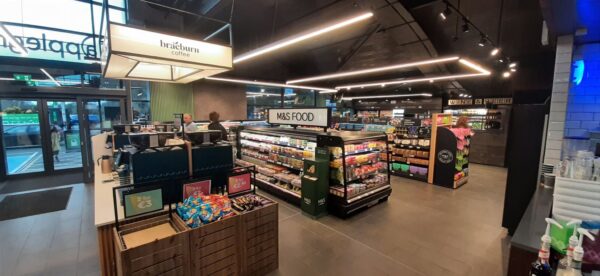
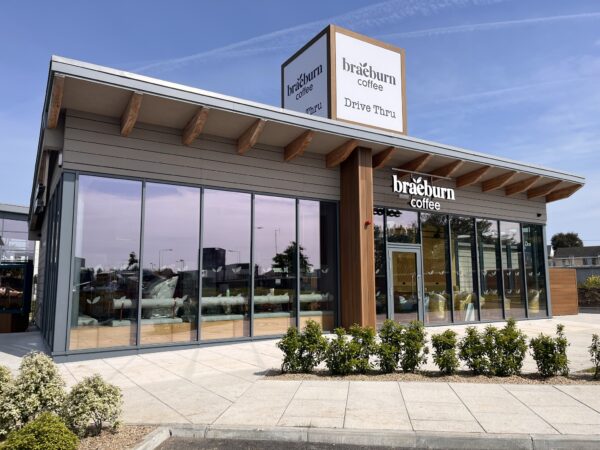
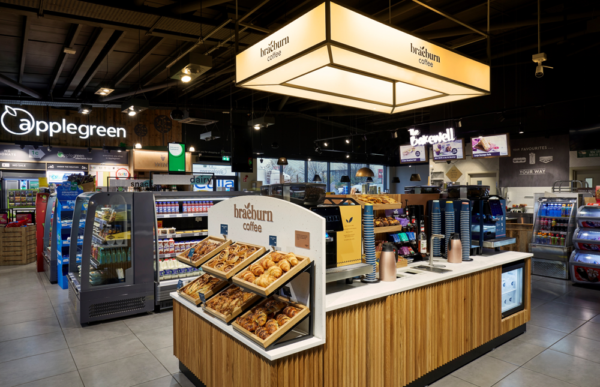
Current top sellers include the energy drink, Prime; coffee, including the company’s new Braeburn brand; plus M&S Percy Pigs, after the retailer struck an exclusive partnership with Applegreen.
At the time of broadcasting, Applegreen had just signed a deal to introduce M&S Food into a further 65 locations. “It was really helpful for us and for them as they want to grow and expand their business,” Barrett says. “There was an opportunity to bring the brand into Northern Ireland as well, which will be good for us.”
Oliver asks about the attitudes of mainstream retailers to the Applegreen business. Barrett says Applegreen has worked well with the likes of BWG and Musgrave, who also have distribution warehousing businesses, over the years but stressed the company liked to be in control of its own business and have its own distribution centre; as well as manage the Applegreen brand.
The partnership with M&S is great because Applegreen is heavily involved in the distribution side of that business, which helps to maximise volumes and margins, he added.
The duo discuss how people use Applegreen’s stores.”People generally come into us for top ups, Barrett says. “We say our brand essence is simple solutions for every day. We are not really destination shopping but one of the things we have found with Marks & Spencer is that that’s an area that we can help solve and we are going to be looking at click and collect for online ordering.”
Barrett also emphasises the importance of evolving and says the retailer is always on the look out for new products and ideas.
Looking ahead
Oliver asks about the ambition for the Applegreen business, which he runs with Bob Etchingham, and Blackstone as a shareholder.
Barrett emphasises the size of the senior management team and the fact it lets each country run its own business and it guides rather than dictates.
Barrett reports he sees massive further growth potential in the US. The business has looked in Europe previously and nothing has happened but it will look again, Barrett says.
“I think there will be further opportunities there,” he says.
For Barrett the biggest challenge is getting good people due to a combination of recruiting, training and retaining employees.
Applegreen has developed its own graduate training programme, which is going really well, Barrett says. The company works closely with UCD too, while in business Barrett is in regular contact with people he met at College.
Asked what he looks for in from new recruits, Barrett says the most important thing is ambition and the right mind set. People with those qualities become leaders and entrepreneurs, he says.
Making mistakes is also fine, he adds. “You learn more from your mistakes than your successes,” he says.
Good language skills are another asset, Barrett says. This has been one of the blockers for the company going into Europe, he suggests.
But the future for Applegreen looks bright.
“It’s now about bringing on the next generation to see how big this thing can go,” Barrett concludes.
Applegreen will be hosting during Insight Market Focus Dublin, February 2024, learn more here.
