

Tg Green Teas offer healthy soft drinks opportunities
Changing consumer trends towards health and wellness and regulation in key convenience categories is opening up opportunities for new lines and brands.
Today’s shoppers, and Millennials in particular, are on the hunt for better for you lines and products without artificial ingredients.
At the same time, tobacco and soft drinks – the two core sales categories in convenience and forecourt retail – are increasingly coming under pressure due to regulation including the tobacco display ban and plain packaging and a levy on companies who supply sugary drinks.
It’s opened the door for new market entrants who can provide healthier, convenient alternatives.
Enter TG Green Teas, a women-owned start-up founded by Sophia Nadur and Hua He.
He is a Chinese national and medical doctor who has worked in Europe before moving to the UK.
Nadur has a background in global innovation and marketing, having worked with leading FMCG brands including Coca-Cola, Mars, Kraft and Unilever for 25 years and across geographies.
Obesity freight train
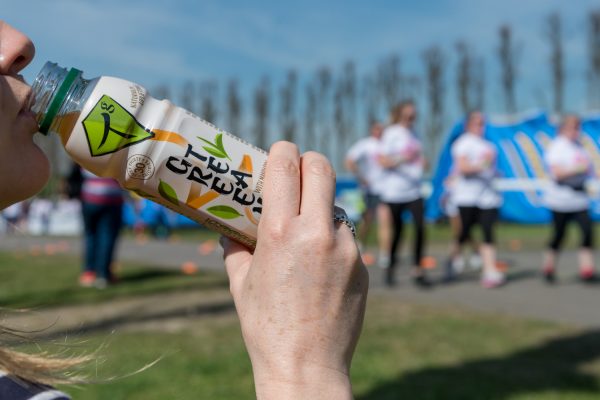
According to Nadur, TG Green Teas was born to challenge the obesity freight train and respond to the move among Millennials for more natural products and those that are telling stories about the product’s benefits.
“It’s about adding green tea to the daily routine,” she explains.
As a 4,000 year-old herb, green tea certainly has heritage but it has traditionally been used in Asia as a medicine and not so much in western diets due to its taste.
TG Green Teas and the health trend are pulling down that taste barrier; as Nadur observes: “Green tea is becoming more and more part of people’s lifestyles. It is sustainable and familiar, more versatile than black tea and good for carrying flavours.”
TG Green Teas offers two key ranges: a tea bag product, which is organic and ethical and aimed at cafes, delis and workplace restaurants and designed to build green tea occasions and the brand; plus the ‘‘hero” packaged ice tea product, which is aimed at grocery and convenience stores.
The product is brewed in Peterborough and from real tea, not an extract. According to Nadur, that delivers a more authentic taste and allows for a cleaner label too. It all chimes back into theme of wellness and Asian philosophy that food is medicine and medicine is food, Nadur says.
Flavour variants
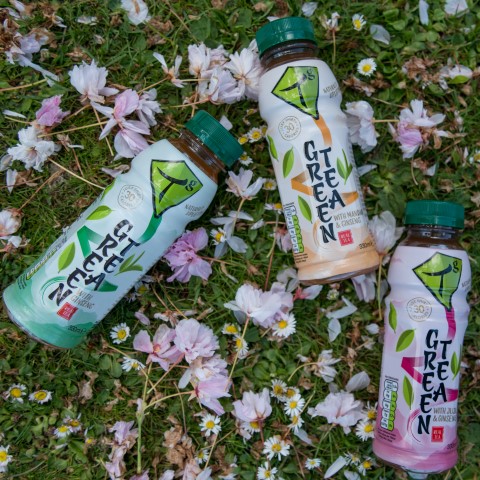
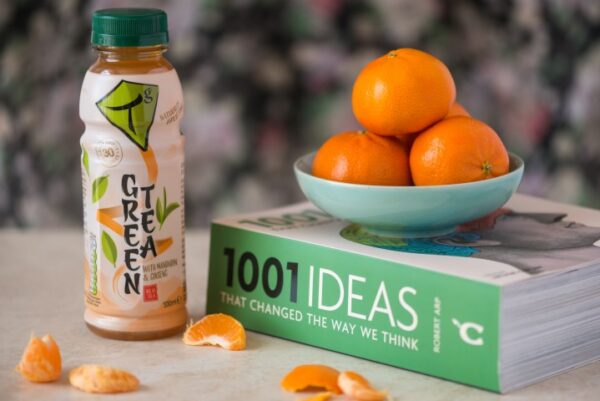
There are three ice tea variants: green tea with ginseng, green tea with ginseng and mandarin fruit extract and green tea with ginseng and jujube (a type of red date).
Fairly uniquely, the drinks score green on nutritional traffic light labelling with just 7g of sugar per bottle, well ahead of rivals.
“It’s important to dial down the sugar options. We have been careful to have a product that is very low in sugar,” says Nadur.
The product packaging mirrors the wellness messaging. “A London based designer created our packaging graphics, combining traditional elements – kites, calligraphy, and Chinese characters – with expressive global street art that adorns London streets. This unique East meets West design helped us win a Global Packaging Design Award,” says Nadur.
She claims the product delivers over and above other “new age” beverages because it answers three key criteria: it appeals to people who are “trying to get the bad stuff – sugar, gluten and calories – out”; it appeals to people who want things that are innately functional ie found in nature and not in a lab; and it offers something which can be daily habit forming.
Crucially, priced at the £1.39-£1.59 price point, it’s also affordable, as Nadur states: “We can’t just appeal to rich folks that shop in Planet Organic. We wanted to make sure it is something for every one and the convenience channel is essential for us to make it work – I’m sick of seeing kids pick up Lucozade and Irn-Bru.”
Stockists
While it’s still early days, Tg Green Teas is stocked in Partridges in London and a clutch of farm shops and delis and Nadur expects to win a listing in Whole Foods Market too.
More recently, the brand has successfully crowdfunded on Tesco’s BackIt site, securing £10,000+ from backers. The brand is now in talks with Tesco buyers, and will move towards an engagement day with the retailer, which could secure listings in a few Tesco stores.
TG Green Teas is at the start of a journey both for the brand and the category.
“Ready to drink ice tea is a nascent category in UK,” says Nadur. “It has been spoilt by Lipton, which is not a healthy option; but now new products are coming in, which are reasonably good and there’s now an incredible amount of interest in cold brew tea from Millennials.”
Coconut water, another new soft beverage on the block, in contrast to tea, has an acquired taste, says Nadur. It is not as versatile from a flavour perspective and the price point is prohibitive to some. “It’s an expensive proposition for an everyday habit. Tea is the undeveloped space,” she says.
The major players recognise that too. Coca-Cola is launching its Honest Tea range in the UK and Arizona, the number one ice tea brand in the US, is available too.
“When the big boys see it as an opportunity, all of a sudden a proper category gets created,” Nadur says.
The challenge is to create the right shelf space for the category, Nadur adds. It needs to sit between juice and carbonated soft drinks, within refreshment and not energy drinks.
Lunchtime opportunity
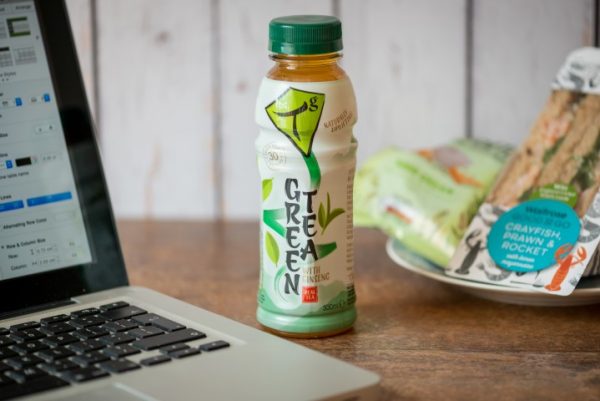
Anchoring the product around the lunchtime occasion is key too. “Tea has a big opportunity to be part of lunchtime and we want to try and get into the meal deal offer, even though it will be astronomically expensive [for Tg Green Teas] but it will help to establish the category,” Nadur says.
As convenience stores start to struggle with carbonated soft drinks, Tg Green Teas provides a fresh opportunity for growth.
“The challenge will be to meet need states so that people don’t fall back into bad habits or down trade into water,” Nadur says.
But would the start-up consider being ‘swallowed up’ by one of those big boy rivals, who have an appetite and history in devouring innovative, young brands?
“A big company has already expressed an interest but Millennials would run away if we were part of big corporate,” Nadur admits. “I want to build a bit of a movement and then see. Would I say no, no. But right now I want to hold onto this baby.”
