

South Africa – the ideal landscape for a thriving convenience retail industry
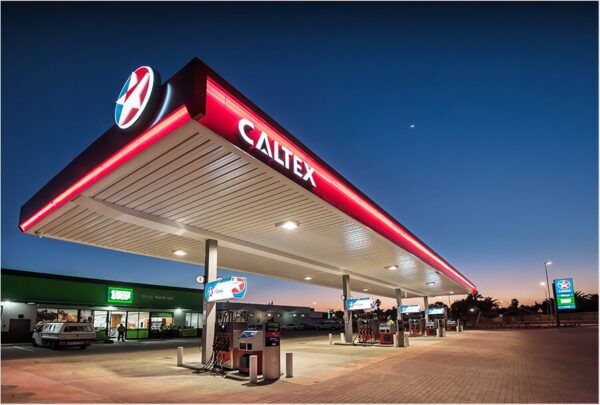
South Africa has historically relied on road transport to get goods and people around the country. The country, which is twice the size of France, has 59 million people, 11 official languages and an annual GDP of 351.4 Billion USD. It is a diverse country and a leading economic powerhouse on the African continent that supports a thriving retail market.
It’s retail market is one of the largest in Africa and continues to be mainly mall-based. Retailers have, over the years, travelled extensively and adopted and benchmarked their offering to meet international standards and trends. Despite the dominance of larger retail groups, there are several thousand medium and small operations, of which a significant portion consists of informal traders.
In addition, convenience retail plays an integral role in the retail space in South Africa, especially fuel forecourt convenience retail outlets, which are highly developed and very competitive; and growing exponentially across South Africa. The rise in the forecourt convenience retail market can be attributed to a growing middle-class market with increased disposable income, added value services such as pre-paid electricity, airtime, Barista coffee bars, in-house food brands, quick and healthy food on the run, produce and daily essentials.
The old days of a garage service station store offering the 5Cs (cigarettes, cool drinks, chips, chocolates and push-button coffee) are long gone. Growth and competition in the forecourt convenience store market continues to be positive for the industry resulting in improved support and service levels for franchisees, increased quality and a drive to offer customers a more holistic shopping experience that is competitively priced against conventional superettes.
Convenience Retail in the Age of COVID-19
South Africa’s retail industry was heavily impacted when the country went into lockdown (Alert level 5) on 26 March 2020. For 35 days, South Africans were under curfew and unable to leave their homes except to purchase essentials such as food and medication. As essential service providers, retailers were able to continue trading to provide these essential items but were prohibited from selling alcohol, cigarettes and hot food. The c-store industry was hard hit due to the loss of income from cigarette, hot food and coffee sales.
The majority of South African fuel service stations struggled financially with the significant drop in volumes in the face of the Covid-19 imposed national lockdown. South Africa’s Fuel Retailers Associations (FRA) reported that April 2020 fuel volumes versus April 2019 had dropped by between 80 and 90 percent. The curfew restrictions also impacted fuel retailers’ usual 24/7 operations, and the exclusion of hot meals and cigarettes significantly affected potential revenue as these two items specifically tend to bring more traffic to service stations.
Despite the exceptional trading conditions, some c-store retailers innovated during this time to meet the needs of their customers. “With hot foods banned, we were unable to operate our in-house fast-food brands, which led to us developing self-service Grab & Go ranges to bolster sales; plus, we created YouTube videos to train our staff remotely.
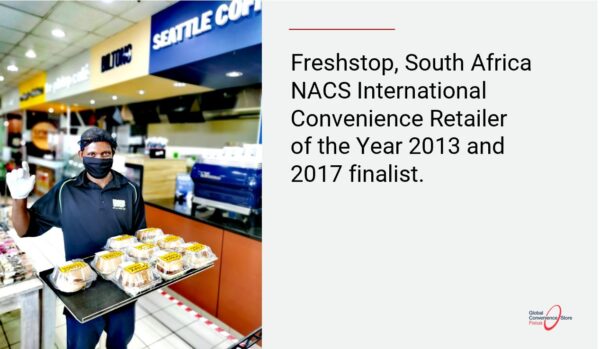
Sales of fresh fruit and vegetables increased by 100% during this time and we noticed a spike in groceries and healthy snack sales with the quick set up of delivery services via Mr D Food, curbside pickups and WhatsApp ordering groups,” says Joe Boyle, Managing Director at FreshStop, named NACS International Convenience Retailer of the Year 2013 and finalist of the 2017 International Convenience Retailer of the Year Award.
Roadside Retail

In 2017, Nielsen put the South African convenience retail sector at R35 billion, commanding 10 percent of total market retail spend, and pointed out the growth opportunity for forecourt retailers. Other reports have also signalled expansion of this segment as lifestyles change, busy consumers look to shop closer to work or home, and demand for convenience shopping continues to grow. Forecourts have evolved from mere fuel-sellers into sophisticated micro-retailers.
Despite a struggling economy, COVID lockdowns and overall tough retail trading conditions, fuel forecourt convenience retailers have raised their game over the last few years and are enjoying solid growth despite the economic malaise.
A number of factors suggest growth is likely to continue. With South African car ownership creeping up annually with half of all households now owning a car, more people are visiting forecourts to top up their tank. At the same time, consumers are more time-starved. A forecourts’ proximity to where people live, longer opening hours and shorter queues make them an increasingly attractive option for busy people.
South Africa’s Top Fuel Forecourt Brands
There are more than 4,500 fuel service stations countrywide, with 93% of all outlets being dominated by six brands, being Engen, Caltex, Shell, BP, Total and Sasol.
Some of the upcoming new brands brands include Puma with close to 115 outlets, Exel with approximately 60 outlets and Ener-Gi with a network of more than 20 service stations across the country.
Proprietary Food to Go brands and offers
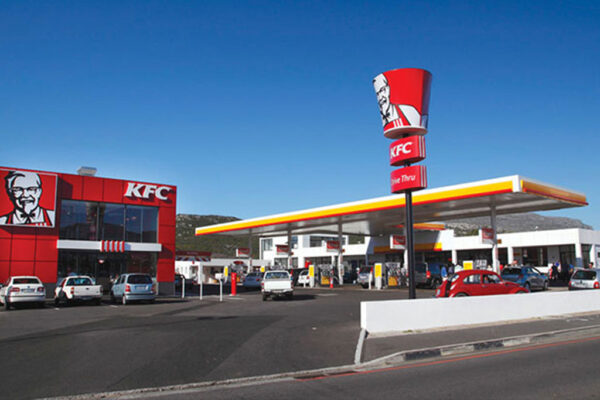
Longbeach, Cape Town
A solid food strategy is a necessity to be successful in most countries around the globe, and South Africa’s fuel retail convenience sector is no different, with consumers increasing their spend with retailers who offer them dedicated, quality food lines that offer choice and variety.
“Over the years of visiting the NACS tradeshows in the United States and Europe, we have learned that where there is a focused food strategy, the brand will do well. Convenience food is growing across all retail sectors and it is currently contributing over 30% of our business where we have foods service offers.”
We know that our core food service lines will be the growth point for our Re-Fresh and new store conversion strategies,” says Boyle. FreshStop is a member of NACS and attends the annual NACS show with many of its retailers to learn about the latest in industry trends.
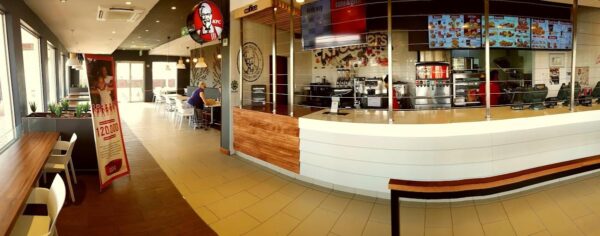
KFC at a Shell Ultra City, South Coast Motorway Services
Innovation and diversification of product is one way in which forecourt c-stores are commanding the market. Forecourts are leading the food-to-go trend internationally and customers want a variety of food product offerings to choose from, from crispy chicken to fish and chips, to burgers and grill items; and they want them quickly.
Over the last few years, fuel retail convenience stores in SA have been developing and expanding their in-house food service offering, which became critical during the COVID-19 pandemic, when consumers started relying on their local c-stores for fresh fruit and vegetables, grocery store items, Barista coffee as well as fresh, fast, quality takeaways.
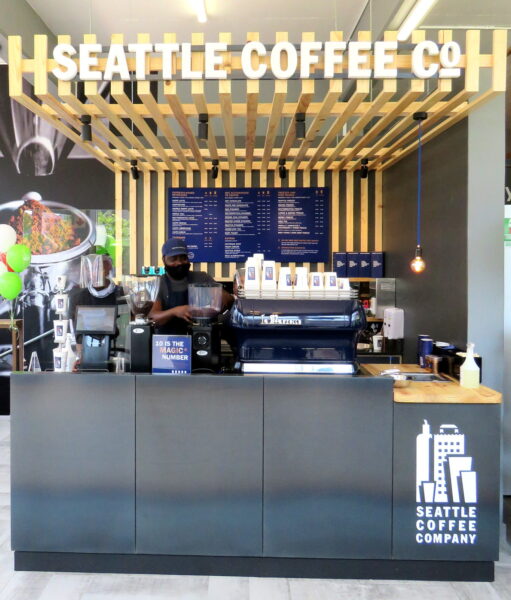
FreshStop at Caltex, which has the most established in-house food brand offering in the region, was able to ride out the various stages of lockdown, and in some cases increase turnover, despite the drastic drop in fuel sales.
Their portfolio of in-house brands includes Seattle Coffee, Crispy Chicken, Grill to Go, Hooked on Fish & Chips, Sausage Saloon, and Doughnut Delite.

FreshStop initially launched its first in-house fast-food brand, Crispy Chicken, in 2014 and it quickly gained market traction and customer support. With 82 Crispy Chicken outlets across South Africa, it continues to be the top-selling in-house food brand.
“Chicken is still the biggest food driver in SA and our Crispy Chicken brand has proved what a difference an in-store outlet can make to a store’s bottom line,” says Boyle.

Another winning in-house brand has been Grill to Go, which offers customers a healthier grilled option such as delicious value-for-money grilled chicken, beef burgers and grilled chicken portions. With 58 outlets nationally, retailers have incrementally increased participation from 5% to 20% of store turnover per month (excl. associated drink sales), with sales increasing steadily.
Fuel forecourt c-stores are now in a position where they can compete head-on with Quick-Service Restaurants (QSRs) on quality, speed of service and price.
The pandemic has created an environment in which c-stores have evolved and taken another step forward by offering shoppers additional benefits, such as not having to enter a shopping mall, no parking fees and the availability of a complementary range of products compared to the QSR environment.
A focused foodservice approach gives c-store franchisees, like those at FreshStop, a basket of food offerings that suit their specific customer base and location, at affordable entry costs.
“Store Retailers want to be in a position to offer their customers new local brands and food lines to attract new shoppers and drive sales. It’s about keeping the essentials of the offering consistent whilst bringing innovation to suit the retailers and their customers,” adds Boyle.
Retail Partnerships
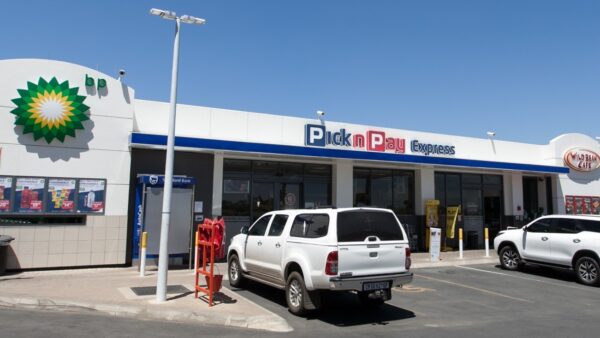
Pick n Pay and BP partnership, Image credit: RalphBronzin
Three of the four largest petrol players in the SA market have partnerships with established retailers – Engen has Woolworths, Caltex (now Astron Energy) has FreshStop (a subsidiary of Food Lover’s Market), BP has Pick n Pay, and Shell has Spar – each bringing merchandising, supply chain and retail expertise to elevate the retail offering.
Service stations that convert their stores from non-branded shops to instead partner with established retailers see a definite increase in footfall and sales turnover.
According to Boyle, once a shop converts to the FreshStop brand, turnover increases by 100 percent and after 10 years of trading, FreshStop shows compound growth of more than 60 percent in retail sales. On-site gross profit (GP) figures exceed 30 percent, which far outpaces other forecourt c-store brands in the industry. Similarly, fuel volumes increase by around 10 percent when a store converts to a FreshStop.
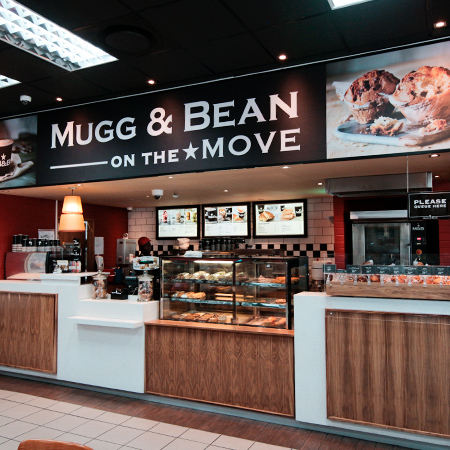
Mugg & Bean On the Move, Total, Courtenay
Consumer loyalty to service station brands has also played a big part in the last few years, partly due to the benefits acquired from third parties.
In a poll conducted at Nedbank Franchise Roadshow events, audiences consistently indicated that around a quarter of people chose which service station to stop at on the basis of the loyalty scheme partnerships present at that brand. This is a substantial driver of choice that is being leveraged by the major fuel station brands.
Additionally, brand loyalty does not end with loyalty rewards, but branded grocery retailers play a crucial role in the successful consumer conversion from one service station brand to another. ‘Conversion’ is the proportion of consumers accessible to the service station (that is, driving on the road segments next to the service station) that choose to turn in to that service station.
South Africa’s Retail Partnership Landscape

Image: Franchising in SA (Lightstone_Aug 2019)
Increasingly, the franchising environment is playing a key role in the service station ecosystem. Although the main revenue stream for service station owner remains fuel, the partnerships with retailers, and loyalty schemes, play an important part in drawing customers in.
In a competitive environment, every new customer counts in the success of the service station and its ecosystem of retailers.
Number of SA Fuel Forecourt C-Stores (by Retail Partnership) *
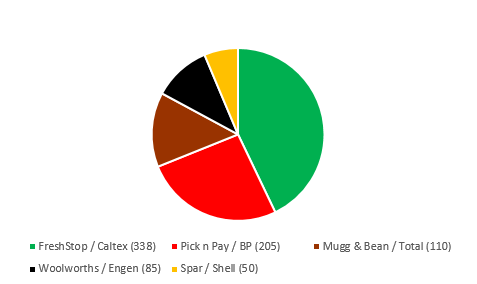
* Numbers are approximate – based on last count
Current Trends
South African consumers are more tech-savvy and time-strapped than ever before, and are demanding greater relevance and convenience from service providers, all within a tighter economy and rising fuel costs. With accelerating technological change, consumers’ entire living patterns are evolving. To remain relevant to the maturing digital consumer, fuel retailers need to dramatically re-invent the fuel forecourt retail experience.
Today’s consumers can continuously re-evaluate their options, choosing a provider that is most relevant to them in the moment. They are demanding greater convenience, health and wellness geared options, and hyper-relevance over loyalty to drive their choices.
Despite being the epitome of convenience, fuel forecourt c-stores had to re-evaluate their convenience offering during South Africa’s strict COVID-19 lockdowns in 2020. New online and home delivery solutions were employed by various brands to redefine themselves to meet the needs of their customers.
Many of the South African government lockdown restrictions, such as a ban on cigarettes and hot food sales, have impacted the industry greatly but retailers have adjusted their product offering to meet customer needs, and at the same time ensure the safety of their customers. In smaller towns and neighborhood sites, c-stores oftentimes became the only local stores to provide communities with access to essential foods required to survive lockdown.
Home Delivery
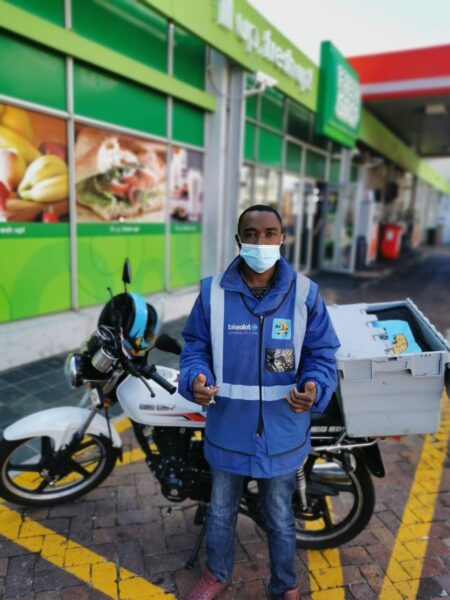
Encouraged by COVID-19 lockdown measures, convenience stores developed new partnerships with delivery services to reach their customers. FreshStop at Caltex was one such brand that partnered with a food delivery service. Its customers are now able to download the Mr D Food app and order their favourite food, snacks and cool drinks for delivery. “Our recent partnership with Mr D Food has been the ideal way for us reach the most vulnerable in society. The elderly, and those who don’t have transport, can now order our food and beverages online. We currently have more than 60 stores listed and we’re adding more stores daily to the online platform,” says Boyle.
Loyalty Apps
FreshStop recently launched its Rewards App that gives customers cash back on purchases made in-store. According to Boyle, customers are looking for technologies that will enhance their shopping experience. “Convenience stores in the US are already offering shoppers mobile apps that offer customers digital rewards, fuel discounts and mobile payments; and Artificial Intelligence (AI) has started shaping the shopping experience through the building of smart shopping baskets for customers.
“Everyone is promoting loyalty programmes but these programmes need to be simplified. As the first forecourt convenience retail brand in the country to launch a rewards programme, we are engaging with our customers by offering them great products at great prices resulting in them getting cash back in their pockets. They will also be among the first to get to know about our special promotions and take advantage of them. We know it’s not price alone that keeps customers loyal. Simplicity, recognition and a smile are still the best incentives.”
The fuel forecourt convenience retail market in South Africa is an industry leader on the African continent with its variety of magnificent brands, alliances and experienced fuel and convenience retailers who will continue to show dynamic growth in the years to come. Franchisors and retailers with innovative offers and new marketing mediums are driving success across their businesses, carefully pivoting from core to new business by developing innovative products and services to power their growth.
As technologies advance and customer needs shift, retailers will need to adjust their business strategies and business models to meet customer and market demands and secure their future in an ever-changing landscape. A new age of competitiveness has just begun and for forecourt retailers, the future is exciting.
By Joe Boyle, Managing Director at FreshStop.
