

Shell EVP interview: Bunch lays out strategic focus on key markets, convenience proposition and local empowerment

Shell is committed to mobility and convenience and it’s a three-pronged approach. That’s according to David Bunch, Group Executive Vice President for Shell’s global mobility and convenience business.
Bunch was appointed to the role in June 2024 following a 25-year career with Shell, largely in retail mobility and convenience but spanning operations, network and GM roles across the world. Prior to his latest appointment, Bunch was country chairman for Shell UK with corporate responsibility for Shell’s end-to-end footprint, representing the business with Government in the energy transition and drive to net zero.
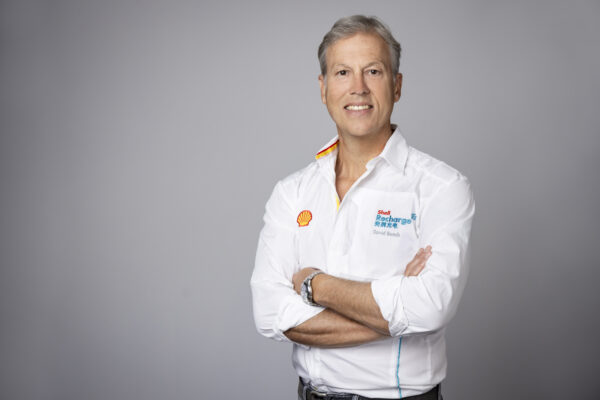
“I’m lucky to have had such varied experience – each role has had unique challenges and it’s been a continuous learning journey that has equipped me well for the fast pace of change we are operating in today,” he says.
Today, Bunch manages the world’s largest mobility and convenience retailer with a global footprint in 80 markets and a network of 47,000 retail fuel and convenience sites, serving 33 million customers every day.
Three-pronged focus
Shell has scrutinised its footprint, offer and customer base and has honed in on three major strands, Bunch says. These are:
A focus on seven energy transition priority markets: the USA (recognising the regional variations), China, the UK, Netherlands, Germany, Switzerland and Singapore.
“That’s not to say other markets are not important but we are focusing our energy transition capital and resources where we believe we have the strongest right to win and can generate a competitive return for shareholders and grow convenience propositions for customers,” Bunch says.
The customer offer, which has been subtly rebranded as a mobility and convenience business.
According to Bunch, this move recognises that 50% of Shell’s profitability comes from convenience and that convenience and mobility go hand in hand.
It also includes expanding the fresh food component of the offer and employment of new tech, as well as updates to loyalty programs to ensure Shell has good interaction and intimacy with customers to deliver what they want and when they want it but in a more efficient way.
Shell aims to strengthen its local connect by bolstering its front line customer-facing market divisions, investing in talent and development, to bring more empowerment into country structures.
Bunch says this move acknowledges Shell is a global business but can meet customer needs more efficiently in local markets.
Supplier partnerships will be relevant in all three strands, Bunch adds.
This is key for Bunch who, in a former role, initiated Shell’s Global Growth Forum, a series of events that has enabled Shell to leverage its unique global scale by sharing best practices and communicating its convenience retail strategy with supplier partners and Shell CR teams globally.
“Key supplier relationships are integral to the innovation we can bring to the stores and, the better they understand our strategy, the easier it is for them to innovate – and we want to be first in line to partner in that innovation,” he says.
“Way back then, it was our ambition to increase the profit contribution of non-fuel to 50%, in recognition of the increasing role of convenience, and we’ve largely met that ambition,” Bunch says.
While Shell has identified seven energy transition priority markets, which are ahead in terms of energy transition and have more advanced convenience channels, other markets are beginning to mature and will create a second tranche of focus and investment, Bunch says.
These include countries such as Malaysia, Canada and the Philippines, where Shell has a leading brand position, significant scale and a market-competitive fuel supply strength through it’s trading and supply capabilities.
Shell Recharge
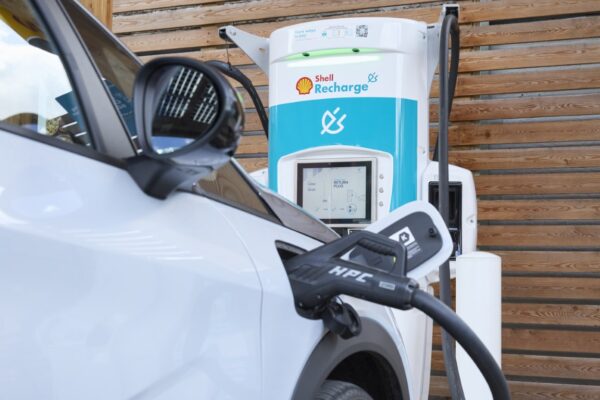
Shell Recharge, Shell’s electric vehicle (EV) charging network, has been a big success story and has played a key role in EV adoption and meeting drivers’ needs.
Shell has just celebrated the installation of its 70,000th charge post – at a new site in Watford – and will focus continued investment in the seven priority energy transition markets as demand builds.
“While we are proud of the numbers and EV is increasingly evolving as a network, it is only serving a customer segment and is not the only customer segment,” Bunch cautions. “There are still c-store only shoppers and fuel and c-store shoppers. I view EV as an additional offer at a convenience location, where we are growing the number of customers and expanding our range of convenience offers to meet their needs,” he says. “It’s less about the numerical deployment of chargers and more about making sure we are building the infrastructure in pace with demand growth and in conjunction with the broader convenience offer that two thirds of respondents from our research say they need.”
In those seven lead energy transition markets, for example, Shell is growing the number of customer missions. Sites are becoming busier, and the offer is evolving to meet the longer dwell time of EV customers, who are also buying more, Bunch says.
Bunch references a site he has recently visited in the Netherlands, where the energy transition is developing and its resulting impact on the convenience business.
Despite a decline in fuel volumes, as people have converted to electric vehicles, the number of customers has grown and the convenience offer has expanded to include a pizza station, a deli counter and quality coffee proposition, which is attracting more customers.
Charging performance is another key metric for Shell. The business has strong customer satisfaction scores for charger uptime and has won external awards for customer experience, including its integrated loyalty platforms.
This is key since Shell’s recent EV Driver Survey found range anxiety, which has previously been a top concern, seems to be diminishing and customers are looking for a broader EV experience plus the expectation that the technology will work, Bunch says.
Shell has a strong competitive advantage in this respect. It is the preferred mobility brand in the world, which sets it apart from other mobility hubs, Bunch adds.
The loyalty piece is under constant development too. Experts at Shell’s centre of excellence for technology in India are working to create enhanced capability across Shell’s four loyalty platforms (North America, Europe, the East and China), Bunch reports.
Going forward, the tech will recognise and reward customers with the right offers and support, whether they are driving an EV or petrol car and will create insight-driven experiences.
Shell’s EV Driver Survey found two thirds of respondents actively seek out a better experience and offer so, understanding those customers and being able to target specific offers by time of day will become key, Bunch says.
Energy transition

While the energy transition and support it receives from Government and other interested parties differs from market to market, Bunch claims there’s a need for stronger demand side intervention across the board to support the investment.
“It’s not about electrification for electrification’s sake – the mission is decarbonisation and electrification is a good pathway to get there but, if electric vehicle demand isn’t there, you can build as many charging stations as you like; but, if they are not being utilised, that’s a real challenge,” Bunch says. “Consequently, we see a major role for renewable biofuels to decarbonise mobility, where there is abundant existing infrastructure and compatible vehicles,” he adds.
Bunch suggests that the EV market has grown beyond the early adopter phase but that governments need to do more than support investments in EV cars. Policy change such as cutting the 20% VAT rate on public charging in the UK (versus 5% VAT for a home charger) would be a clear signal, he says.
“That seems like a huge piece of low hanging fruit to stimulate demand. Shell has the largest public charging network in the UK but we need Government and policy makers to make sure demand is generated to make these things investable,” he says.
Global outlook

Six months into his new role, Bunch is bullish about the market and Shell’s prospects.
“The mobility and convenience channel is a growing sector. As more economies progress and people move about more, there’s a general trend to more convenience and a higher quality proposition – it’s one we see as a really exciting area of opportunity and growth. Shell has a deep heritage in both mobility and convenience and is uniquely positioned to thrive,” he says.
Shell has made progress in key areas such as EV charging, meeting a growing number of customer missions and delivering healthy business growth, he adds.
“I got into this business because it’s so central to helping life’s journeys – getting from A to B in the most efficient way, developing new offers to support our customers and now we are on a decarbonisation journey – that’s really exciting,” he smiles.
