

The role of ‘foodvenience’ in convenience retail with Frank Gleeson and Joe Bona
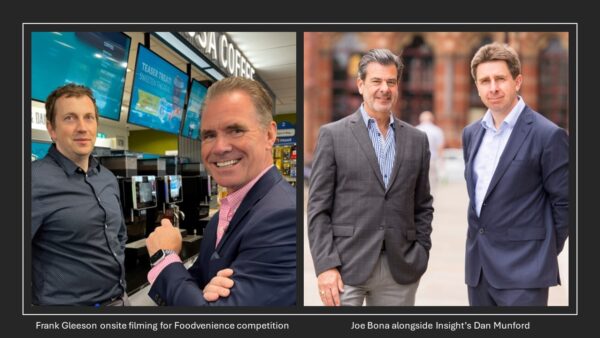
Two industry veterans, Frank Gleeson, former President & CEO of Aramark Northern Europe and former NACS Chairman and now Board Advisor at Insight Research and Joe Bona, President and Founder of Bona Design Lab, reflect on the development of ‘foodvenience’ within convenience retail and pinpoint key future trends and expectations with the launch of The Best Foodvenience Store in the World competition.
The duo begin by reflecting on their career highlights. For Bona, his team’s work in Ireland in the mid-nineties has been one of the most satisfying periods. At the time, foodvenience was in its early stages of development in the US. While the food offer was still pretty basic and largely self-serve, Bona’s brief was to introduce that foodservice element to Ireland and in particular at Statoil.
Bona remembers encouraging operators that food was an area to look at and finding a dealer who successfully sold sandwiches, which were made daily by his wife, to underscore the opportunity for a foodservice offering. It was a lightbulb moment to show that people who were in a hurry would buy food from a garage, he says.
“Ireland was the proving ground around the world that food could really work,” Bona says. Bona describes his work with Statoil – evolving, developing and fine-tuning the offer – as one of the richest spells in his career and that it laid the foundation for foodvenience development around the world today.
Gleeson’s foodvenience experience was spawned in his family’s restaurant and coffee shop business before joining Statoil, via the Blockbuster video chain, when the business began its convenience transition.
Statoil hired Joe and his team to create an American-style convenience store, which had been inspired by visits to the NACS show and leading c-store operators Wawa and Sheetz, Gleeson recalls. The aim was to introduce a hospitality element in c-stores on garage forecourts. “It was a very bold and brave step in what was essentially a motor fuel business with ‘smokes and cokes’,” he says.
It paid off. “That was the genesis for me,” he says. “We learnt the hard way how to manage inventory, spoilage and labour but you have to try and fail at things. We also started the breakfast roll revolution in Ireland – a full Irish and/or English breakfast in a baguette, which became ubiquitous,” Gleeson says. He recalls tying with vendor partners like Cuisine de France and Bewley’s in order satisfy customer need. “It existed, it was just not convenient to get it in a garage or gas station at the time,” he says.
The first Statoil c-stores hit the Irish market from 1995-2000 and showed there was a consumer appetite for a foodvenience offer. “The market and the likes of Spar, Centra and Applegreen started moving with us, as everyone saw what we were doing,” Gleeson recalls.
Statoil’s rebrand to Topaz in 2005 was another key structural change in the market and chimed with the withdrawal of the oil majors from Ireland due to low margins, Gleeson says. At the point, regional players with a strong focus on convenience began to thrive. “In 2005-2010 it really started getting hot,” he says.
Leading operators

For both Gleeson and Bona, the best regional players in the US – Wawa and Sheetz – continue to shine in foodvenience.
“The US players that have been doing it the longest continue to innovate,” says Bona. And it’s not just about the quality of the food, he adds. These retailers were among the first to introduce touchscreen ordering, for example. Wawa has also opened drive-thru only locations to learn and test new operating models. “They have also integrated app-based technologies that are allowing them to bring their offer to more people and both have kept moving the needle by being quicker and faster while adding new items to the menu. “While Wawa and Sheetz continue to be leaders in their respective markets there are also a lot of other regional chains like ampm and Maverik Markets out west and Alltown Market and Cumberland Farms in the Northeast that are competing really well and doing a good job along with many smaller retail chains that have recognized the importance of being “foodvenience” relevant in today’s competitive landscape” Bona adds.
In Europe, Bona and Gleeson agree Ireland leads the foodvenience field and largely due to the tremendous amount of competition in the marketplace.
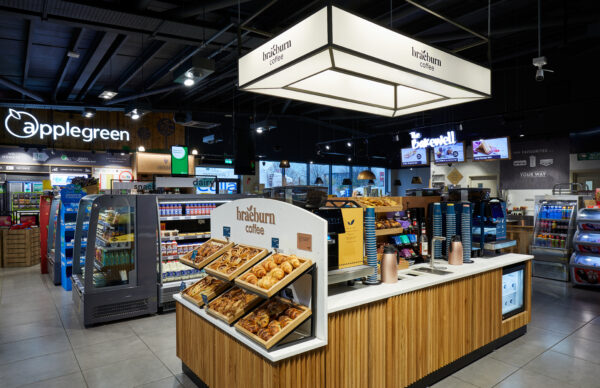
Pushed to single out a winning operator, both select Applegreen for its expansion, continued evolution ie recent partnership with M&S, multiple branded franchises like Burger King and its new Braeburn Cafe drive thru format.
“They are food operators at their core versus fuel,” Gleeson says. Bona credits Applegreen’s strong focus and US highway sites. “They are really super good at what they do,” he says.
Foodvenience trends
The duo discuss the top convenience trends in terms of food.
Gleeson references a McKinsey & Company presentation from the recent NACS European CEO Summit in Barcelona, which showed a high acceptance of convenience among millennials and Gen Z and an increasing health focus. Snacking or ‘snackification’ is also taking priority over large meals, the report showed.
For Gleeson, QSRs and convenience need to be considered as one category now.
Bona agreed the line between QSRs and c-stores is blurring and that convenience stores will become destinations for food as consumers pre-plan where they are going to meet.
The trend for larger footprint stores – up to 300sq m- provides a further opportunity, especially in high commuter and residential areas. “That space is a very beautiful space and c-stores can capitalise on that,” said Gleeson; suggesting stores of the future would encompass some level of drive thru or last mile delivery point.
“There are opportunities for key locations to evolve to meet local needs and doing it with tech,” he said.
Pivotal role of NACS
Gleeson and Bona discuss the key role NACS has played in driving convenience and foodvenience development.
NACS assists with knowledge, connections and networking to share best practice across the world, says Gleeson. “NACS is a the forefront of bringing people together,” he says. NACS also adds terrific value, he adds, citing the presentation by Insight Research managing director Dan Munford on the Best EV Hubs in the World at the NACS European CEO Summit as a case in point. “The ability of NACS to pull together subject matter experts allows the whole industry to move forward. You don’t see that in other sectors,” he says.
For Bona, one of NACS’s key strengths is the ability to bring together fierce rivals. “There are so many competitors but when they attend NACS events there is amazing camaraderie and friendship – it’s a community of global folks that love to share ideas and learn and it’s a fantastic thing to participate in,” he says.
Gleeson also credits NACS president and CEO Henry Armour credit for developing a truly international organisation. “As an industry we need good legislation and policy and good information. NACS’ ability to see what’s coming down the road is extremely helpful to retailers,” he says.

Store design and tech
The two move on to discuss changing consumer needs and how stores will evolve in terms of design and new technology.
Gleeson anticipates a lot more tech moving forward and for ordering, paying and loyalty, in particular.
Food technology is advancing too as people are increasingly interested in the products they are buying such as the protein content and calorie count etc, he says.
For Bona, store design has progressed from being “a nice to have” to being more about story telling for a retailer brand. “It’s not design for design’s sake but finding nuggets that make them special and creating those stories and emotional connections,” he says.
Implementing the latest trends is outmoded too, he adds. “Trends get old and dated so it’s about looking at longevity and updating the story so that it’s relevant and fresh in the consumer’s eyes.”
In an increasingly competitive field, where everyone has upped their game in terms of design, creating memorable experiences becomes key, Bona says. Both he and Gleeson suggest open kitchens, where customers can see how food is prepared, will enhance the convenience experience and rubber stamp the perception of fresh.

The Best Foodvenience Store in the World
Gleeson and Bona are both excited for Insight Research’s new competition to find the The Best Foodvenience Store in the World, which follows the hugely successful Best EV Hub in the World contest.
That showcased what best practice looks like in terms of EV charging and no single country dominated, said Gleeson. “The future exists, we just did not know about it,” he says. “Dan [Munford] has done the industry a huge favour. Now the focus is on convenience and how that is evolving and I’m looking forward to seeing what everybody is doing. This new competition has a few other elements – it’s not just about the prettiest store but does it make money?”
As a judge in the preliminary rounds of the EV Hub competition, Bona says he was blown away by the sophistication and level of commitment around the globe in this rapidly evolving component of roadside retail.
And he credits Insight Research for its vision and role in bringing the global community together, Now, he’s looking forward to the foodvenience contest. “There’s so much going on around the world – I can’t wait to see the entries,” he smiles.
