

Protect the magic, modernise the machine – M&S Presentation at NACS Convenience Summit Europe
alastair@fyfephoto.com
Marks & Spencer is doing something many legacy retailers talk about but few actually pull off: using heritage as a growth engine rather than a comfort blanket.
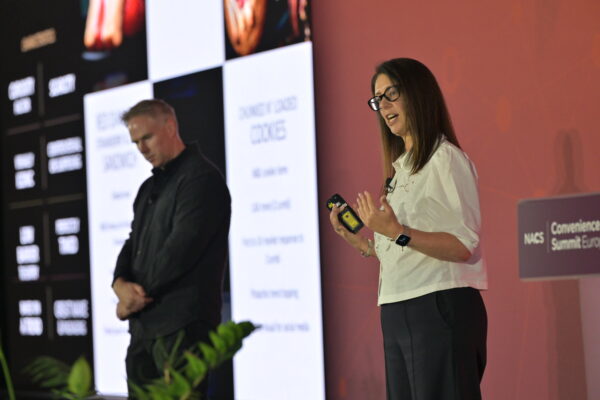
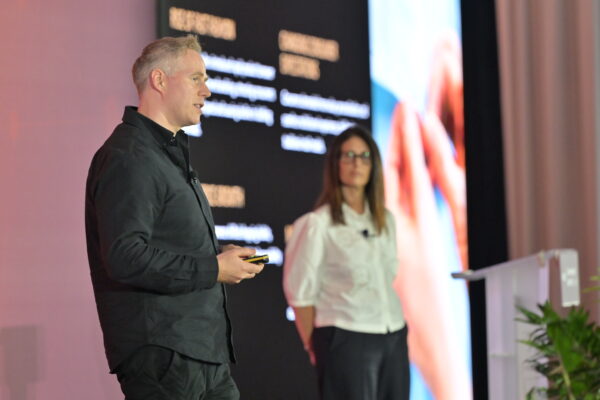
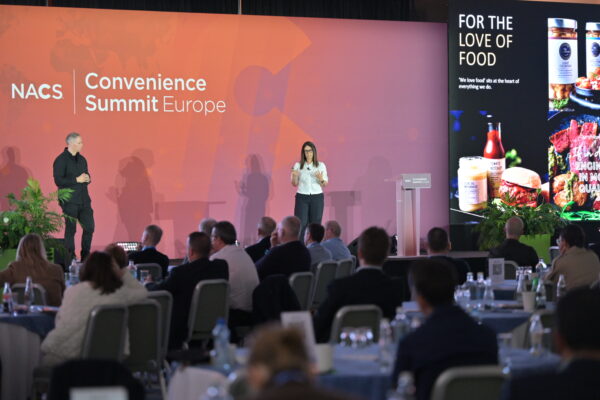
Speaking at NACS Convenience Summit Europe in Warsaw, Louise Eckford, Head of Property, Transformation & Programmes and Nick Wright, Head of Convenience Operations, laid out how its food business is balancing emotional brand connection with hard-edged operational modernisation, and the result is a strategy that feels highly relevant for convenience and mobility retailers far beyond the UK and provoked spontaneous applause amongst the audience here in Poland.
The core idea is simple. Protect the magic. Modernise the rest.
That may sound like neat conference language, but behind it sits a disciplined food strategy built on product quality, constant innovation, sharper store formats and a much more contemporary understanding of how customers shop, discover and share food.
A 140-year-old brand with a point to prove
M&S is hardly a new name in retail. Founded in 1884 as a penny bazaar in Leeds, it has long held a distinctive place in British consumer culture. For generations of shoppers, it has been associated with trust, quality and value – from school uniforms to special-occasion food.
But heritage alone is not enough. The business was open about the fact that its recent history has included both peaks and painful troughs. After record profits in the late 1990s, M&S lost relevance with some customers, faced structural change in fashion, wrestled with store estate issues and had to respond to the growing importance of digital retail. Covid added another major jolt.
What matters now is the response. M&S has reset around three business-wide priorities: product excellence, profitable sales growth and operational efficiency. In food, that has translated into a particularly clear ambition: double the size of the business from 2022 levels.
It is not a vague aspiration. The retailer said it has already delivered 43% growth in four years, suggesting the strategy is gaining real traction.
Why food remains special at M&S
The presentation made one thing abundantly clear: M&S sees food not just as a category, but as a brand expression.
Its team repeatedly returned to the emotional relationship customers have with M&S Food. Internally, the retailer talks about the need to “protect the magic” – the sense of trust, joy and expectation attached to the brand. That matters because it gives M&S permission to innovate, position for quality and remain relevant in a highly competitive grocery environment.
The retailer’s own shorthand captures this perfectly: “This is not just food, this is M&S Food.”
That brand equity is reinforced by an overwhelmingly own-label model. M&S said 90%+ of its food SKUs are own label, giving it far greater control over quality, product development and differentiation than many rivals. The business is unapologetically product-led, guided by a mantra from its food leadership team: “If in doubt, engineer more quality.”
That principle appears to run through everything from ingredients and packaging to health positioning and seasonal innovation.
alastair@fyfephoto.com
Innovation as a system, not a stunt
One of the most interesting aspects of the M&S approach is that innovation is not treated as occasional theatre. It is engineered into the operating model.
The retailer highlighted a long history of firsts, from ready meals and chicken Kiev to more modern headline-grabbers such as melted-in-the-middle chocolate pudding and the gin snow globe. But it is the current cadence of innovation that stands out more.
M&S said it launched more than 1,600 new products and upgraded more than 1,000 existing lines in the last year alone. That kind of volume only works if innovation is systematic rather than sporadic.
To support that, the retailer has shifted away from a model built around a handful of major product spikes each year and moved towards what it described as a constant drumbeat of newness. That is especially important in high-frequency missions. One example shared in the presentation was NHS workers, who shop M&S around four times a week in some locations. Customers visiting that often do not want a static offer.
This is where M&S’s Winning Choices programme comes in. Guided by its Future Navigators team, which tracks food and consumer trends globally, the retailer identifies gaps, builds new product pipelines and keeps categories moving. It also uses full category transformation, revisiting ingredients, pack design, pricing, merchandising and marketing in tandem rather than treating each lever in isolation.
That matters because some of the biggest wins appear to come not just from launching something new, but from making the proposition clearer. In one example, M&S said its meatballs with just three ingredients delivered a 300% sales increase on the same SKU once that simplicity and transparency were clearly communicated.
Health, indulgence and “affordable luxury”
Like most food retailers, M&S is responding to a customer base that wants contradictory things at once: indulgence and wellness, excitement and reassurance, value and quality.
Rather than viewing those tensions as a problem, the retailer seems to be treating them as the basis for range architecture.
On the health side, it said a high and growing proportion of its range is UPF-free, with further progress still targeted. It is leaning into cleaner-label cues, nutrient-dense ranges and simple ingredient messaging. It is also using sub-brands to help customers navigate need states, including Plant Kitchen, Made Without, Count on Us, Gastro Pub, Best Ever and Collection.
On the indulgence side, M&S remains heavily invested in treat-led food, social occasions and seasonal peaks. Its executives noted that consumers are increasingly socialising at home and looking for restaurant-quality experiences without restaurant-level spend. That creates a sweet spot for premium retail food.
Few retailers understand that dynamic better than M&S at Christmas. According to the presentation, in the three days before Christmas, its stores can generate the equivalent of two weeks of normal trade, while its food market share more than doubles over the festive period.
This is not just seasonal opportunism. It is evidence of a retailer that understands how to turn event-led retailing into brand reinforcement.
Creating buzz in the social era
If product innovation is one half of the story, marketing execution is the other.
M&S has built a dedicated Buzz Team to drive excitement across Instagram, Facebook and TikTok, tailoring content to each platform rather than pushing identical assets everywhere. It also works with celebrity ambassadors, deploying them selectively by audience and channel.
What is notable here is the level of intentionality. The retailer distinguishes between unexpected viral products – those that take off organically – and planned “zeitgeist” products, which are designed to travel socially through strong timing, visual appeal, trend relevance and the right naming and packaging.
Examples included the Red Diamond Strawberry & Cream Sando, Pistachio Big Daddy, and Chunked and Loaded Cookies, all created or amplified to ride cultural and platform trends.
For convenience retailers, the lesson is not that every product needs to go viral. It is that innovation today needs a communications strategy from day one. Shelf appeal alone is no longer enough; products increasingly need social currency too.
Modern stores, sharper missions
The M&S transformation is not just happening in product and marketing. It is also visible in store design and estate strategy.
The retailer described a modern convenience format built around fresh-first merchandising, clearer zoning and easier navigation. That may sound familiar, but the commercial results suggest the discipline is working.
A standout example shared was the renewed Waterloo station convenience store – a 5,000 sq ft location that saw double-digit sales and volume increases after refurbishment. In its strongest renewal projects, M&S said partners are achieving a rapid payback, impressive in a sector where store upgrades can often struggle to justify themselves quickly.
These numbers matter because they show that modernisation is not simply cosmetic. When done well, it changes customer behaviour, improves mission fulfilment and accelerates return on investment.
Performance with pressure still on
For all the optimism in the presentation, M&S did not pretend the job is finished.
The business said it has been growing market share in both value and volume for four consecutive years, at times performing up to 8% ahead of the market. It also claimed strong customer scores around quality, freshness, innovation and health.
But it also identified unfinished work: improving value perception, increasing basket size and expanding the number of stores able to carry the full M&S range. At present, it said only 50 stores in its own estate offer the full range.
That self-awareness may be one of the more important signals in the whole strategy. The leadership phrase shared during the presentation – “relentless dissatisfaction” – captures a business that believes momentum is useful, but complacency is fatal.
alastair@fyfephoto.com
What convenience retailers should take from it
For the wider convenience and mobility retail sector, M&S offers a compelling case study in how to scale food through brand, not just through assortment.
Three lessons stand out.
First, quality still matters – but only if it is visible, consistent and translated into real customer relevance.
Second, innovation works best as a repeatable system, not as occasional hero launches.
Third, store modernisation pays when it is connected to mission clarity, operational discipline and a stronger food identity.
M&S is not trying to become everything to everyone. It is trying to become more unmistakably itself, while updating the machine behind the promise. That is a subtle but powerful distinction.
For convenience retailers navigating the pressure to modernise without losing their soul, it is a model worth watching closely.
