

Parkland USA accelerates convenience expansion in the Rocky Mountains and Florida
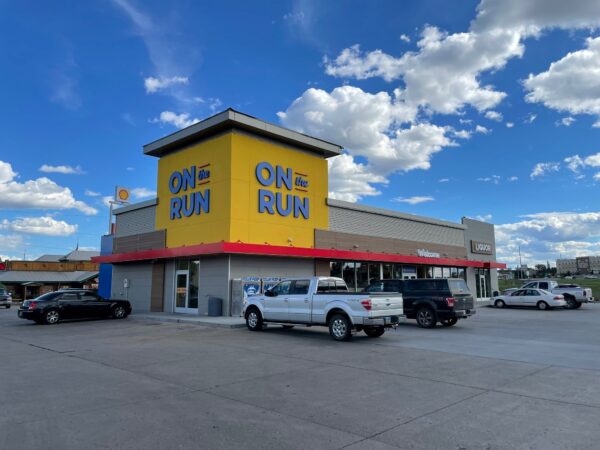
Parkland USA is on a roll. The subsidiary of Parkland Corporation, Canada’s largest and one of North America’s fastest-growing independent marketers of fuel and petroleum products and a leading convenience store operator, has tripled its footprint in the last two years.
And the business is eyeing further expansion opportunities as it launches the On the Run brand in the US and looks to leverage the EV charging expertise won by its Canadian parent across its own operations down the line.
The expansion has been led by Parkland USA president Doug Haugh. Appointed to the role in November 2017, Haugh has overseen 20 acquisitions in the past 36 months and witnessed Parkland’s USA earnings grow by 10x.
Haugh, who started his career at Exxon, has held a number of senior management roles at leading oil and gas companies and was previously president and chief strategy office for Mansfield Energy Corp. He also sits on the NACS Board of Directors plus the Board of Directors of BioBlend Renewable Resources and The Fuels Institute.
At the time of writing, Parkland USA operates in 17 US States. In terms of site numbers, the business has expanded from 67 company-owned stores at the end of 2020 to 212 at the end of last year. In the same time frame, it has increased its dealer and franchisee network from 324 to 420, giving a total of 632 outlets, which Parkland USA either operates or supports.
According to Haugh, the acquisition strategy is pretty individual.
“We are unique in how we filter markets,” he says. “We look first and foremost for underlying growth – growing markets, communities and States.”
For Parkland USA, that has narrowed the quest down to two of the fastest growing regions in the USA: the Rocky Mountain States in the Western United States and Florida, the southeastern most US State.
“They are areas with rapid population growth – it’s always nice to have new customers, as a tail wind,” Haugh smiles. However, they are also markets, which from a fuel perspective, are difficult to supply.
That has given Parkland USA the edge. “Unlike other retailers, we have integrated supply and trading so there’s more of a supply advantage – these regions are hard to supply so we get paid well to do it,” Haugh says.
Historically, the Rockies have been sparsely populated, so they have not had investment in big pipeline distribution systems, Haugh explains.
“Plus, there’s the fact that they happen to be mountains, so supply and logistics is always challenging in that part of the country.”
A fleet of 600 distribution trucks plus rail expertise has given Parkland USA that supply advantage.
“We are not capable of fully supplying the market by road so rail expertise is quite important,” Haugh says.
Indeed, supply chain informed Parkland USA’s early acquisition strategy.
“In the Rockies it was a pretty unique acquisition strategy. We targeted companies that had stores and understood retailing but also those that had made investments in distribution. Now supply and distribution is complete, it’s much easier to add stores,” he says.
“Florida is completely different. There are no pipelines in Florida and, as it’s a water bound market, everything has to go to Florida on ships.”
But Parkland also has a presence in the Caribbean, where it is the largest independent fuel marketer, supplying 500 stores. It also operates 13 charter ships.
“We have been able to scale that infrastructure and win the same supply chain advantage that we have in the Rockies and Canada – we just do it with ships,” Haugh states.
Electrification

Read more about Parkland Corporation’s plans to build the winning design from The Electric Fuelling Station of the Future competition: More with Less by Edinburgh’s James Silvester.
Despite Parkland’s fuel focus – the company has specifically targeted markets in the US where it believes there will be at least five to 10 years’ growth in fuel – Haugh believes the future for convenience stores will be heavily reliant on electrification.
“While people worry about demand destruction in terms of fuel, growing cities and markets that need new stores to serve more customers every day, mean that’s not likely for a least the next 10 years,” Haugh says.
“But change is happening,” he adds.
In British Columbia, Canada’s westernmost province, EVs account for almost 12% of all new car registrations. That’s on a par with California.
Parkland operates 250 stores in British Columbia and is currently installing its first 100 ultra fast EV charges in the province. The company has also sponsored a design competition to build the electric charging destination of the future in British Columbia and is committed to building the winning design. Haugh reports the market is Parkland’s ‘lab’ for EV, where it will aim to figure out the optimum marketing, pricing and servicing strategy.
“People think you just put EV chargers in and people simply plug their vehicles in – but there’s far more maintenance and support. Customers also need to know they are reliable and that they can depend on them to work and provide high speed charging.”
Haugh anticipates the business will trial different charging models and even subscription-based offers, which are already popular for car washes.
“We will experiment with all of those models,” he says. “We’ve not seen anyone that says this particular model works – everyone is in a discovery mode.”
In the meantime, British Columbia provides a marketplace with real demand and a growing number of customers to help the business learn really fast, Haugh adds.
“We will also be integrating EV into our loyalty program so customers can earn points and redeem them with EV. That’s how seriously we have taken EV development, we have built into every facet of our strategy,” he says.
Haugh concedes EV charging will be much more distributed than fuel retailing has been, however. There will be more providers including coffee shops, cinemas, shopping malls and restaurants; as well as home charging, for instance.
But c-stores will play a role, he maintains.
“I believe we are operating convenience stores not gas stations. People go there for convenience and there is a convenience offering for charging at high speed. Convenience in the EV sense is speed.
“C-stores will command a slice of that market but will also win on their amenities and foodservice plus cleanliness,” he says.
Parkland’s sites in British Columbia, for instance, are the number one choice for onsite fresh foodservice, have adequate parking and WiFi and therefore are natural sites for EV charging.
Others may need to be refigured and developed as the energy transition to EV evolves.
In future, Haugh expects EV charging will be targeted more at the traveler versus commuter so that stores in communities would not expect to service a lot of customers but travel centers will have a significant opportunity.
“Those are the locations that we think should have EV charging and will need it,” he says.
On the Run
Parklands USA is launching the retailer’s flagship Canadian convenience brand On the Run in the US this year.
Haugh reports the first 15 stores in Miami are currently under construction and all 97 sites in that market will be converted over time, as will the majority of Parkland USA’s 213 company-owned stores.
“We will get there as rapidly as is practical. There have been supply chain issues, so I’m giving up on specifying the schedule in detail,” Haugh says.
As a significant brand investment by the business in the future of retail, the launch is larger than a rebrand. Haugh prefers the term reimplementation since some sites may be completely rebuilt, while others will be retrofitted and remodeled.
The focus on Miami is deliberate. Stores are in close proximity so Parkland USA can ensure it gets good returns from its advertising and marketing strategy.
The Rocky Mountains is a much more distributed, less dense urban market and stores are not that close. “I love the Rocky Mountains but in terms of advertising effectiveness, it is harder to get leverage,” Haugh says.
Foodservice is a key area of focus for the On the Run brand. “Hot fresh food and clean, quick convenience – that’s our focus and it’s no more complicated than that.
“It’s nice to have hero products and we have some of those but I think success is due to execution, a great selection, good lighting, a commitment to cleanliness and that it’s easy to get in and out. It’s not easy because executing is hard but that’s the business for us.”
Sustainability
Sustainability is a key focus for Parkland. The company published its inaugural sustainability report in November 2021. According to Haugh, the objective is simple – to help Parkland customers drive to net zero.
At site level, Parkland targets energy management and reducing its stores’ carbon footprint with initiatives including solar panels – particularly effective in the Caribbean where electricity is expensive but sunshine is cheap and plentiful. Packaging is another focus area.
“We take into account all of those areas to reach our objectives. It’s important because consumers vote with their business plus it’s the right thing to do,” Haugh says.
Sustainability, along with EV and new technologies and capabilities will shape the future of convenience retail, Haugh maintains. Parkland’s vision for that future is captured in this new video, which readers of Global C-Store Focus can watch exclusively here:
