

NACS Convenience Summit Asia distills top retail trends in China
The 2019 NACS Convenience Summit Asia, held in Shanghai, China, 5-7 March condensed the key learning and insights from one of the world’s fastest growing convenience markets.
The three-day event, supported by the NACS Global Supplier Council, had a bit of everything: an overview of the Chinese market and convenience retail in China including highlights and examples of new types of retail concepts plus topical themes including next generation payments and vehicles and fuels.
Retailer case studies provided the filling in this jam packed convenience sandwich and featured both indigenous and overseas competitors from the convenience and forecourt arena.
The event was topped and tailed with a walking store tour in Shanghai, taking in an eclectic mix of retailers and specialist operators; and the 2019 Asian Convenience Industry Leader of the Year and Asian Convenience Retail Technology Awards.
Convenience in China
Henry Armour, president and CEO of NACS, set the scene for the Summit by exploring what part of the future is happening in China and how China compares with the rest of the world regarding global issue lifecycles.
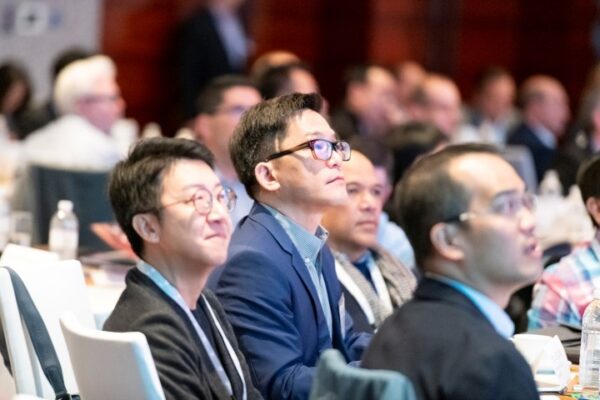
“The future is here…it’s just unevenly distributed,” Armour told delegates. China is on the front foot of many trends including payments systems, digital marketing, emerging technologies, foodservice in small spaces, supply chain logistics, delivery and EVs. “Retailers are using technologies to solve a problem versus technologies looking for a problem to solve,” he said.
Brady Ni from Nielsen China provided an overview on the Chinese consumer and the retail channels that they like to shop. Chinese consumers require instant satisfaction and faster delivery speed, he advised. The e-commerce evolution in China has created a very diversified retail commerce landscape, however, with C2C, B2C and now merged online and offline models, billed as ‘new retail’. Short distance logistics are also very evident in China, driven by the high population densities. Ni advised retailers keep an O2O service to attract traffic and enhance efficiency of fulfilling orders. He urged retailers to create a diverse experience; upgrade their physical stores with digital solutions and to be aware of the unmanned store, even though it’s yet to deliver the best shopper experience. Retailers should also explore the empowerment of grocery by leveraging supply chain sourcing to reach a wider and deeper geography, Ni advised.
The scale of the convenience market in China – the world’s second largest economy – was also put under the spotlight at the Summit. There are now more than 100,000 convenience stores in China, with combined annual revenue of 190 billion yuan ($29.7 billion). First and second- tier cities are still popular locations for new store openings. Regional players have taken the lead in the small-format retail sector, but no single operator has yet established a national presence, excluding stores linked with gas stations.
Single day sales per store averaged about 5,000 yuan in 2017. The convenience store sector grew 23% year-on-year in 2017 in terms of same-store sales and new openings, down from 31% in 2016.
New momentum coming from internet giants’ involvement has intensified competition and altered the layout of the sector. More than half of the stores offer mobile payment options via Tencent Holdings’ WeChat app, slightly higher than the number offering Alibaba Group Holding’s Alipay. Companies have poured investment into new technology, with a focus on self-pay stores and updating logistics.
So far, 36% have adopted online operations. Those companies said online sales contributed 10% of their total revenue. About 40% of the companies have set up a membership system to offer promotional deals. The membership business model is still in its infancy in the Chinese sector, only contributing 35% of sales. Despite the sector’s rapid expansion, convenience stores are facing bottlenecks, largely in the rising cost of rent, up by 18% year-on-year; labour, up 12%; and utility bills, up 6.9%.
New retail
The trend to ‘new retail’ was dissected by Matthew Brennan from China Channel, a China-focused tech consultancy and research firm.

Online’s move to offline is being driven by the competitiveness and maturity of the online sector and opportunity to grow offline. Brennan dubbed Hema as the ‘poster child’ of new retail since it provides an experience centre for entertainment and having fun with a goal to drive offline shoppers to shop online. “The essence behind new retail is to apply the idea and technology of the internet to restructure people, products and place in an all-around way from the place of origin to the hands of consumers,” said Brennan.
EasyGo, another ‘new retail’ player on China’s convenience block, showcased its smart retail platforms including autonomous retail stores, facial recognition for supermarkets and smart boxes such as the weCafe, a full-featured coffee robot.
Next generation payments.
Next generation payments was one of two key themes addressed at the Summit. China is already a leader in mobile payments but delegates were keen to learn what was next on the payments horizon. Kelly Wang, senior operation manager, WeChat payment department, showed how WeChat Pay powered smart retailing by digitising the entire process for people, product and stores.
Retailers can use payment traffic to increase connectivity via dynamic couponing or social media proliferation, for example. They can use payment data to empower operations – WeChat shares big data with retailers to create precision marketing. WeChat Pay also enhances the customer experience with faster payments, scan and go self checkout and home delivery, for instance. Mini programs using the WeChat platform also help eliminate the need for apps. “Smart retailing is not about a single digital upgrade to the retailing sector, but rather about being a leading internet-enabled industry,” Wang said.
Vehicles and fuels
The second key theme at the Asian Summit focused on vehicles and fuels. Klaas Mantel, head of global convenience retail, Shell, presented the customer insights and scenarios driving change within mobility retail. The way people “consume mobility” will undergo fundamental changes as cars become computers on wheels, autonomous driving goes mainstream, car ownership is replaced by transportation as a service, and the vehicles are increasingly electrified, said Mantel. These changes will reshape our cities as well as brick-and-mortar retail, he added. Mantel revealed how Shell Retail is repositioning itself to thrive in this mobility and energy transformation. It is significantly expanding its service station network while growing its convenience retail business to become the preferred mobility retailer, he said.
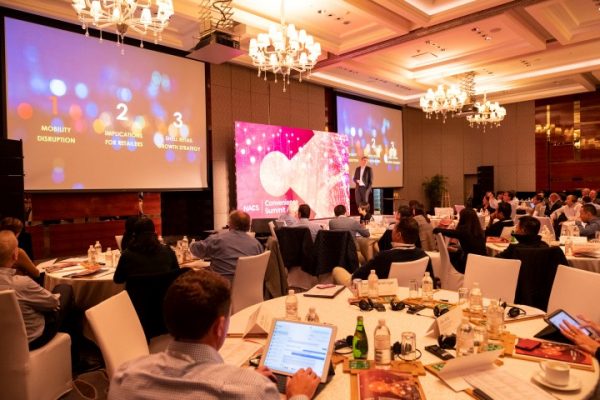
Adam Weng, Shanghai sales lead for Tesla, shared the company’s strategy and view of where EVs are headed in Asia – China is already Tesla’s number two market in the world and soon to be number one.
Tesla is marketing its latest car featuring over-the-air software updates and embedded auto-pilot technology, primed for autonomous vehicle conversion. The electric car brand is also promising a new shopping experience including experiential showrooms in malls, online purchasing and direct to consumer sales and service.
Retailer case studies.
Delegates heard from a number of leading convenience operators in China including Hema, which is integrating online and offline channels to great effect and is a prime example of the retail evolution that’s taking place. While 60% of sales are online and growing, offline sales are increasing too. According to Hema, new retail means adopting a customer centric approach versus a retailer centric strategy. The operation is characterised by five key elements: unique consumer value (discovery/experience plus convenience and fresh), fully digitalised stores, a smart supply chain, AI powered fulfilment engine and supply chain traceability.
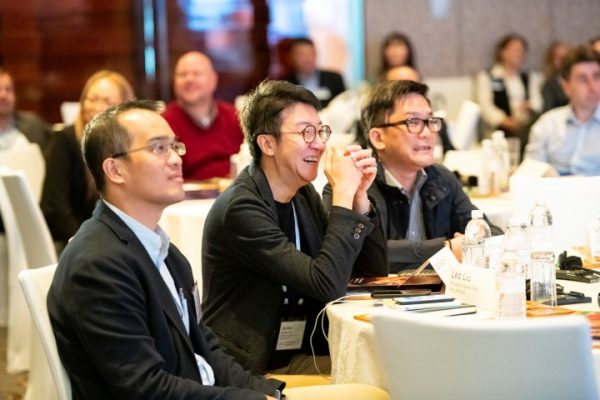
Two Japanese retailers, Family Mart and Lawson, revealed why they are convenience leaders in China. Lawson operates 2,000 stores and wins 7 million customer visits per week. Its strategy is based on a ‘bicycle theory’ of balancing the ‘size’ or focus of the front and rear wheels: the front is focused on store development, marketing, sourcing and PR and the rear on operations, IT systems and standardised management. The retailer differentiates in marketing and products and is experimenting with self scanning checkout.
Sinopec showed how one of the nation’s major energy companies competes in China’s disruptive market; while PetroChina revealed how its uSmile convenience store brand is performing and its future plans. PetroChina operates 21,000 sites serving 11m customers a day and is the third largest oil company in the world. Despite enjoying 35% annualised CVS sales growth at uSmile, vice president Lei Zhu reports there are cultural barriers to foodservice growth due to a preference for at-home cooking. As a consequence, there is demand for staple cooking ingredients and uSmile focuses on bulk sales of staples such as rice and oil. The retailer also focuses on car care products. Data analytics are key for this major player. “Data is like oil…it lubricates retail,” said Zhu. The general sessions of the Summit closed with a panel discussion, debating the key conference themes and trends, and an event wrap by Henry Armour.
Store tours
The Summit featured a walking store tour around Shanghai to showcase new retail design and next generation technologies. It featured a broad range of retailers and sector specialists. They included City’super, aimed at the top 5% of income earners in Shanghai and specialising in upscale imported grocery products with seasonal displays at the entrance and around the store; Hey Tea, a Chinese tea shop chain; Blue Tree Cafe, aimed at health and environmentally conscious consumers and Little B Convenience Store, a high end convenience store located in an alleyway in Shanghai’s historic Xintiandi district, which takes inspiration from the aesthetic of pop-up shops. According to Armour, these operators are delivering on the shopping experience, selling experiences and feelings versus products. Elsewhere, Family Mart, Lawson and Carrefour demonstrated crisp and excellent merchandising and put an international stamp on proceedings in China’s largest city.

Retailers with a singular category focus all featured on the tour and included 1st Tree, a nutraceutical herbal store and restaurant, which brings ancient Chinese traditions to enhance one’s overall wellbeing and promote longevity; and Gogo Fruitage, a high end fruit store that sells a large variety of fresh and mostly imported fruit.
And for delegates in need of a caffeine boost, coffee was plentiful and on offer at Pacific Coffee, a European style coffee house that also sells its own brand of coffee beans and Jura Coffee machines and provides catering and delivery services; and Ratio Care, a fully automated coffee shop run by robots or so-called cobots (collaborative robots), which help to create completely customised coffee drinks. Customers can order their morning cup exactly the way they want it via mobile and have it prepared to perfection by a cobot. The café turns out about 400 drinks a day, taking on average two minutes from order to table. The menu consists of more than 50 fixed coffee and cocktail drinks, as well as the option to create your own using preferred flavour profiles. All ordering is done through WeChat, the most popular multi-purse messaging, social media and mobile payment app in China. Using artificial intelligence, Ratio has taken it a step further by storing customers’ orders and learning about their preferences in order to make recommendations for future visits. Now that’s next generation technology indeed.
Awards
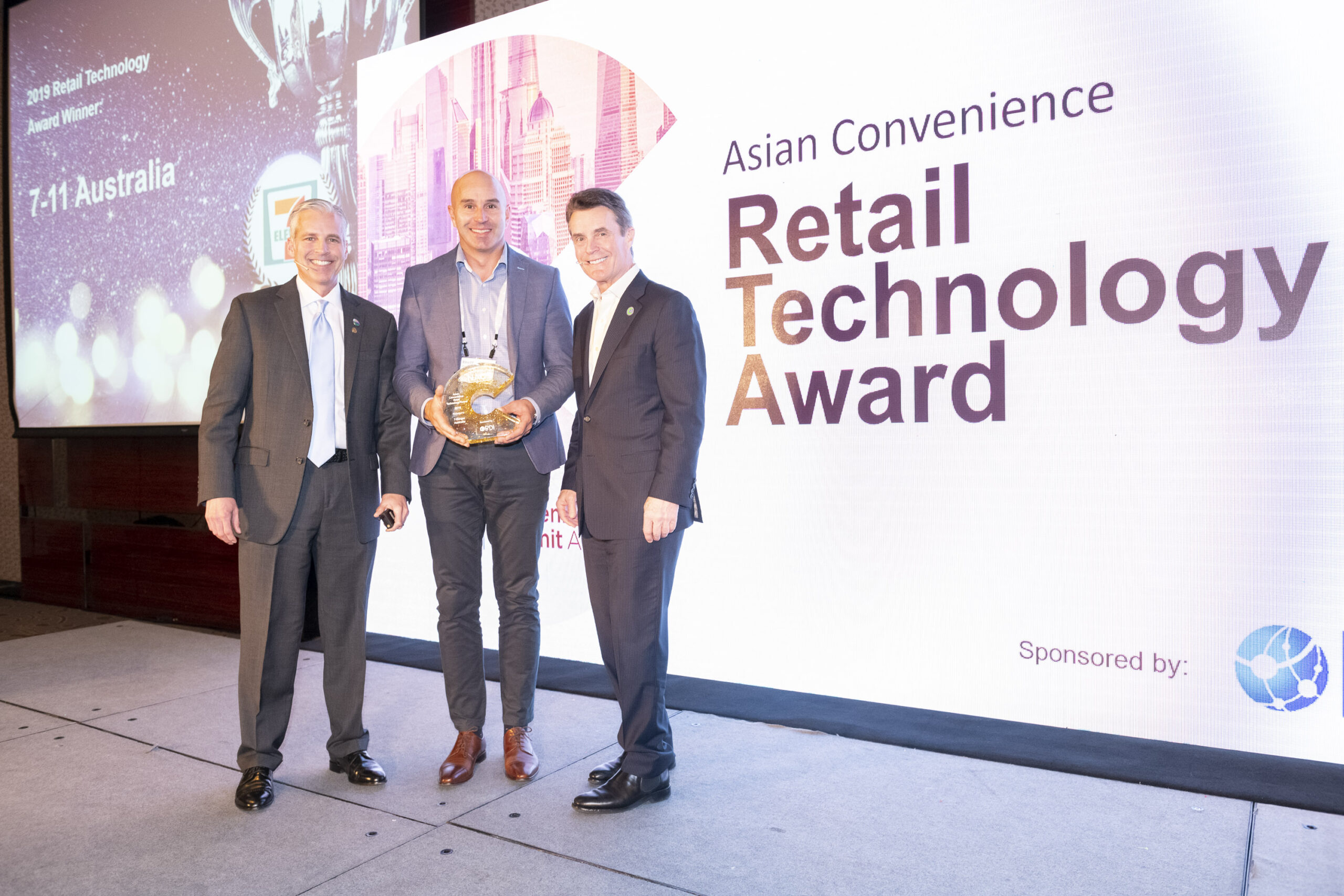
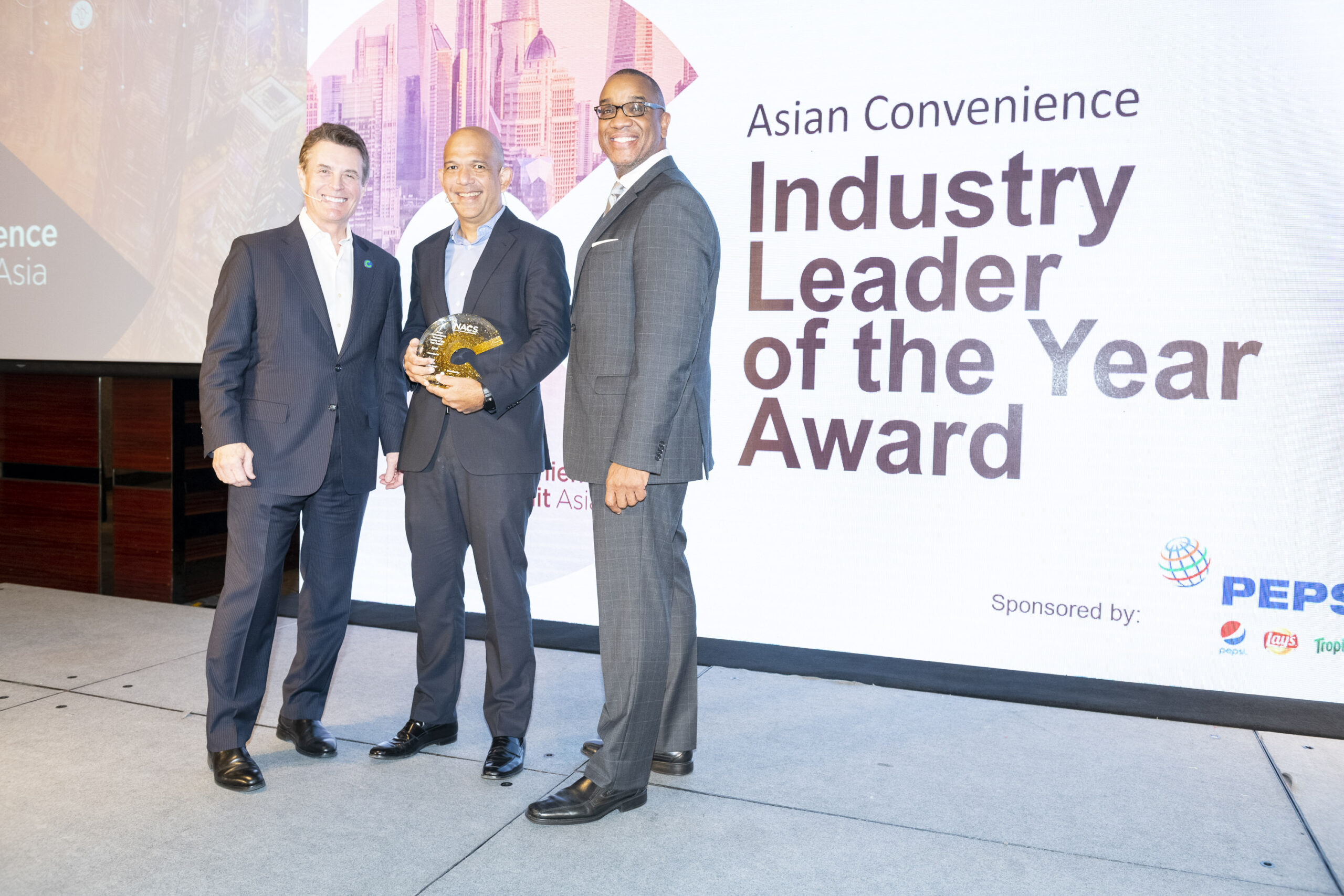
During the NACS Convenience Summit Asia the Asian Convenience Industry Leader of the Year Award, sponsored by PepsiCo, was presented to Victor Paterno, president and CEO of Philippine Seven Corp., and the 2019 Asian Convenience Retail Technology Award, sponsored by PDI, was presented to 7-Eleven Australia.
Convenience Summit Europe
London, 5-7 June
The NACS Convenience Summit Europe is where the world gathers for two days to gain and share knowledge on global strategic industry issues, while taking a deep dive into how these core, retail-centric themes will impact our industry today and in the future.
Key Themes and Confirmed Speakers
- Global Industry Issues: What Keeps us Awake at Night Frank Gleeson, NACS Chairman; President, Aramark Northern Europe; and Henry Armour, Ph.D., President & CEO, NACS
- Digitalization: A Threat or an Opportunity? Mike Atkin, CEO, MJA Associates, Nick Chambers, Director, Mobile Loyalty Technologies and Paula Thomas, Loyalty Expert & Consultant, Author and Chief Content Officer, Liquid Barcodes
- Perception: How Do Younger Generations See Our Industry?
- The Electrification of Mobility Philippe Vangeel, Secretary General, Avere – The European Association for Electromobility, Håkon Stiksrud, Senior Director E-mobility, Circle K Europe and Tormod Lier, Director, Norgesgruppen Convenience
- Best Practice & Innovation: Success Stories from Our Industry
NACS Market Tours Europe
Amsterdam, 9-11 June
Witness the future of convenience in real-time. See best-in-class execution, thought-provoking design and next generation technology during guided tours and expert-led debriefs. Previously a part of NACS Convenience Summit Europe, the reimagined NACS Market Tours Europe is designed to provide a closer-look into retail operations and solutions, as well as a deep dive into discussion-based learning.
The Retailers
- Fuel & C-Retail: Shell, BP, Total, De Haan, Loogman, Euro Garages
- Non Fuel C-Retail: Spar, Jumbo, Albert Heijn, Ekoplaza, Sterk, Marqt
- Food: Stach, Hema, Febo, Dunkin‘, Simit Sarayi
Specialties: “Bike through café”, “Oh my raw balls”, “Vegan Fast Food”, “Candy Freaks”, “The Headshop
