

Middle East – Oil rich region on the path to Decarbonization

One year ago we shared with you a deep dive into the diverse region of the Middle East with its endless opportunities for roadside retail.
Today we would like to give you an update on what has been happening in the region and what we can expect going into the year 2022. And in particular, how Middle Eastern countries are addressing the sustainability and decarbonization agenda.
Covid19 impact in the region
As with many other places around the globe the Middle East has had its share of restrictions and lockdowns this year. However, vaccination rates have always been quite high and some countries like the UAE have managed to remain open for the most part of the year. This has certainly helped its economy which is dependent on international trade and tourism.
Regional Governmental efforts were backed up by the private sector too. The ADNOC Distribution company is an example of one of the first retailers globally to vaccinate 100% of frontline staff.
Another reason to remain open for the UAE was the Dubai Expo which started in October 2021. The Dubai authorities are focusing their efforts on both limiting the spread of Covid19 and giving access to as many visitors as possible.
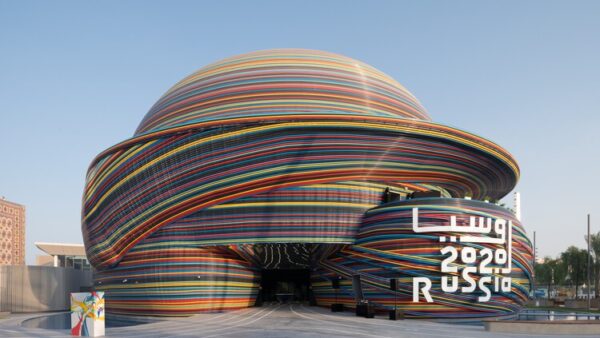
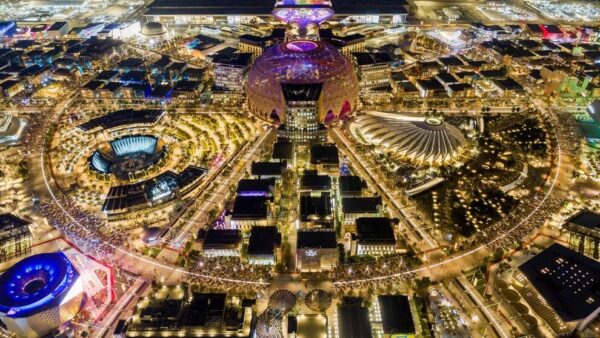
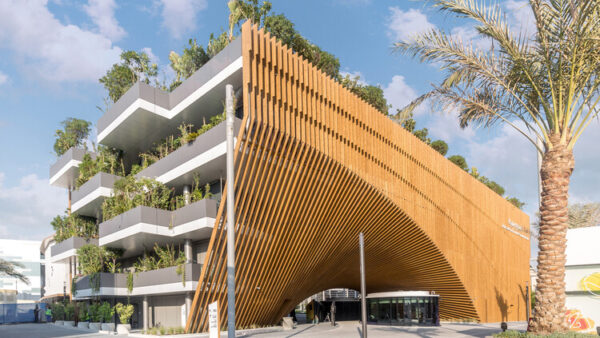
What happened in the Middle East in 2021
UAE
Without a doubt the largest, the most significant thing to happen in the region in 2021-22 is the Dubai Expo; the world fair which has been built from scratch on 4.3 sq km of desert. It’s an exhibition of culture, technology and architecture under the banner “Connecting Minds and Creating the Future”. It is aimed to attract tourists and investments in the country.
As we mentioned in the previous Middle East feature and one of the Shop Talk Live episodes – a place to visit at the Dubai Expo for convenience industry professionals is ENOC’s Station of the Future. This site is remarkable both from a sustainability and a retail design point of view. The Dubai Expo will remain open until 31st of March 2022. So, you still have a chance to catch it!
2021 was the year of creativity and innovation for the UAE’s convenience retail industry as well:
- ENOC has announced a partnership with Emirates Post, UAE’s official postal operator, to enhance the last mile delivery experience for customers. ZOOM, a convenience store chain owned by ENOC Group, has become a convenient pick-up and drop-off location for customers sending or receiving shipments via Emirates Post.
- ADNOC Distribution has launched its first ‘walk out’, contactless and cashier-less Oasis store in Abu Dhabi. This is the first pilot for the company to test the new shopping experience enabled by AI technology and weight sensors. Every shelf in the new store also features an electronic LED screen that displays price, offers and promotions.
- Majid Al Futtaim, operator of Carrefour stores in the region, partnered with Russian Yandex group to test last mile deliveries done by robots in their Dubai stores. Carrefour customers will be able to receive their online orders delivered by Yandex autonomous delivery robots:

Saudi Arabia
Regional rivalry between the UAE and the Kingdom of Saudi Arabia (KSA) has been gaining momentum. KSA is serious about challenging UAE’s status of financial and tourist hot spot for the GCC. This year it pushed many international businesses to shift their regional Headquarters from Dubai to Riyadh in exchange for tax incentives.
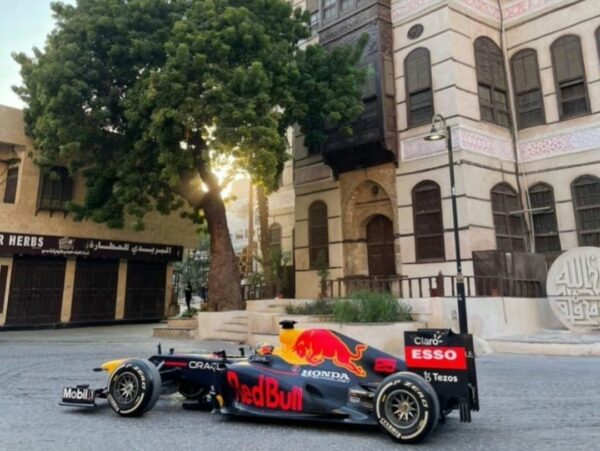
The social and economic changes in the Kingdom that started several years ago under the ‘Saudi Vision 2030’ program continue to surprise. Saudi Arabia is changing and changing fast. From a very closed unknown place it is transforming itself into a trendy attraction. In 2021 KSA welcomed for the first time F1 Grand Prix event in Jeddah, the Red Sea Film Festival as well as a four-days music, art and culture festival “Soundstorm” in Riyadh. “Winter at Tantora” Festival happened for the 3rd time in 2021, luring all the travel bloggers into picturesque Al Ula region. There was even Winter Wonderland in Riyadh (desert edition)!
Several major infrastructure projects were announced. But the most ambitious and futuristic of them is “THE LINE”. The Line is literally a 170km long line shaped city stretching out from the Red Sea shore into the mountains. It is envisioned as a Carbon zero city with no cars and no CO2 emissions. It is an attempt to reimagine the way how cities are built, how urban infrastructure and urban mobility are planned.
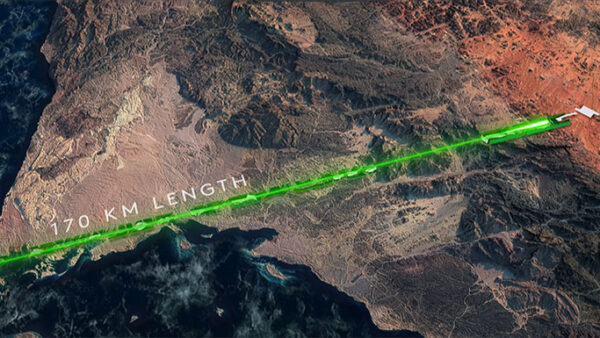
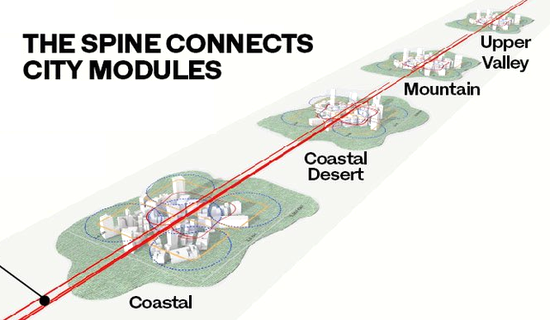
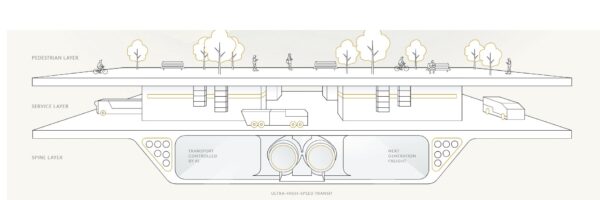
The project is extremely ambitious and hard to execute, but the Saudi government has enough resources and determination to make it real. Who knows, maybe ‘the future’ will arrive sooner than we expected!
Convenience Retail in KSA hasn’t been standing still in 2021 either and the competition is fierce:

- The long-standing JV between Aramco and TotalEnergies has been operating a network of Petrol stations under the brand ‘Sahel’ in the country. But in 2021 this joint venture opened 2 completely new stations: the first TotalEnergies branded station in Dammam on the East coast and the first Aramco branded station in the capital city of Riyadh. It’s a major milestone for Aramco as it’s the oil giant’s first ever station under their own brand. Even though the company has interest in more than 10,000 petrol stations around the Globe, the Aramco brand has never been used in its retail operations. With a diverse portfolio of national champion brand, international brand and established local brand the ‘Tas’Helat’ JV will be perfectly equipped for conquering the Saudi convenience market.
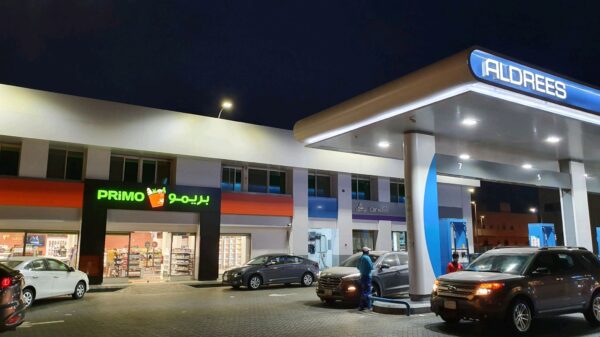
Photo by Jeton Veliu, Petromin
- Jeddah based Petromin company is also working on strengthening its market position. In 2021 it expanded the Primo Convenience store concept beyond their own forecourts. A newly established partnership with Al Drees company will give them a boost in network reach. The last mile delivery is also a hot topic for this retailer. In 2021 Petromin partnered with DHL, Amazon and Aramex to become the collection and drop-off point for their customers.
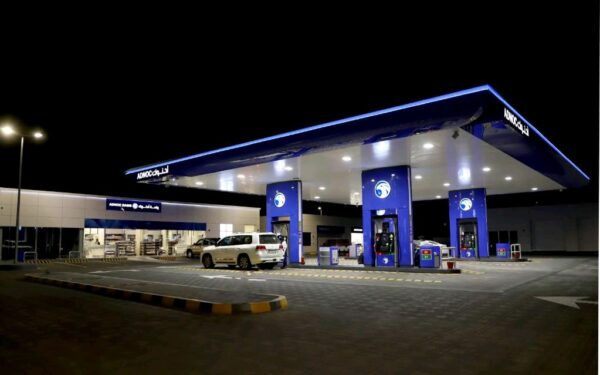
- Abu Dhabi based ADNOC Distribution also sees Saudi Arabia as its priority market. Throughout the year ADNOC acquired 35 sites in the Kingdom and has already opened a few new ADNOC forecourts with ADNOC Oasis stores.
Saudi Arabia and its convenience retail industry will remain the most dynamic in the region for the years ahead.
Egypt & Qatar
In Egypt’s convenience retail space the news of 2021 was the privatization of the ‘Wataniya Petroleum’ company previously owned by the military. The country’s sovereign fund accepted bids from both local and regional investors and as of the date of this article hasn’t announced a decision yet. ADNOC, ENOC and Petromin confirmed their interest in the 255 stations strong chain. For all these players it would be a logical step into the fast-growing economy of Egypt. Cultural similarities and shared language would be an advantage for all 3 of them.
You can also refer to one of the recent Shop Talk Live episodes where another African player OLA Energy shared their success stories in Egypt and beyond.
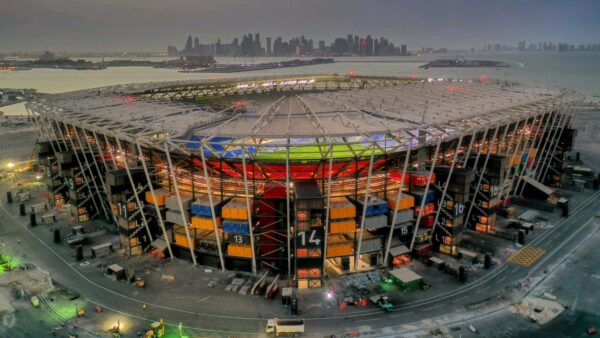
The main story for Qatar this year was the preparation for the 2022 FIFA World Cup that will take place in November. The country was building new facilities and even had a chance to run a test with the first FIFA Arab Cup happened in Qatar in 2021.
One of the newly opened stadiums was particularly interesting. It was named “974 Stadium” after 974 shipping containers used to construct it. It is believed to be the World’s first sustainable Football stadium.
What’s ahead for the GCC region in 2022 and beyond?
The Gulf Cooperation Council (GCC) will have a lot of challenges as well as opportunities in 2022. The GCC countries will need to deal with inflation rates, the Covid driven economic slowdown, balancing the interests of international investors and local business, localization of jobs and labor force structure. But the key theme for all the GCC countries is diversifying economies away from oil. And the big part of this agenda is to decarbonize mobility.
One might think that oil rich states will be the last one to think about lower emission vehicles, alternative fuel and carbon footprint. But as in many other countries, the Covid19 pandemic accelerated the transition and created a clear push for action. The Middle East is no different.
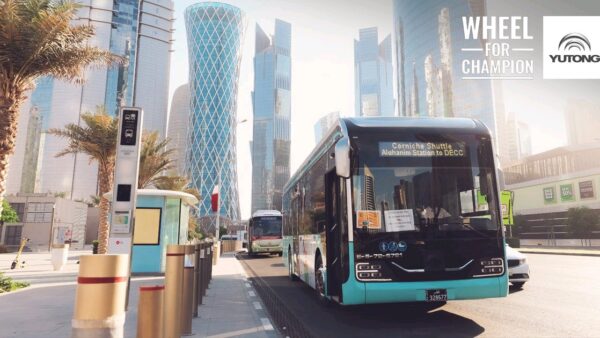
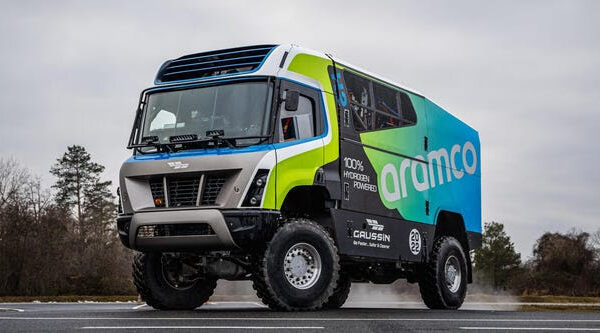
The region is focusing more and more on renewable energy sources and clean transportation technologies across B2B, B2C segments and even sport events.
Dakar 2022 race in Saudi Arabia will have a specific “alternative energy” category focused on racing in hybrid, electric or hydrogen-powered cars and trucks. Aramco together with Gaussin Group revealed the H2 Road Truck, a hydrogen-powered truck developed for the race.
In the B2B environment both public and private sectors are making the first steps into cleaner solutions: you might find Tesla taxis in Dubai, Qatar’s recent FIFA Arab cup was served by 100% electric bus fleet and the Omani government established a new Oman Energy Authority in 2021 tasked with nation-wide decarbonization.
B2C electrification in the Middle East is also happening. The EV market is expected to grow in the MEA region by 15% annually in 2021-2026. UAE is leading the way with the biggest share of new EV cars sales across the Middle East & Africa.
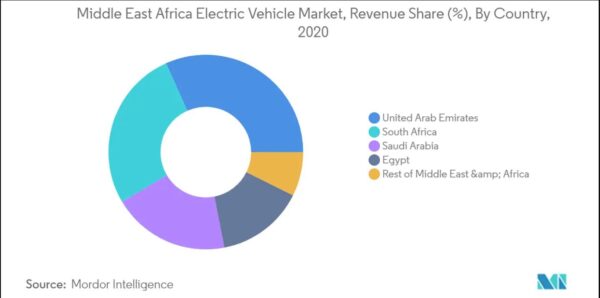
EV passenger cars are often perceived as luxury vehicles: Tesla, Rivian, Lucid and other new automotive brands are seen not only as a greener, but also as a more exciting choice by many GCC consumers.
More traditional car manufacturers are also transitioning their product lines to EV only. And it will affect the Middle Eastern market sooner than we might think.
General Motors is a good example of that. GM sees their future as 100% electric and are focusing on developing EV models. GCC countries are a key consumer of all the GM brands: Chevrolet, GMC and Cadillac. And as those brands transition into electric we will see more and more electric cars and trucks on the streets of Dubai and Riyadh. In fact, GMC held a launch event for the Hummer EV in the UAE’s desert. It’s a clear sign of GM’s commitment to bringing its latest technology to the region.

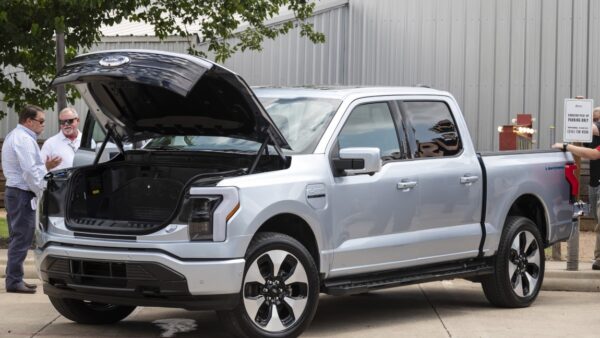
Another best-selling truck in the region is Ford F150. The introduction of the Ford F150 Lightning will make going electric easy for consumers on the Arabian Peninsula.
A major challenge for the mass electrification will be the charging Infrastructure. As of now it remains an issue with limited charging points available. While in the city limits it might be less of a problem, the longer and especially cross-border trips could be challenging in an EV. Long trips in cars is the typical regional feature accelerated further with the pandemic.
This is where the roadside and convenience retail business will play a key role. It’s a major opportunity for our industry to meet that charging infrastructure demand.
Closing remarks
The Middle East remains an extremely dynamic, diverse and modern region. It has tackled the Covid19 pandemic better than most and is preparing for growth. The region wants to limit its dependence on oil and transform itself into a sustainable, carbon neutral place while attracting investors and tourists.
The convenience retail industry will be instrumental to this transition. So, we suggest you stay tuned, follow this space and come visit both the Dubai Expo and the World Cup in Qatar in 2022.
