

Mapping the new Foodvenience: Insight uncovers the viral future of convenience across three global cities

In 2025, Insight Research cracked open London’s fast‑shifting convenience landscape with London’s Most Viral Foodvenience, revealing a Gen Z‑led wave of wellness, global flavours, and treat‑driven discovery reshaping how city dwellers eat, shop and share. Since then, the Insight trends team has taken the methodology further, applying the same rigorous, street‑level, social‑first approach in Dublin and New York.
What emerged is a multi‑city view of how viral food culture travels, mutates and embeds itself into very different local retail ecosystems. The result? A powerful new comparative framework for understanding how “foodvenience” evolves when accelerated by Gen Z behaviour, creator‑led discovery and the new wave of small, creative market entrants rewriting the rules.
This article zooms in on Dublin, its flavour, its pace, and its own unique viral logic.
Why Dublin? Because It’s Evolving Faster Than You Think
If London showed us what happens when viral food culture meets a vast, competitive, innovation‑heavy market, Dublin shows us what happens when those same forces hit a younger, more intimate, more socially connected city.
And the difference is striking.
Where London’s scene is defined by scale, speed and constant reinvention, Dublin’s is defined by personality, belonging and everyday creativity. Irish consumers don’t just adopt trends, they remix them, localise them and build communities around them.
Crucially, Ireland’s major convenience and roadside retail players; Dunnes Stores, Musgrave Centra, SPAR, Fresh the Good Food Market, Applegreen, Circle K and Maxol, are more switched‑on to these viral dynamics than their UK counterparts, with one major UK exception: Marks & Spencer, whose world‑leading “viral moments” social strategy stands in a category of its own. Now, thanks to the M&S partnership with Applegreen, that influence is spreading across Ireland too.

Wellness Gets Warmer: Dublin’s Personalised Feel‑Good Food
In London, functional foods and customisation became mainstream. Dublin kept the energy but changed the vibe; less performance, more personality.
Açaí leads the way
OAKBERRY’s Dublin store is now Europe’s top performer, fuelled by organic açaí and a dizzying array of toppings that let consumers design their own wellness identity. With 20 Irish stores forecast by 2025, the momentum mirrors the boom Insight mapped in London, but Dublin’s version feels more community‑driven and joyfully casual.
Sprout & Co
Dublin’s homegrown answer to fast‑wellness: brighter flavours, stronger community links and an energy that feels fresher than London’s increasingly crowded health scene.
Indulgence, Reinvented for the Feed
London taught us that indulgence isn’t the opposite of wellness—it’s the companion to it. Dublin runs with that idea.
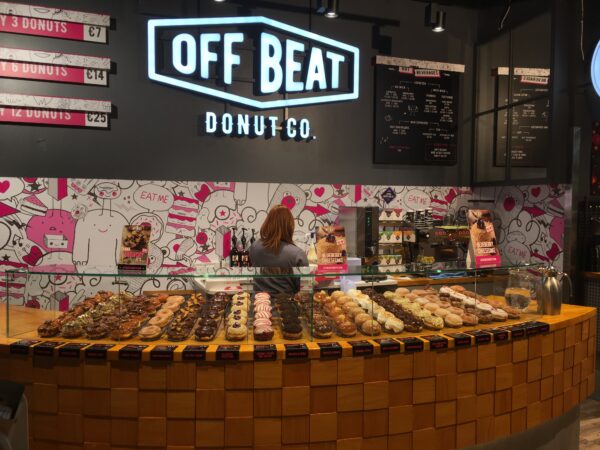
- The Rolling Donut, Cookie Boy and Offbeat Donuts (now in partnership with Circle K) are delivering hyper‑visual treats that hit the algorithm sweet spot.
- Açaí has jumped categories—from morning fuel to all‑day treat.
Gen Z don’t pick between “healthy” and “treating themselves.” They want both, sometimes in the same cup.
Asian Influence Meets Irish Imagination
As Insight charted in London, Asian flavours are everywhere, but in Dublin they’re arriving with their own twist.
- Japanese Fruit Sandos are trending for their aesthetic charm.
- Ramen bars with Tokyo‑style self‑service machines are reshaping the lunchtime rush.
- Bubble tea has cemented itself as a playful daily ritual.
- Super Asia is giving Dublin its own TikTok‑fuelled global grocery moment, echoing London’s Oseyo and Tian Tian.
Matcha, still early‑stage, is gaining real momentum through boutique cafés like OMMA and The Matcha Bar, an echo of London, just more curated.
The Spice Bag Goes Global: Dublin’s Most Viral Export
Every city has its viral dish. London gave us birria tacos, mochi hybrids and udon carbonara. Dublin gives us the spice bag—a late‑night favourite that exploded onto social media. It’s now established as an old favourite in Dublin but has potential to grow elsewhere and is beginning to appear in London now.
Xi’an Street Food’s saucy, salt‑and‑pepper chicken‑and‑chips version turned the trend into a citywide phenomenon, amplified by creator hype and rapid expansion. Its jump into the UK shows how viral foodvenience isn’t generated only in global capitals, sometimes it travels from anywhere.
Cafés Become Community Powerhouses
London’s cafés doubled as co‑working hubs, running clubs and creator nests. Dublin echoes the trend, but with a more intimate, community‑first feel.
- Independents flourish.
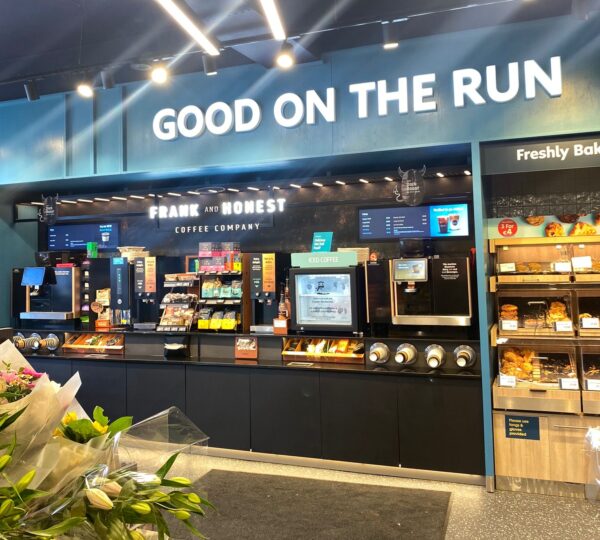
- Musgrave’s Frank and Honest, SPAR’s Insomnia, Applegreen’s Braeburn Coffee, and Maxol’s Rosa Coffee have pushed premium coffee into everyday locations—forecourts, commuter routes and neighbourhood spots.
- Applegreen has even spun out its own drive‑through café brand, Braeburn Café—a sign of how strong the coffee‑plus‑community proposition has become.
Retail Reinvention Accelerates
Just as London’s grocery giants embraced foodservice innovation, Dublin’s major retailers are moving boldly:
- Dunnes Stores blends grocery with in‑store dining.
- SPAR uses deli counters and social‑first moments to stay culturally relevant.
- Applegreen experiments with food halls and marquee brands like Chick‑fil‑A and Taco Bell, while supercharging its own labels.
Creators influence discovery. Algorithms influence footfall. The pattern matches London—but Dublin’s execution is more cohesive.
So How Does Dublin Compare to London?
London was the blueprint.
Dublin is the evolution.
Both cities share the big drivers:
- wellness
- indulgence
- global flavours
- creator‑driven discovery
But Dublin adds a distinctive layer of warmth, authenticity and personality. Its food scene feels like it’s having its main‑character moment—still plugged into global trends, but unmistakably itself.
A New Multi‑City Methodology Is Emerging
With London, New York and Dublin now mapped using the same Insight methodology, a new understanding is taking shape:
Viral food culture doesn’t look the same everywhere. It adapts. It localises. It creates new opportunity spaces for retailers willing to surf the wave.
And with Insight’s expanded knowledge of how major retailers plan and execute their viral social strategies, advancing considerably since the original project in 2025, clients now have a clearer path to action than ever.
This isn’t just the next article. It’s the next chapter in how foodvenience, culture and social media are reshaping cities: one viral moment at a time.

