

Lion Place redefines expectations of life on the move in Argentina
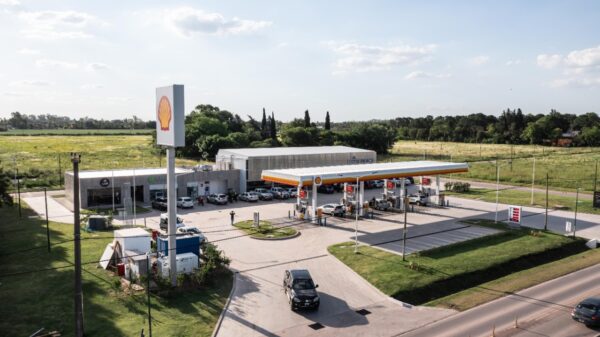
Lion Place, a new forecourt and foodservice concept launched in Argentina, is challenging customer expectations of the service station environment and winning positive feedback and results.
Developed by FGC Fuels Marketing (www.fgc.company), a company that was founded six years ago by three downstream executives with a mission to innovate and transform the fuel retail industry in Argentina, two Lion Place sites have been opened to date.
The first in Los Cardales debuted in September and the second in Funes opened last month (November). A further two are planned and scheduled to launch at the end of Q2 2022.
Combining multiple foodservice and coffee offerings alongside a carefully curated convenience range in a spacious service station environment, which includes co-working areas and meeting rooms, the sites take their cue from the latest trends in Europe and the US.
Claudio Reboredo, one of FGC’s founders and a former Exon Mobil executive, picks up the tale.
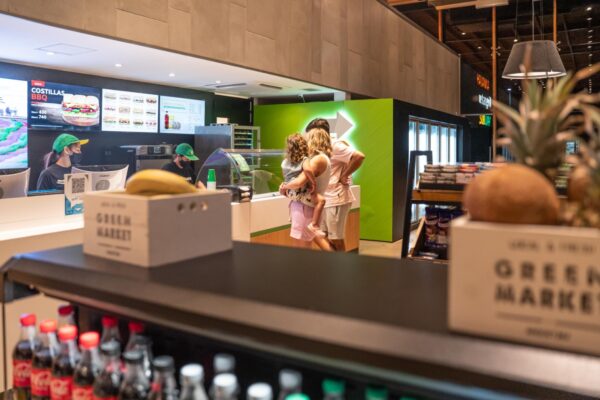
“We wanted to change perceptions of the service station in Argentina,” he says. “It is a traditional fuels market with convenience instead of one where convenience is the centre of innovation. We wanted to change that and remove the doubts that people may have about the quality of the foodservice offer or the bathroom experience.”
With fuel margins coming under pressure in Argentina, Reboredo and his two colleagues – Federico Chierasco and Gustavo Laveaga – recognised that stores needed to transform, especially as the trends elsewhere all indicated the market would become increasingly customer centric and focused on mobility in particular.
Spurred on by active participation in NACS’ events in the US, including store visits in Philadelphia and New York plus trips to Europe, the trio set out to determine the service station elements that they could transpose to Argentina.
In essence, that has resulted in a European foodservice market coupled with a US-style forecourt experience – big parking lots and full serve from a fuels perspective.

But it goes further. In Shell, FGC found a fuel partner who was very open and receptive to the new approach, especially with regard to mobility. “It’s a big leap in the market – we are focusing on the drivers now versus the car and people who want good coffee and a great bathroom experience and are looking for a haven in the middle of a jungle,” Reboredo says.
The trend to position service stations at out of town locations in Europe and the US has been mirrored in Argentina too. The two new Lion Place sites, for example, are located at highway entrances or exits in areas of new suburban development and occupy 3,500sq m+ to provide a modern, spacious layout with multiple parking lots.
“We have forced ourselves to be different,” Reboredo says. “Today the world demands high quality fuels and food, prestigious and recognised brands, speed, minimal friction and comfort for consumers. The convenience store format must adjust and evolve for change. Our purpose and ambition is to create a concept in which consumers visit service stations because they want to, and not just because they need to or there is no other option.”
FGC has looked to Europe and EuroGarages and Applegreen in particular for inspiration. These operators have engaged with franchise formats of recognised foodservice brands to provide the right credentials from the get go.

In a similar vein, Lion Place is operating the Havanna franchise, Argentina’s leading and highly recognised coffee brand. The food offering, meanwhile, is complemented by the addition of a Subway, providing a concept with an attractive price and quality ratio, Reboredo says.
FGC has put its own Argentinian-style spin on the new format too with the launch of Tan Grill, an in-house fast casual restaurant, which combines traditional Argentine food – the grill – in a modern, convenience environment.
“Argentina is a meat country – the BBQ for Argentinians is a Sunday ritual, “ Reboredo explains.
“Our aim with TanGrill was to try to capture an unfulfilled desire to be able to find a healthy, fresh, quality, fast offering in a modern convenience business environment with food prepared in sight.”
Reboredo believes the menu will “blow our customers’ minds” and states the execution of a fast casual restaurant has forced the business to climb to a new level operationally. This fresh capability spans both brand and food creation, hiring trained chefs and baristas plus service personnel.
“As an organisation, we are really growing in terms of skills and abilities to execute something different,” he says.
It’s paying dividends. In the short space of time since the two sites opened, performance is exceeding expectations with foodservice accounting for more than 75% of store sales. Tobacco, on the other hand, contributes to less than 5% of the total.
While tobacco is on sale, it’s purposely not merchandised, Reboredo reports. “We wanted to create a centre for foodservice and tobacco is out of sync with having Havanna coffee, Subway or Tan Grill,” he explains.
The sales breakdown is in stark contrast to traditional service stations where tobacco accounts for 45% of sales and formats are more akin to kiosks versus convenience stores.
It also ensures Lion Place can differentiate itself from the likes of Carrefour Express and the Spanish supermarket chain Dia, who are both present in the Argentine market. “Foodservice is an area where we don’t overlap so we can compete,” Reboredo says.
The architectural design also helps Lion Place stand out from the crowd.
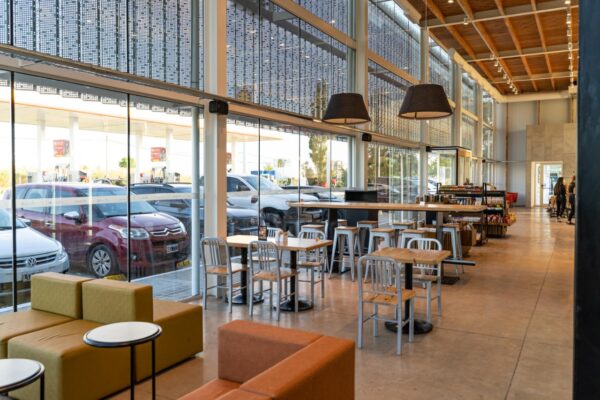
“We have paid attention to those details because customers are looking for a different ambiance and a great experience. The feedback we have received is “this is not a service station”.”
The new communal working areas and meeting rooms are another hit with customers and have really come into their own during the pandemic, as work from home edicts have restricted peoples’ movements in Argentina.
According to Reboredo, that’s as much due to luck as judgement but, this use of the upstairs space as a work versus service area, plays very well into how environments function and look in a post-pandemic world.
It is usual for the spaces to be reserved for three to four hours at a time, as well as used for meetings and to socialise, he adds. And there’s a significant universe of people who are working on-the-go, either in their cars or moving from one cafe bar to another. Lion Place is providing an extension to those private areas where people can work, Reboredo maintains.
Future
Looking ahead, FGC intends to give drivers more reason to visit its sites with a drive thru format possibly on the cards plus a tie up with Argentina’s second largest burger chain, Mostaza, for standalone QSRs alongside fuels and Lion Place.
“We need to be able to operate multiple formats because consumers are different and they are different at different times of the day too,” Reboredo says.
The foodservice push will also enable the business to reduce the sites’ dependency on fuels – currently 60-80% of revenues – and grow the convenience pie further.
And, while EV and the future mobility may still be 20 years away for the Argentine market, Reboredo sees no reason why FGC can’t leap frog the competition and move very quickly on that journey from convenience to customer centricity.
