

The future of roadside retail – Moto provide a hint
The roadside retail sector is on an innovation journey to the future. Insight Research is positioned at the heart of that journey as part of a project called ‘Mobility Retail 2030’ which has been running for the past two years.
In this project we work with a group of leading roadside retailers worldwide in order to operationalise best practices in e-mobility. Our group’s goal is to make sure the roadside retail industry is at the forefront of this new opportunity and for this we have significant support from our ‘Knowledge Partner’ McKinsey & Company, as well as backing and sponsorship from Vontier and Kempower.
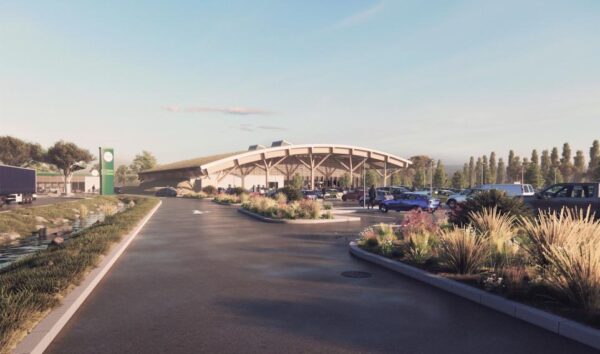
We agree with the view of fiction writer William Gibson who said, ‘The future has arrived, it’s just not evenly distributed yet’. I had one indication of what that might look like pop into my inbox last night as it happened, a breaking story on Moto’s plans for an innovative and cutting edge £30 million motorway service station on the UK’s M4 motorway, just South of Swindon at Junction 16.
Moto Hospitality is the UK’s largest motorway services operator and this would see the construction of a large ‘sustainable’ site to the South-East of the carriageway.
According to the local paper (the Swindon Advertizer) which broke the story, the scheme would create 150 jobs and benefits from a “highly sustainable” design, boasting solar panels, a green living roof and three acres of new wildlife habitats. And the site would clearly focus on electric vehicle charging infrastructure having 50 EV chargers and 62 new HGV space according to the report.
In the near-term roadside retail/service stations are going to do very well if they offer an efficient, reliable and safe on-the go charging solutions. There is a great need for this and it is rapidly becoming apparent that the higher than anticipated demand for ‘on the go’ charging is going to deliver incremental visits versus ICE customers and a greater uplift in shop sales and margins.
Looking further ahead, new opportunities for retail disruption are also apparent. And, this new Moto development offers us a few hints of what that may look like. Looking to 2030, the key question we should perhaps be asking ourselves is not ‘what have customers got used to from a petrol station, c-store, QSR, motorway services?’ But ‘what might customers want from an e-charging break?’
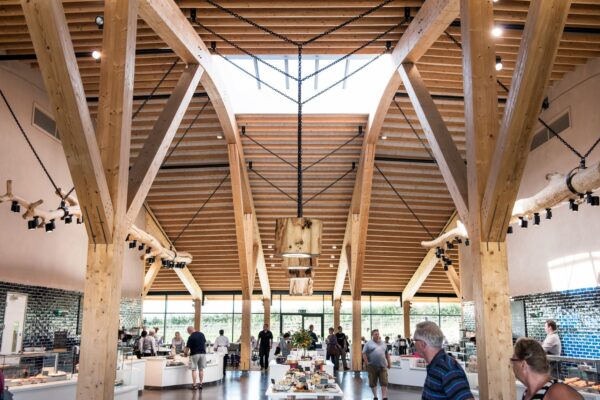
After all, existing propositions for motorists are not new. Service stations are 118 years old, supermarkets are 105 years old, motorway services are 64 years old and drive-thrus are 48 years old! So another key and provocative question is – how could charging stations use the advantage of new innovations in tech and design to produce propositions that disrupt the huge markets sat on by these slow changing ‘pensioners’!? In this respect our recent Insight Market focus visit to Westmorland Family (Gloucester Services M5 site pictured below) and conversations we have had with them and many others as part of this project have given us important clues.
Of course, in common with all things motorist, petrol stations feel most suited towards the single male driver. What happens if instead of defaulting to designing for the average customer, we consider customers who haven’t been thought about as much in the past? This is one of the many questions our group is focusing upon to work out what this future disruption is going to look like. If you’d like to find out more about Insight’s Mobility Retail 2030 project, please contact us below.
Error: Contact form not found.
