

Circle K aims to lead the transition to eMobility, says EVP Circle K Europe
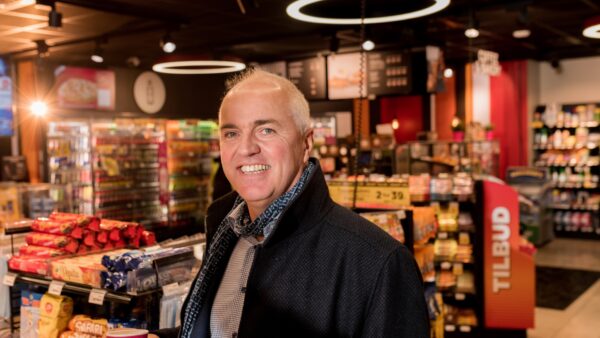
Circle K aims to lead the transition to eMobility, according to Hans-Olav Høidahl, Executive Vice President Operations Europe & Global eMobility at Circle K.
The business is also massively extending its customer reach in Europe following the acquisition in January 2024 of certain retail assets from TotalEnergies in Germany and Benelux and is full steam ahead on the integration, leveraging its people-orientated culture and unwavering commitment to results.
EV adoption
While EV adoption slowed in Europe last year, the market has rallied in the first quarter of 2025 with more EVs coming into the market, Høidahl reports.
“There’s bit more uncertainty due to the political situation but external sources are still expecting European progress to be as indicated,” Høidahl says. Bloomberg, for one, forecasts 50% of new cars sold in Europe to be EV by 2030.
The picture in the US is less rosy, due to the significant change in policy support for EVs, but Circle K remains upbeat.
“As a company, we are well positioned to handle this transformation with a superb customer offer,” Høidahl says.
That’s down to the creation of a strong EV team and honed experience in Norway, the global leader in EV adoption; plus one of the best EV charging solutions in the marketplace.
That EV knowhow permeates the Circle K organisation with customers in Sweden now rating the company their preferred destination for EV charging, ahead of Tesla, Høidahl reports.
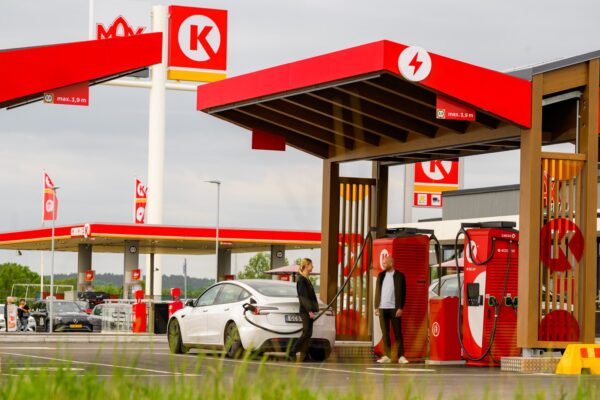
“We are in a good place,” he smiles. “We have over 3,000 Circle K branded EV chargers in Europe, and we are continuing to expand in Scandinavia and see big opportunities in the Netherlands, Belgium and Germany,” he says.

Strong differentiators
With research showing 76% of consumers prefer charging stations with amenities, Circle K is well positioned to capitalise on the energy transition. Plus, it has great locations. “For customers who don’t have the alternative to charge at home, but are in transit, an easy location is the one thing that matters,” Høidahl says.
Circle K has strong networks across Europe. It is the market leader in Scandinavia, for example, where its EV uptime in charging is 97%, Høidahl reports.
That level of performance and higher will become table stakes for any player in the industry going forward, he adds. What sets Circle K apart, however, is also providing a station that is well lit and manned, so that customers feel safe and secure; good amenities and clean restrooms; great customer service with friendly staff; an attractive place to work and enjoy a good meal with a wide range of both hot and cold beverages.
Customers appreciate those differentiators, Høidahl says and he reveals that close to 25% of sales in Scandinavia are from food and growing, rising to 35% in Norway.
Extended reach
The TotalEnergies acquisition of 2,200 sites in Germany and Benelux has significantly extended Circle K’s European presence, propelling its market reach from 70 million to 185 million people, Høidahl reports.
“We are very happy with what we have acquired – good networks and a lot more customers but also great people,” he says.
Cultural integration is extremely important for the company in respect of acquisitions, Høidahl adds. With parent company Couche-Tard’s strategy of leading through local management, teams have fully embraced this approach by engaging with Circle K’s values and culture, he says.
In terms of synergies, Høidahl reports the company is ahead of schedule. The first point of focus has been on store operations and the customer experience. Now Circle K is beginning to implement new floor plans and planograms plus programmes to improve cleanliness across different markets. While the current focus is on store concepts, Circle K is not forgetting the forecourt, which is the beginning of the customer journey, Høidahl adds. Here, work is underway to improve cleanliness and navigation, upgrade marketing materials and the car wash etc. The aim is to create a 360-degree customer journey, he says.
Synergies from IT and procurement will follow on, including the implementation of Circle K’s award-winning AI training and recruitment programme, which has already streamlined recruitment across 5,200 locations.
Moving forward the emphasis will be on improving the customer experience and consistency across the network, Høidahl says.
To date, the integration is moving at a faster rate in the Netherlands but the business has recently revised its franchise agreements in Germany, which have been signed by 95% of franchisees and will help to create more consistency in future, Høidahl reports.

Tech implementations
The key to Circle K’s success in implementing new tech, like the AI training and recruitment piece, across such a large network boils down to its ease of use.
“It has to be scaleable, standardised and fit for the local market,” Høidahl says.
Last month, Circle K Europe was named the Convenience Retail Technology Award Europe winner by the National Association of Convenience Stores (NACS) for its AI-powered digital people platform, which was tested prior to implementation.
“The fight for the best candidates in the market is hard so speed is important. It is also a learning journey so we are using AI solutions to continuously be better at getting the right people into our stores,” Høidahl reports.
As well as assisting in recruitment, Circle K engaged colleagues in gamified training challenges including ‘Customer Star’ and ‘Beat the Boss’. This ensured team members mastered customer-centric skills in a fun and engaging way, Høidahl says.
The company also developed a gamified training solution to train employees about EV functionality, which has the advantage of reaching everyone in minutes versus days and weeks, Høidahl says.
As well as simplifying the life of employees, tech should help remove bureaucracy and administrative tasks, Høidahl adds. The same is true for customer-facing tech, such as the EV user experience, which has been tested at store with customers in order to discover if it is easy to understand and intuitive. If it isn’t easy for the customer, you will never get adoption, he says. Once there’s a good solution that’s been tested, it’s then possible to scale.
The company is currently testing new functionality on its Circle K Charge app in Norway, for example, which will then be introduced in Sweden and other markets.
“We also try and standardise as much as possible because it provides more speed when you do upgrades,” Høidahl says.
Strong leadership and teams
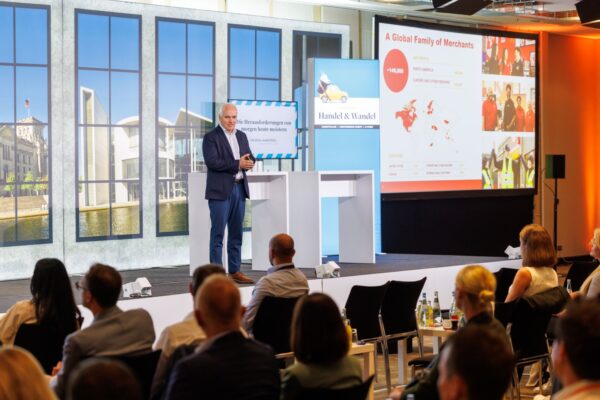
© Handelsblatt Handel und Wandel / Photo: Gust. Hans-Olav pictured at the recent Handel und Wandel event in Berlin.
Values are key to Circle K’s leadership strategy and team-building expertise, says Høidahl.
“We are a values-driven company with a special culture where we put our people and customers first,” he says. “We also play to win, take ownership and work as one team across the different markets.”
As with the recent TotalEnergies acquisition in four countries, Circle K aims to build on local leadership. “We are not a centralised company. We want the local team to be comfortable for their local meetings with customers and store teams,” Høidahl says. This people-first culture is reflected in the company being recognised as a Gallup Exceptional Workplace Award Winner for four years in a row.
“We are deeply people-focused and equally committed to delivering strong results—because we believe one drives the other,” he adds. “It comes back to bureaucracy. As you get bigger, bureaucracy can creep in but we work to try to avoid it as much as possible. We have a culture where people are empowered to take the initiative, learn from setbacks, and continuously improve—with a clear focus on performance.
“We believe in local accountability – everyone owns their results and is empowered to deliver them. If you are a store manager, you own your Profit & Loss and your bonus is tied to what you achieve locally – and that principle applies all the way up the ladder,” he says.
Future outlook
Høidahl has a positive outlook, despite the obvious challenges in roadside retail.
“A challenge for this industry is that fuel is declining but, on the other hand, the industry has been through constant change over the last 50 years and sites have transformed from providing local services for cars such as changing oil etc into convenience retailers,” he says.
Circle K will continue to play to its strengths, he adds. That’s not just capitalising on its great locations but its skills and understanding of travelling consumers. “If we focus on them, we have the best opportunity in the market to lead the EV journey,” he says.
He also points to Circle K’s growing strength in food and beverage. “We’ve proven we can develop digital interfaces with customers in the EV market, but it’s also about food and drink. In Norway, 35% of what we sell is food. In Sweden and Denmark it’s 25%—and it’s growing. People are eating out more, and beverages like water and energy drinks are booming. It’s all about food and drink for immediate consumption, and we’re in a great position to deliver that with easy access and simple solutions.
“We’re very proud of our offering. We continue to improve our forecourts and there are still lots of opportunities in this space. There will not necessarily be the same number of service stations in future but there’s an opportunity for Circle K to be a winner. While the number of service stations may decline over time, we see a clear opportunity for Circle K to lead. We remain committed to supporting customers who rely on traditional fuels, but our long-term ambition is to lead the transition to EV in every market we serve. Our goal is to sell the last drops of fuel where needed—while being the first choice for customers on their EV journey,” Høidahl says.
