

Casey’s drives digital transformation and brand refresh during pandemic

Casey’s, the Midwest, US, convenience store chain, has powered through 2020 with a slew of new initiatives that are shaping the business on its transformation journey.
They include a new strategic plan, a complete brand refresh, a private label launch, a significant acquisition plus new digital capabilities including innovative delivery and fulfilment solutions. 
Julie Jackowski, Casey’s chief legal officer and corporate secretary, is well placed to share the latest developments at the business, which is one of just two publicly listed convenience chains in the US and is the country’s fifth largest pizza chain by number of locations.
Jackowski, a trained lawyer, has enjoyed a 26 year career with Casey’s in multiple roles and was the most recent NACS chair, handing over the baton in October 2020.
Founded in Iowa in 1959, Casey’s has expanded to encompass nearly 2,300 locations across 16 States in the Midwest, the majority of which offer fuel.
Casey’s has a strong community focus with over 50% of its stores in towns with populations of less than 5,000 people, Jackowski reports. In these rural and agricultural farm markets, Casey’s is often the only convenience, fuel and restaurant location serving those local populations, she says.
While Casey’s restaurant offer features regular hot fare such as hamburgers, cheese burgers and chicken tenders plus subs and salads, it’s famed for its pizza and makes its own pizza dough in store.
While pizzas were launched in the early 1980s, Casey’s has not stood still and introduced a breakfast pizza featuring egg, cheese, bacon or sausage or veggie toppings to expand the day part for the range, Jackowski reports.
Pizzas have also come into their own during the Covid-19 pandemic, she adds.
“With Covid, pizza has been really been helpful. With fewer people on the road needing fuel, our pie business has increased as many of our guests are looking for a cost friendly, value dinner,” she says.

The offer is available for both takeaway and delivery. Casey’s launched its own delivery service several years ago but just prior to Covid it partnered with DoorDash to pilot an expanded service. When the pandemic hit, Casey’s increased DoorDash to 600 more locations and now serves several hundred more stores, enhancing its own in-house delivery services.
Legal eagle

Jackowski joined Casey’s legal department in 1994 as the retailer’s attorney, specialising in employment and personnel law and was the business’s first employment lawyer. She later transferred to human resources as VP of HR and worked closely with store operations including the retailer’s onsite childcare centre, cafeteria and mail room.
She moved back to legal duties in 2010 as general counsel, subsequently rebranded as chief legal officer, overseeing legal and risk management for the company. Here she looks after, in part, all legal matters as well as property and casualty insurance, personal injury claims and workers’ compensation, while also being proactive to ensure the safety of staff and guests at stores. The enterprise management piece spans risk mitigation including disaster recovery and business continuity; critical as Casey’s HQ is centred in the middle of a tornado belt.
While the majority of Jackowski’s career has been focused on the legal side, the operational experience has been invaluable, she maintains. “I’ve been very fortunate to move outside of what was my area, employment,” she says. “All business leaders should have to work in or closely with Store Operations at some point. It’s very easy to simply publish policies and issue new tasks from the office with good intention, but having the additional understanding as to how those directives will truly work in the field is critically important,” she says.
Strategic plan
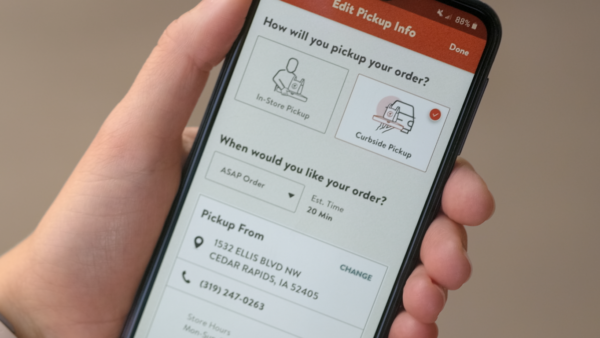
Casey’s published its new strategic plan in January 2020, just six months after new CEO Darren Rebelez joined the business from a background encompassing both Exxon and 7-Eleven.
According to Jackowski, that plan focused on what Casey’s will do to drive the business, including digital transformation.
“We were already on the path to transformation – we had an online app we were using, for example, but it did not have all the bells and whistles we wanted for a best in class guest experience, thus we upgraded our digital platform and offerings,” she recalls.
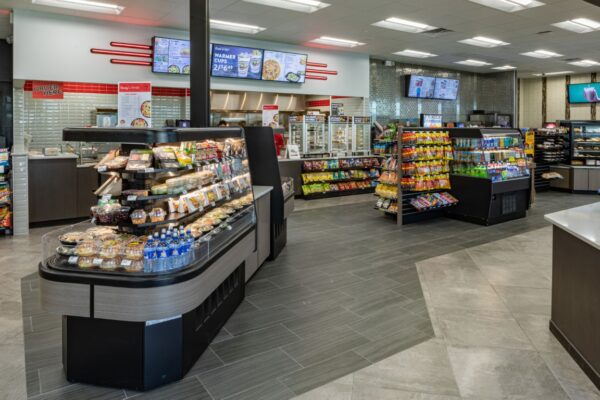
Casey’s also relaunched its rewards programme for guests. It enables customers to select rewards on in-store purchases or at the fuel pump or to donate to a school of their choice in a Cash for Classrooms programme. Covid did for digital just as it did for whole pizzas, Jackowski reports. “The digital programme was ramped up immediately with Covid – now a vast majority of ordering is done digitally and we have seen great success with that,” she says.
The plan has also urged the business to think differently and outside the box, Jackowski reveals. Casey’s is currently in the process of acquiring Buchanan Energy, owner of the Bucky’s Convenience Stores convenience chain, operating largely out of Nebraska and Illinois. The deal spans 94 retail stores and 79 dealer locations and will introduce a new revenue stream by transporting oil to its own oil jobbers.
Rebelez’s convenience background, meanwhile, means Casey’s is also exploring new business models and ones that don’t necessary include fuel.
Expansion is key to maintaining shareholder value and growing the business, Jackowski says. Casey’s has typically expanded at a rate of 70-80 stores per year – a mix of organic growth and acquisition – but Buchanan will be its largest acquisition to date.
While the industry is characterised by consolidation, Casey’s remains a conservative company with regard to its acquisitive behaviour and will ensure the price is right for its business model and brand; so will take into account any remodelling or rebuilding that may be required, Jackowski reports.
New brand image
Casey’s General Stores rebranded to Casey’s in the early autumn with a new fresher logo and ID. According to Jackowski, the move was partly prompted by confusion, over time, regarding the ‘general store’ terminology. Variety stores like Dollar General and other general stores are more concerned with merchandising a wider variety of products in larger formats versus the convenience model, she explains.
“Back in the day, when we were the only general store and only store in town, ‘Casey’s General Stores’ made more sense,” she says.
The new logo also works well with Casey’s new private label range, another element of the strategic plan. To date, around 80 private label items have been launched, beginning with sodas and packaged bakery but extended to both CPGs and food to go.
Future proofing
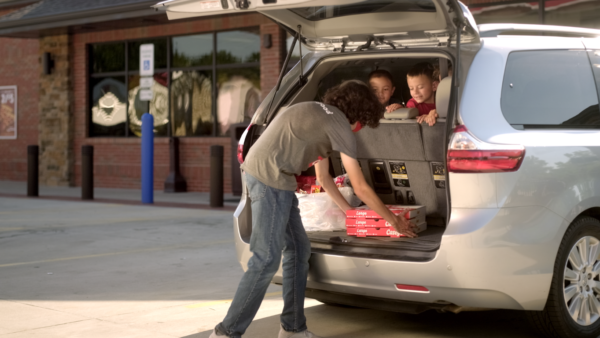
Looking forward, digital will continue to accelerate, Jackowski says. Casey’s digitally enhanced rewards programme is already helpful in providing more value and offers to guests, she says.
Online ordering has also been expanded from primarily hot food and soda to grocery and general merchandise.
New fulfilment options – delivery and curbside pick up – are being expanded too and will come into their own in winter when people want to stay in their cars.
“Those are enhanced components of that digital transformation phase,” Jackowski says.
“We are fortunate to work for a large company with a lot of resources and expertise available,” she continues. “With that support, we have been able to execute on our technology initiatives in the digital arena in order to keep up with guests’ expectations of convenience in a digital format.Quite simply, our guests want to get in, get products and get out quickly and, if they can do it online, all the better,” she says.
Casey’s aims to provide products efficiently and safely, she adds. It also must ensure that its food offering does not remain static. “Having the food service component in place is key to our business strategy and it allows us to compete with some of the QSRs. We were fortunate to have started our pizza offering early in our business cycle in the 1980s, which has provided that additional line of business beyond traditional convenience,” she says.
Covid challenged the business at the outset since the 16 States in which Casey’s operates all handled things differently, following CDC (Centers for Disease Control and Prevention) guidelines, then State level, as well as city level guidance.
In response, Casey’s created a Covid Task Force – a multi function team, whose role was to focus on the changing environment and respond accordingly.
Self serve fountains and bakery were initially removed, for example.
“We thought guests would say that was great but they still wanted to do it on their own and so we have adapted. Everything is now back to self serve but it requires us to make sure we are cleaning more diligently,” Jackowski says.
Similarly, employees are only coming into stores when they feel healthy, she reports. This has created some labour challenges in the Midwest and, at the start of the crisis, Casey’s split stores in more critical areas into A and B teams to ensure they could continue to work in the event of a confirmed case.
“It was tricky and interesting working it out but NACS was critical in the beginning because they lobbied for c-stores to be classed as essential shops,” Jackowski says.
NACS
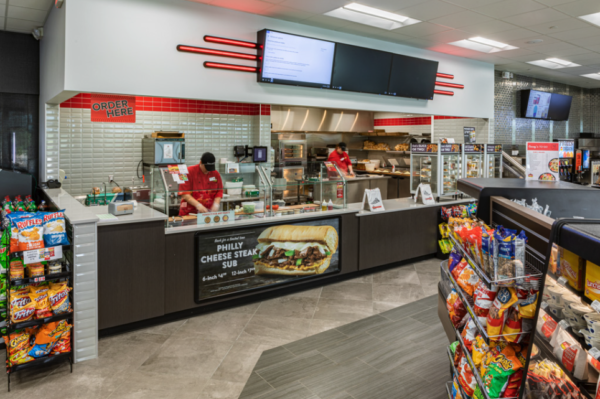
As NACS chair from October 2019 to 2020, Jackowski has had an unusual tenure to say the least. “A lot of the NACS chair’s role is speaking, engaging and networking at events and conferences, which I was not able to do,” she says.
Instead, she’s drawn on her legal background and worked with the NACS Government Relations team in Washington DC to lobby for funds for critical business workers, for convenience stores to be classifed as essential business, and for Covid relief plus assistance and Covid liability protection.”
The latter could be a trap door waiting to spring open, Jackowski maintains. “The argument for liability protection is that it essential businesses have followed the CDC guidelines to the best of their ability, they should have some for, of immunityfrom litigation,” she noted. “ We have worked collectively with NACS to understand the various government requirements and implemented those measures in our stores. The push for liability protection is key to protecting businesses who serve so many guests daily with essential services while doing their best to manage as best as possible,” she says.
At the onset of Covid, stores struggled to source flexi glass, masks and hand sanitisers, for example; and have now replaced a lot of those temporary solutions with more permanent items. “One of the long lasting effects of Covid will likely be a heightened focus on hygiene and cleaniliness,” she says.
Casey’s, for example has removed tables from sit and dine areas in stores and replaced them with product and it has launched the curbside option for those guests who don’t want to come into store.
Communicating regularly with NACS members, who have been unable to attend key networking events, has been another key aspect of her role.
Jackowski highlights the NACS Europe and Asia Summits as fantastic vehicles for connecting retailers from different parts of the globe to share best practice.
“NACS has a really great network of people but the thing we have missed the most is not being able to be at those events in person. We are competitors but we are also willing to share information and be a helping hand.”
As to the future, Jackowski is looking forward to “being out of Covid and being back together again” in order to consider how businesses can be more efficient and bring new services and products to their guests, to keep them engaged and excited about the convenience industry. It will also be fun to see what’s next in the technology sphere, she adds.
She’s also keen to highlight the convenience sector’s philanthropic work -giving back to those communities that support it so much.

Food insecurity is a key issue, she says. For its part, Casey’s partners with organisations including Feeding America, the Red Cross and supports its own Cash for Classrooms program. It also recognises front line workers and the emergency responders and supports communities with both money and volunteer time plus charitable actions.
It’s neatly summed up by the retailer’s ‘Here For Good’ brand platform, launched in 2019, which spans all those touch points.
“We have been restructuring our philanthropic giving to focus on key needs in our communities. With nearly 2,300 locations, spanning 100s of communities across the Midwest, we try to do our best to offer support, currently focusing in on hunger through a partnership with Feeding America; veterans groups such as Hope for the Warriors, emergency response and education in our local schools.
“We are using our platform to try to provide awareness for those particular activities and providing volunteerism and cash to our communities to offer support where it is needed,” Jackowski concludes.
