

Bright future for convenience retail in Germany
Germany’s convenience retail market is evolving across every channel. Simon King speaks to Christian Warning, NACS Representative for German Speaking markets
There is no doubt that Germany is an economic powerhouse in Europe. In 2018, for example, the German economy grew for the ninth consecutive year and unemployment is currently at its lowest level for 25 years.
Looking at challenges facing the industry, Christian singled out labour.
“There are many regions in Germany with full employment,” he said. “And there are dealers that have closed sites because they couldn’t find staff.”
Christian said: “With more than 43.5 million people at work, Germany is experiencing a record level of employment – with an unemployment rate of 3.1% compared to the 6.3% unemployment rate across the European Union. Rising employment and increasing wages are strengthening consumer confidence, and with more disposable income, consumers have more to spend in retail and an increased willingness to spend.
“Germany’s convenience retail market is evolving across every channel – in supermarkets and independently-run c-stores, forecourt sites, discounters and bakeries – as operators seek to meet changing consumer needs, increased mobility and the trend towards casual food formats, delivering offers for immediate consumption. The German retail market is the most challenging and complex one in the world.”
There are around 14,000 forecourts across Germany. Across the country, petrol station shops are being modernized, however, Christian said that in some regions of Germany, there are still many run as traditional confectionary, tobacco, newspaper kiosks rather than foodvenience destinations.
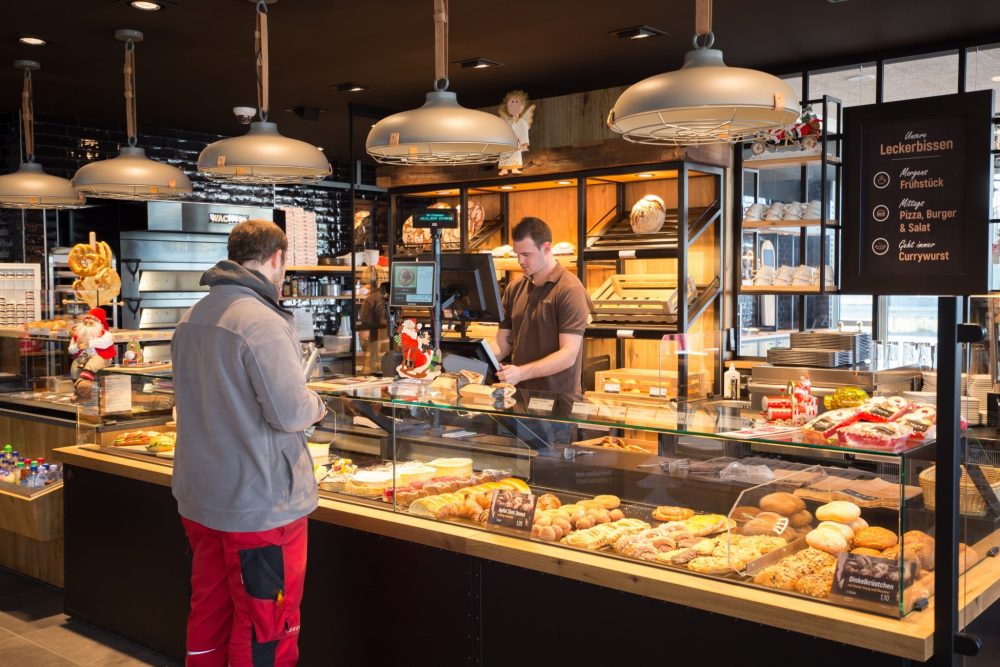
In addition to the German convenience store network, there are also an staggering 44,000 bakery shops in the country.

Valora Food Service Deutschland and EG Deutschland, a subsidiary of the globally active EG Group, have launched a pilot project in Cologne and Frankfurt in which BackWerk and Ditsch shops are upgrading a filling station to a one-stop shopping destination. EG Germany is thus transferring its already successful strategy in Great Britain; combining several strong food brands at one petrol station, to Germany for the first time. In October 2018, the British filling station operator EG Group took over the German Esso filling station network with around 1,000 locations throughout Germany.
Quality and price positioning give petrol stations new impetus
EG Germany wants to increase the frequency at its service stations by tank customers and non-tank customers with the establishment of strong food brands. Valora and its consumer brands BackWerk and Ditsch are the ideal partners for this strategy.
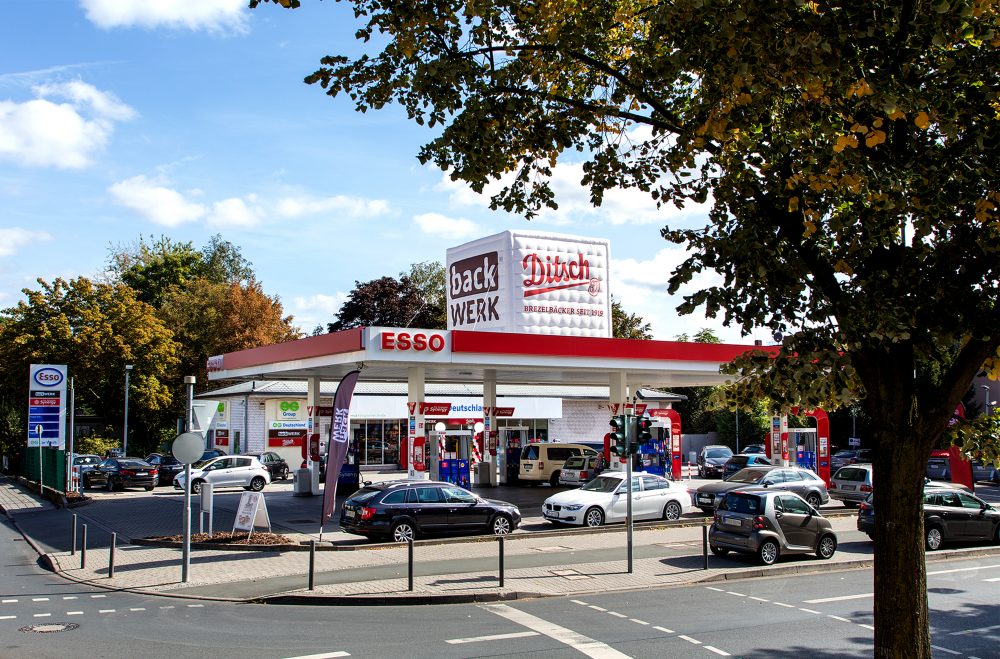
In September, a twelve-month pilot project launched at three locations in Cologne and Frankfurt: in Cologne (Höninger Weg, Neustadt-Süd), a BackWerk store will be integrated into the filling station, and in Frankfurt (Königsteiner Strasse & Rheinlandstrasse) two points of sale will be created with BackWerk and Ditsch.
Attractive food offer for petrol stations
The brands are integrated into the petrol stations as a shop-in-shop system – comparable to a food court concept. This not only turns the petrol stations into places of leisure with a great culinary variety, but also invites you to linger.
Customers can choose from the proven and popular assortments from BackWerk and Ditsch, with BackWerk focusing on sandwiches and rolls, sweet pastries, hot top-seller snacks, such as hot dogs, crunchy chicken, as well as Fairtrade coffee. At Ditsch, customers can enjoy fresh, oven-warm pretzels, seed pretzels, savoury and vegetarian pizzas as well as coated pretzel sticks.

In addition to the wide range of snacks, BackWerk and Ditsch also offer classic baked goods such as fresh rolls, bread, butter croissants and sweet pastries for local supply at the weekend.
Petrol stations as a place to enjoy and linger
Among the oil majors, Aral, the BP brand in Germany, leads the pack in the German forecourt sector, with Shell its closest competitor in terms of site numbers.
Christian has a number of ideas around how operators can improve their offering. Central to this is taking advantage of changing consumer behaviours and the opportunity to tailor their location to the needs of their local customers.
He said: “The solution that makes a difference in one location will not work to the same extent in another, but there are clearly proven best practices which can be successfully implemented on a broader scale by petrol stations and convenience businesses alike.”
“The market is really on the move. Operators are investing in giving a better experience on the site. Sometimes the experience is better, but operators select the wrong products; or operators go to an interior design agency or a fixtures company and ask them to build a new shop, but the offer remains the same.”
“If the location is right and the formula is right, that will provide enough traffic to make a good business – the forecourt market in Germany is still one of the most attractive markets to oil companies and convenience retailers,” he said.
“The future will be challenging for those who don’t change and don’t look to develop their offer. Those who are able to invest and can be flexible to change will succeed, but operators need to change more than once every 20 years!
“The biggest strength of the sector is the convenience factor – it’s an attitude, a way of life – and I believe the industry has a bright future.”
Germany’s larger retailers up their convenience game

Germany’s big four retailers account for 60% of the total available market volume and are investing heavily in their German networks.
Christian said: “Edeka and Rewe each invested €2bn in their German networks; Aldi Süd will invest €3.5bn within the next two years, Aldi Nord will invest another €2bn and Lidl is investing €3bn from 2016 until 2020.
“The big point in the German market is there are 330 supermarkets per one million consumers, compared with 113 supermarkets per one million consumers in the UK. In big cities, such as Berlin, Hamburg or Munich, there are 450 supermarkets per one million consumers.
“The discounters have had a massive effect on the industry. Aldi has developed coffee-to-go and sandwiches-to-go, which is a very good solution. At lunchtime, Aldi has a convenience assortment that includes salads – Aldi is doing a better job than 95% of convenience stores at gas stations currently.”
“Come to Berlin and enjoy a thriving city where convenience leaders can explore innovation and vertical retailing in a dynamic retail environment”
There is a great opportunity to explore the German market at the 2020 NACS Convenience Summit Europe, 2-4 June in Berlin.
