

A Ride Through the Brazilian Convenience Store Market
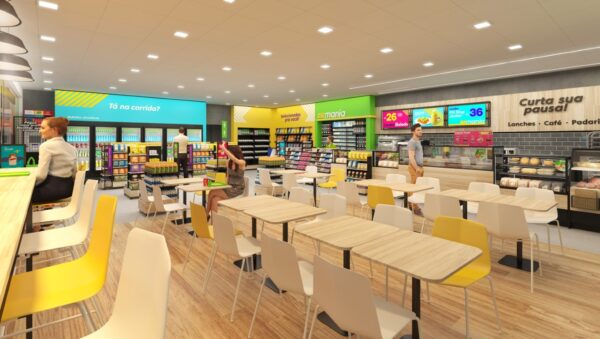
Brazil. A country of continental dimensions. Tropical weather. Joyful, hardworking people. Breathtaking landscapes where nature is fascinating from the Amazon rainforest to the plains of Rio Grande do Sul. Paradise beaches. Samba, Carnival, soccer. A destination that seduces tourists from all over the world, drawing people’s desire to get their passports stamped and hear the warm greetings “Bem-vindo ao Brasil”-Welcome to Brazil.
This is the Brazil known abroad. It is also faced with demanding issues: the environment, political and economic scenarios and, today, the impacts of the pandemic that took over the globe-before COVID-19 hit Brazil, the country was struggling to recover from a severe recession. Due to the crisis caused by COVID-19, there are many uncertainties and challenges ahead.
Although the pandemic has brought adversities never imagined before, the Brazilian convenience store market continues to expand and evolve. New consumer habits and needs triggered by the virus made the channel rush to adapt and come up with creative solutions to the actual demands.
As C-Stores are allowed to operate as essential businesses during periods of lockdown and social distancing, they have been quickly adjusting to the new reality, ready to serve an even more demanding customer. In addition, COVID-19 has drawn consumer’s attention to convenience stores, which became more relevant than ever-from both the retailer and the consumer points of view. A positive effect in the midst of so much tension.
Brazilian C-Store Market

There are about 8,100 C-Stores operating at service stations in Brazil. The channel has consistently grown in number of stores and in revenue over the past ten years. Since the opening of the first convenience store, 34 years ago, the channel has always adjusted to the market-adapting to meet consumer needs and demands, undergoing changes, strengthening its important role in customers’ lives.
About 60% of the total of C-Stores are franchises of major fuel brands-Ipiranga (AmPm), Petrobras (BR Mania) and Shell (Select); There are networks of licensed operators (e.g., EntrePosto and Aghora brands), owned C-Store chains (e.g., Mime and Sim), as well as independent stores.
There remains a lot of space and potential for expansion in the Brazilian convenience store market-according to data from the sector’s last Yearbook, stores are present in only 20% of the country’s service stations.
Brazilian consumers, with fast-paced lifestyles, appreciate the option of convenience store shopping. Retailers have, in the backcourt, another source of revenue, which is an important anchor during challenging times. Suppliers, over the years, have always given their support and invested in the segment, and solid partnerships have helped this market to grow and thrive.
All is in favor of the multiplication of this virtuous retail format, which fits perfectly in today’s busy on-demand culture. The customer wants speed and convenience, and seeks for an easy one-stop shop. Also, a frictionless shopping experience is increasingly valued. Those attributes are ever more relevant in face of the restrictions imposed by the pandemic.
Proximity Stores

Proximity retailing is a trend in Brazil, just like in many markets around the world. In response to consumer demand for practical and convenient ways to shop, savvy hypermarkets and supermarkets have launched, in recent years, smaller versions as “proximity stores”-offering not only products for small purchases, top-up/replenishment and emergency purchases, but also food service items.
Chains such as Carrefour Express, Minuto Pão de Açúcar, Hirota Food Express, Minimercado Extra, among others are experiencing a fast-paced expansion, and competition is fierce. According to Nielsen, in 2019, there were already more than 3,100 markets of this format in Brazil, which represented a growth of 35% in three years-a movement driven mainly by large retail chains. During this period, the share of households that shop at neighbourhood markets went from 19% to 26.4%.
This growth trend is expected to continue, following ambitious development plans. And new brands will try to capture generous pieces of the market. Although proximity stores feature some C-Store’s attributes, Brazilian consumers still associate the name/concept “convenience” with the stores inside gas stations, which is a competitive advantage for operators-and an important stimulus to increase the presence of convenience in sites that have not yet entered this thriving business.
The increased need for more convenience, closeness to home/work and speed, made petroleum brands also launch stand-alone stores, as proximity markets.
Behavioural shifts among consumers are happening at record speed. People have no time to spare. In this context, the demand for simple and time saving solutions intensifies and so does the competition.
C-Stores Efficient Response to the Pandemic
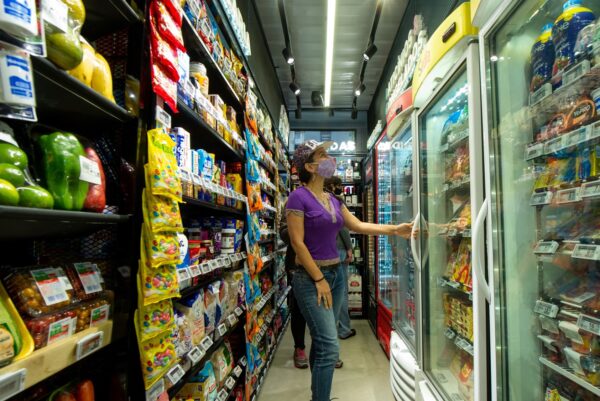
Major challenges emerged with the pandemic as soon as it hit the channel: digital technology acceleration, less human contact and more automation, extra sanitizing and safety precautions for both customers and employees, all with keeping the promise of a positive experience for consumers in the midst of chaos. But, perhaps the biggest challenge was (and still is) to keep up with sales and profit amid an adverse and uncertain scenario.
When everything seemed to have fallen apart and a wave of negativity washed over the market, C-Stores’ response to meet the new demands was surprising. Some initiatives have exceeded expectations and stirred up the channel. Of course, this doesn’t refer to basic requirements, which by the way happened quickly-hygiene procedures, disinfectants and hand sanitizers, mask wearing, face shields and sneeze guards were promptly implemented to guarantee the safety of consumers and staff. The most significant changes involved service offerings, technology and new business formats.
Sales were impacted, at first, due to restrictions that mainly affected the forecourt and, as a result, store traffic decreased. After the initial shock, sales started to recover and consumers learned that they could rely on convenience, whether for a quick purchase or fresh food, or just a snack.
Frictionless shopping experiences and delivery were incipient initiatives in the Brazilian C-Stores market prior to the new coronavirus arrival. Because of the changes in the consumer routine caused by COVID-19, the channel hit the accelerator, swiftly introducing new technological solutions and more efficient services. Digital payment methods enabled contactless payment and QR Codes provided touchless menus. In addition, cashback programs have helped to build consumer loyalty. Online offers and mobile ordering expanded-allowing for curbside pick-up or delivery. Many stores have launched partnerships with third-party apps (such as Uber Eats, iFood and Rappi).
As shoppers are visiting stores less often during periods of restrictions and lockdowns, delivery has been one of the ways to maintain in-store sales and meet changed customer needs.
C-Stores have also increased the assortment of categories such as Groceries and Household Care. In Food Service, grab & go and better-for-you offers were expanded.
Automated Stores at Condominiums
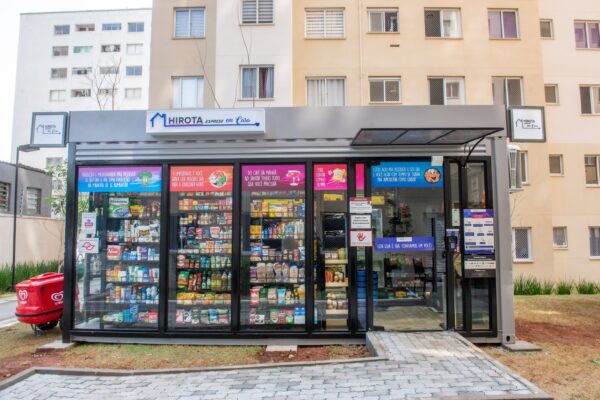
A creative innovation that emerged during the pandemic was the boost of a new convenience format-automated stores within residential or corporate condominiums. Before COVID-19, the Brazilian market had a few stores inspired by Amazon Go (e.g., ZAITT chain high street stores).
The virus prompted drastic routine changes and habit shifts for consumers-from working from home to social distancing, it forced people to concentrate most activities at (and around) home, which made this business format increasingly compelling. The promise of “hyperproximity” and convenience coupled with artificial intelligence allowed the expansion of such stores which were launched by multiple technology startups. Omnibox, Onii, Zuper, QiSar Home are some of the companies specialized in autonomous retail-they’ve established their businesses inside containers or rooms in condominiums, in different regions of Brazil.
The Hirota supermarket chain, which has also its proximity retail format (Hirota Food Express), has launched Hirota em Casa and it is booming. There are already more than 20 stores in condominiums in São Paulo, fully automated with self-checkout and digital wallet, selling non-alcoholic beverages, beers, snacks, candy, ready-to-eat meals, edible and non-edible groceries, health and beauty products, among other categories. Euromonitor International has elected Hirota em Casa as a worldwide case of retail innovation during the COVID-19 pandemic.
It’s Right There
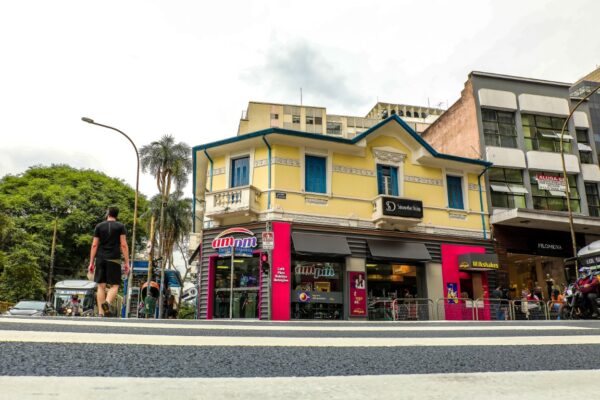
“It is right there”-this is the new positioning of AmPm, operated in Brazil by Ipiranga, which belongs to the holding company Ultrapar. AmPm also promises: “everything you need close to your home”.
AmPm is the largest convenience store chain in the country, with more than 2,000 points of sale ready to serve diversified consumer profiles, in their daily lives, on-the-go. With a very well formatted bread offering, AmPm has the largest bakery chain in Brazil, with more than 900 units.
Ipiranga has always been very active in the Brazilian convenience retailing market. Before COVID-19, the company was already developing the “new AmPm” project, based on different consumer journeys and demands, and has launched it at the beginning of 2020. The innovations-which were many, from contemporary design to technological disruptions-have a perfect fit to meet the needs of today’s reality.
The new concept has a wider assortment, especially in the food service category, which includes items such as pizza, sandwiches and pastries.
Ipiranga has put into practice a study that mapped all the omnichannel customer shopping journeys and introduced digital solutions for a fast and fluid experience, whether at the point of sale or using online marketplace. Those solutions came in line with the call for a frictionless purchase and less physical contact.
The digital drive thru, for example, allows purchases without leaving the vehicle, by scanning the QR Code at the forecourt to access the menu. Then, mobile ordering and payment are made convenient and efficiently, and the items are delivered to the customer’s car by a store employee.
From home, the customer can shop at AmPm on the main digital marketplaces.
“Room Service” is another innovation that emerged with the pandemic in stores close to business centers. Accessing the menu by QR Code, payment is made by mobile. The customer opts for receiving at the office or curbside pickup.
Also, in December 2020, AmPm opened its first street store, initiating operation tests outside the service station. The goal is to bring convenience to the customer, wherever he is, playing the role of a “good neighbor”.
Strategic Partnership
The Brazilian convenience store market will be further enhanced by a new partnership that has just been announced-Petrobras Distribuidora (BR) and Lojas Americanas*. The joining of forces was made public on February 25; the new company will operate in the convenience business, inside and outside service stations.
As publically stated by Petrobras, BR has approximately 1,200 BR Mania franchise C-Stores and Americanas operates 55 Local stores (Americanas’ C-Stores). The BR Mania brand will remain in the service stations, and stand-alone units will have the Local brand. The chain will operate in both owned and franchised store formats.
The alliance between these two giants is expected to foster the expansion and strengthening of the convenience channel in Brazil, which will benefit from the extensive retail knowledge of both partners, nationwide presence in points of sale, logistics, supply, technology, performance in digital retail, etc. It aims at a new value proposition to clients, franchisees, operators and store attendants, in alignment with its strategic vision to provide convenience mobility solutions and improve customer experience.
The formalization of this partnership depends, among other requirements, on the authorization of the government regulatory agency CADE (Administrative Council for Economic Defense).
Shortly before the start of the pandemic, Petrobras Distribuidora stations and BR Mania stores launched a new, modern and dynamic design. Over the last few years, BR Mania had been implementing several digital innovations and, in 2020, the chain has accelerated the adoption of newer technologies and ways to facilitate consumers’ current routine-digital touchless payment methods, cashback, online ordering offering delivery through third-party apps; along with safety measures to protect both customers and staff.
* Lojas Americanas is a well-established Brazilian company in the retail segment, operating on both physical and digital platforms. It has different brands/formats of physical stores (Lojas Americanas, Americanas Express, Local, AmeGo) with a total of over 1,700 units; a robust digital platform with marketplace and cashback system; and 4 distribution centers.
Oxxo in Brazil

In August 2019, an announcement created a buzz among players in the Brazilian convenience market-the formation of a joint venture between Raízen, Shell brand licensee, and Femsa Comercio. The latter is a leading Mexican multinational company in the convenience and proximity store segment in Latin America, with more than 19,000 stores in that region (Mexico, Colombia, Chile, Peru and now in Brazil).
A year later, the partnership resulted in the creation of a new company-Grupo Nós. Currently, retail operations comprise around 1,200 convenience stores under the Shell Select brand at service stations, and OXXO proximity stores.
The company states the promise of facilitating consumers’ daily routines, giving them more free time. It opened its first OXXO store on December 1, 2020, in Campinas, São Paulo. Less than three months after inception, there were already nine units in that city.
Bringing the concept of convenience to a mini-market and practicing competitive prices and promotions, the stores have a very broad product range-bakery items, fruits and vegetables, edible and non-edible grocery items, meat, beverages, snacks, among other categories. It provides for easy access to products for daily household replenishment at points of sales located in residential or high-circulation areas.
The bakery offer is one of the highlights of the new store-it sells fresh-baked bread. There is an important focus on Food Service, with a wide variety of sandwiches, pizzas, pastries, ready-to-eat meals, desserts and hot and cold beverages. Another differential of OXXO stores, when compared to similar proximity stores, is the offer of cold non-alcoholic beverages and beer displayed in walk-in cooler.
The Shell Select chain, whose vast majority of stores is franchised, is a key player in the business growth strategy. It had its new generation of stores launched in 2018, presenting a more modern layout and a simpler and more profitable operation for the franchisee with lower operating costs. The average sales of the stores in the new format increased by 20% versus the previous year.
As it happened with the channel in general, the COVID-19 pandemic rushed implementation of processes to meet the new habits and needs of consumers. The delivery service, in partnership with marketplace companies, was put in place. Home delivery and the offers of bakery items, food service and non-perishable products have helped stores to secure sales in times of lockdown and mobility restrictions.
Over the next three years, Grupo Nós plans to open 500 additional stores in the southeastern region of Brazil-Shell Select at service stations, and stand-alone OXXO proximity stores.
*Raízen is a joint venture between the Brazilian sugar and ethanol company Cosan and Shell.
Trends and Opportunities

New trends and technologies triggered by COVID-19 are here to stay. The idea of omnichannel is now stronger. As in-store shopping is not always feasible, Brazilian consumers are naturally engaging on integrated physical and digital shopping experiences-they want them to be frictionless, faster and practical. Therefore, convenience stores must strive for keeping up with solutions for those demands, either inside or outside of service stations.
Brazilian convenience spotlights continue to focus, now with more intensity, on the Food Service, which tends to grow in assortment and sales share. Better-for-you offers are gaining power among clients as they have received a wake-up call about the importance of their health and well-being-the pandemic has driven a shift to healthier foods.
Delivery and drive-thru options will continue to grow. Loyalty and cashback programs are likely to be more relevant.
The concept of convenience has been amplified in the eyes of the consumer and, as paradoxical as it may sound, the pandemic has brought this “advantage” to the channel. Gas stations without a C-Store shall rethink their businesses and consider entering the segment that is likely to stand out going forward. In addition, large retail chains are also contributing to bringing convenience closer to the customer, extending their reach in proximity markets. Therefore, competition will grow. And this is great!
By Giselle Innecco Valdevez Castro, Co-founder and Executive Director of Valsa and NACS Regional Representative for Brazil.
Join Giselle alongside NACS’ Henry Armour and Petrobras’ Brenda Branco in our upcoming Shop Talk LIVE episode focusing on the Brazilian market.
Friday 16th July, 2pm UK. Learn More and Register Now.
