

Asia were more prepared for pandemic according to Thailand’s Central Food Retail CEO
Asian countries were prepared and ready for the pandemic and this, together with their increasing lead in frictionless commerce, represents an important learning opportunity for the global food and convenience retail industry. No surprise to see the strong NACS strategic engagement continue in Asia with the NACS Convenience Summit Asia now scheduled to take place in Bangkok, March 2-4, 2021.
We took the opportunity to catch up with Thailand’s Central Food Retail’s CEO Stephane Coum on the current climate and how he’s putting his 25+ years of experience in the retail industry to good use in these unexpected times.

Stephane Coum, CEO, Central Food Retail, Thailand
What were your first priorities in responding to the COVID-19 situation in Thailand?
“To give you some perspective and context about the situation, in Thailand, we’ve been talking among our crisis management team about the Coronavirus since January 27, in order to prepare for the situation. Our job was to anticipate and prepare for the unknown. I worked in China 2007-2010, during which we faced some epidemics, so I could imagine what the worst case would look like.
For us, we prepared ourselves in terms of risk and compliance, as well as supply chain. This is key because you can offer the best services to your customers, but if your supply is not ready, your customers will not be happy. You have to anticipate that there will be a peak period with +100% and just a week later it could come down to -50%.
The priority for us was to anticipate these possibilities, and in the first week of February, we asked our supply chain team to rent a 5,000 sq m warehouse in Bangkok and fill it with the maximum number of pallets of commodities. We knew that there would later be some difficulties in receiving these orders and to deliver them to our stores, so we worked in advance and had around 25,000 pallets of commodities ready to serve our customers in case of a lockdown.”
How much of a crisis has this been for Thailand?
“The situation in Thailand is different from in Italy, where I worked from 2013-2020, and in Turkey, where I worked from 1999-2007. In Thailand, the lockdown came into effect in April, and the announcement created a lot of demand. In just one week, we saw an increase of 100-150%. During the lockdown, people needed commodity items, and it’s been the case for around two months now.
In fact, the COVID-19 situation in Thailand has not been too worrying, and the government has done a great job working with authorities, hospitals and provinces to curb the outbreak. There are only about 60 reported deaths whereas in the UK it’s 33,000 and in France 28,000. We have yet to determine the reason why – perhaps it’s how the governments are handling things differently in different countries, or maybe the virus does not want to come to such a hot country.
Asian countries are more prepared for this pandemic and everyone was already wearing a mask even before the lockdown as the virus was spreading out of China. In Europe, perhaps this is just not our culture and it’s hard to know what to believe. I think people in Asia are more prepared because they’ve experienced it before and psychologically you just don’t forget something like that.
Some restrictions are still in effect in Bangkok such as the night curfew – since the beginning of April, a curfew has been issued from 11PM to 4AM. It means that all convenience stores which used to open 24 hours a day had to switch their opening hours – to 8AM-8PM in our case because we have to give some buffer time for our employees to safely go back home.
During the COVID-19 situation, our sales grew by 10-15% and we over performed – I think that happened globally as during a time like this convenience stores and supermarkets are able to meet customer expectation in a time when customers do not want to go to big shopping malls and be among big crowds. In the future, I think that hypermarkets will become more popular due to the fact that it’s easier to maintain social distance in bigger stores compared to supermarkets and convenience stores.
On June 1, we expect that the government might further ease some of the restrictions and possibly lift the curfew and resume domestic flights, while international flights will have to wait.
A big part of Thailand’s GDP is linked to tourism, and right now those in hospitality and retail are concerned about the situation as they are directly impacted. It means about 10 million people have become unemployed since the beginning of COVID-19”.
Can you talk us through the preventative measures you take to protect staff and customers?
“Since February, we set up preventive measures to ensure the safety of all our employees, including store level employees, and our customers. I am proud to say that throughout the entire COVID-19 outbreak, in our company, we have not had a single positive case of COVID-19. Employee safety is very important to us and we’ve set up a system to mitigate the risk. Every day, every employee must go through a temperature check, and the same measure has been extended to our customers as well. Customers with a high temperature or without a mask will not be permitted into our stores”.
“Compared to what we see in Europe, it’s different, as this type of preventive measures is totally accepted here in Thailand. We have never faced any resistance when it comes to wearing a mask – every day, each of my employees receives a mask, which means I distribute 20,000 masks daily on average. The mask is supplied by our supply chain team who have set up a team of 50 people to ensure masks are distributed to all our employees every day.
Certainly, innovation is important, but it is only a consequence of all our other policies. We also worked with authorities in case any employee had a high temperature, and we tracked their close contacts and customers they might have met during this period.
In Thailand, we had to close our food courts during COVID-19, so we managed the takeaway service in a process specially set up by our risk and compliance team. We closely controlled and monitored everyone and used smartphones for self-check for store managers. With more than 1,500 stores that we had to manage, it’s much easier to know when there were any execution issues so we could react immediately.
You were right when you were speaking about Asian countries handling the pandemic better than their Western counterparts. First of all, in Asia, we are much more respectful of the government’s decisions. When you’ve never experienced a pandemic, it’s difficult to know how to react. When the virus was spreading in Italy, France started to prepare itself, but in Asia, when the outbreak was spreading in China, many different countries around it knew the risk and took action right away”.
How has the Central Food Retail business performed?

“I have a different view on this. Globally, I believe the sales will increase, but maybe not in some countries. For our company, I can tell you that as of end of May, we are still on track with what we’ve initially planned to do with our budget.
Sure, there might be some impact after we’ve invested in employee protection and installing clear partitions at our cashier counters, or cover our fresh produce and food. Still, we still recruit more people to drive both online and offline businesses.
For offline, we’ve recruited 1,000 employees, and for online we have tripled the size of our sales team at both the fulfilment center and at the store level. Our people are stronger and our organization is more agile and flexible.
We have about 5,000 orders per day, and although now it’s decreasing a little bit, we’re still at +100% compared to before COVID-19. Yes, customers will definitely change the way they purchase and consume.
I’m sure that in Thailand and in Asia, customers will be more cautious about health and wellness and buy more organic items, and they will focus more on product traceability – how farmers feed animals, whether chemicals are used. This is something I anticipate and have put on our 3-year plan. It’s important for us as a retailer to anticipate this from customers – transparency will be something that will create the DNA of some retailers.
I would like to highlight a potential shift in fresh produce. I suppose customers would like to buy products and produce from their country, and I can already see this trend in Thailand and other countries. It’s not nationalism – it’s more about a concern about how the ingredients are grown. They want to buy something grown and made near them, and I believe proximity stores will be more and more popular.
In Thailand, we’ve developed many minimarts which offer a strong assortment of commodities in a small space, roughly 150 sq m, located near residential areas.
Usually, when you are at a convenience store, you buy something that you will consume immediately or within the next three hours, but you also have the option of buying something to stock for two days. After COVID-19, I suppose retailers will try to increase the assortment and add more commodity items”.
Could you give us the details of Central Food Retail’s acquisition of the FamilyMart brand franchise in Thailand?

“We believe that FamilyMart is a strong brand. We’ve been in this partnership with Japan Family Mart for eight years and we firmly believe in FamilyMart’s strengths in ready-to-eat meals and Japanese items, and this would bring us differentiation that gives us a competitive edge over 7-Eleven.
We decided to take over the 49% of the shares because we trust in the potential of convenience stores in Thailand, and we want to accelerate this channel. Not only can you buy coffee and food, but our target is to introduce a service area and social area. It will be a place where all your needs are met, whether you need to pay your electricity bills or buy insurance.
Our goal is not just to create a brand of convenience store, but a brand of omnichannel platform for our customers. We’re here to redefine the lives of Thai customers”.
Please could you detail the Central Food Retail store portfolio?
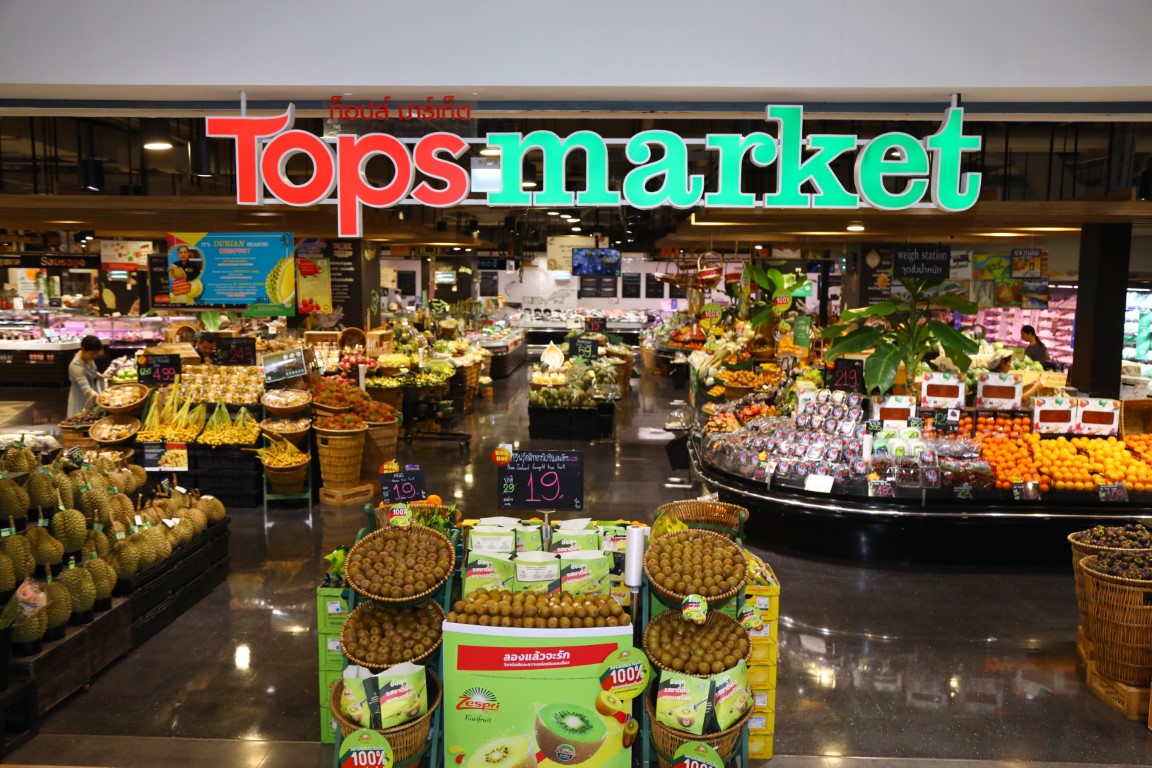
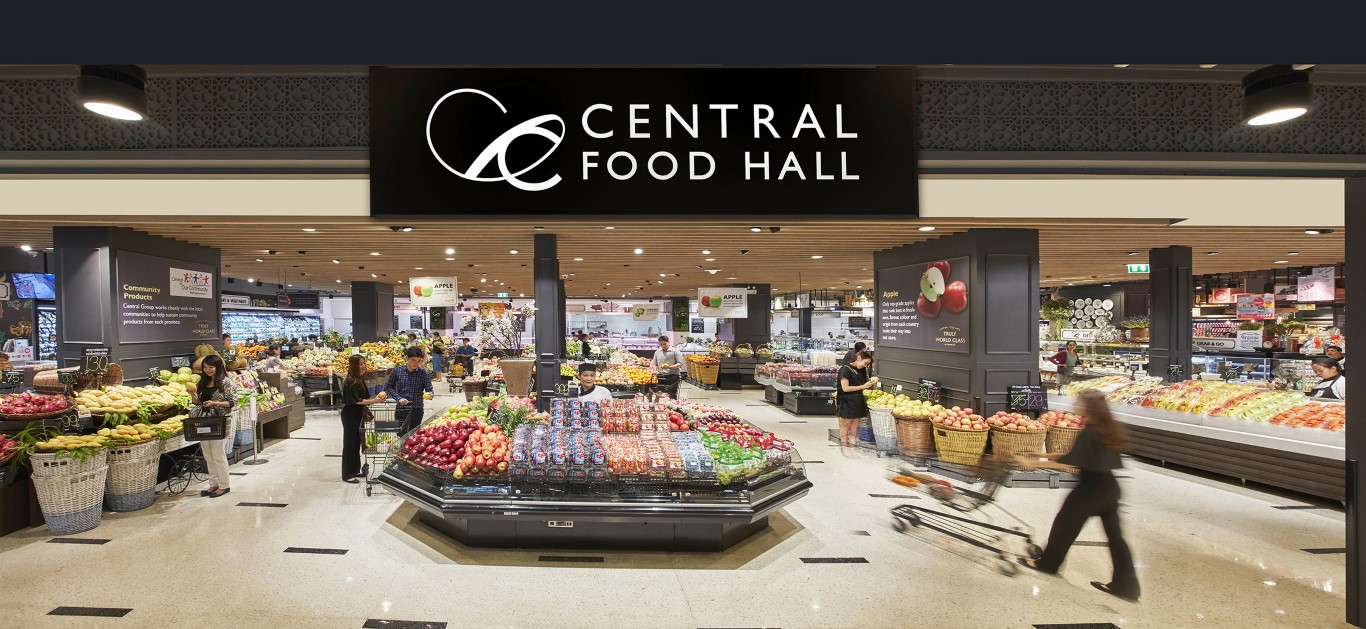
“We have 11 Central Food Hall stores, 3,000 sq m on average, designed for premium customers with premium assortments and imported items.
Tops Market is a supermarket initially developed in Thailand and Malaysia and today we have 115 Tops Market stores, focusing on fresh products with a large assortment.
Tops Superstore is more of a superstore, 3,000 sq m in size, competitor of hypermarkets. Today we have 9 superstores and this is a big opportunity in Thailand. Tops Superstore was launched in 2017 and there’s a lot of potential for expansion.
Tops Daily is about 300-500 sq m in size and we have 67 stores.
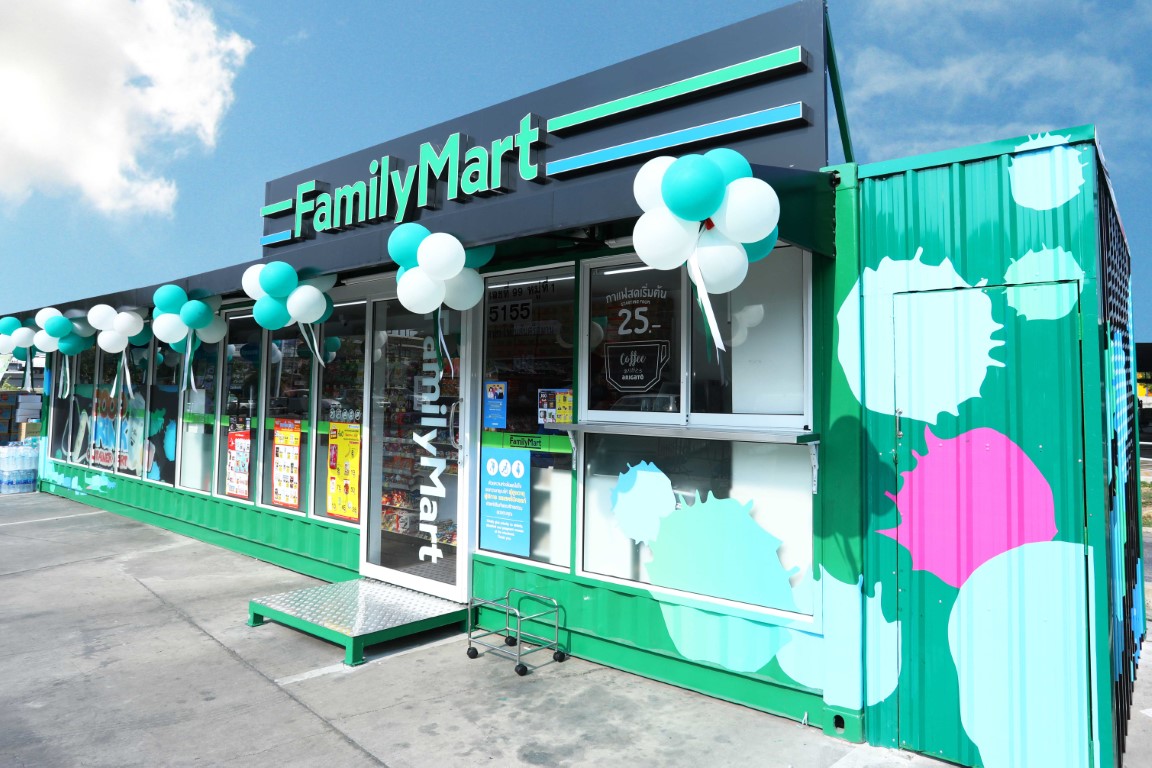
We have 970 Family Mart stores, with an area of 130-220 sq m each. We have an assortment of about 4,000 items in just 170 sq m on average, so it’s quite interesting.
We also have 31 Matsumoto Kiyoshi Japanese stores.
I left Asia in 2013 and I wanted to come back to Europe, first of all because I’m European, so one day I’ll return to Europe for my retirement. I’m impressed by the evolution of Asia in all industries, and by the leaders who have moved very fast on businesses. Clearly for me it’s a good reminder that if in Europe we don’t move faster, other parts of the world will move faster than us”.
